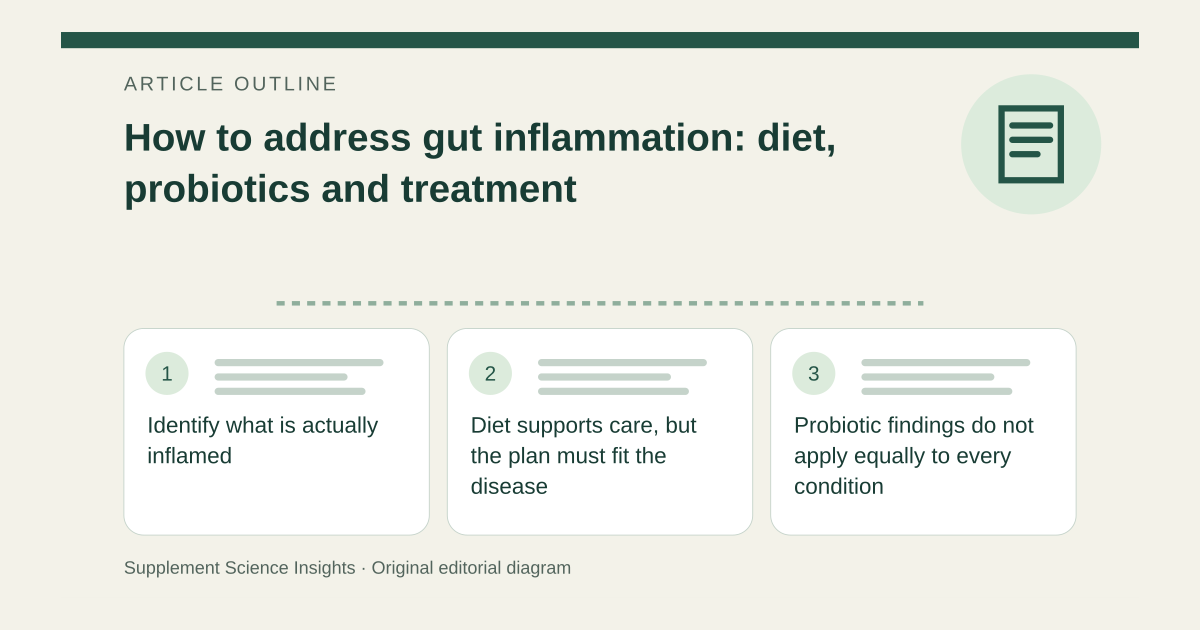
Identify what is actually inflamed
Inflammatory bowel disease includes Crohn’s disease and ulcerative colitis, with different evidence and treatment needs. Digestive discomfort and IBS are not automatically the same as active bowel inflammation. A diagnosis and appropriate follow-up are more useful than assuming every symptom requires a gut cleanse. [1][2]
Diet supports care, but the plan must fit the disease
AGA recommends a Mediterranean-style pattern for general health unless contraindicated, while noting that no diet consistently reduces flares in all adults with IBD. Strictures can require texture changes, and deficiencies or malnutrition need assessment. Specialized enteral nutrition can have a supervised role, especially in Crohn’s disease. [3]
Probiotic findings do not apply equally to every condition
ODS describes mixed evidence, with possible benefits for some ulcerative-colitis preparations but no established comparable benefit in Crohn’s disease. That does not support stopping prescribed anti-inflammatory treatment or choosing a product from its CFU count alone. Severe illness or immune suppression adds safety concerns. [1]
Measure recovery with the treating team
Imagine less bloating follows a food change while the person’s IBD remains active. Symptom relief is useful but does not necessarily show healing. Coordinate nutrition, medicines and appropriate disease monitoring rather than using a supplement response as the only measure. [3][1]
| Need | Approach |
|---|---|
| Diagnosis | Distinguish inflammation from nonspecific symptoms |
| Nutrition | Adequacy and individual tolerance |
| Probiotic | Condition-specific benefit and safety |
| Follow-up | Clinical disease assessment |
Sources for this article
- Probiotics - Health Professional Fact Sheet
Source consulted: 2026-09-21. This is a reference resource, not a claim that we conducted the studies or tested a product. - Probiotics: Usefulness and Safety | NCCIH
Source consulted: 2026-09-21. This is a reference resource, not a claim that we conducted the studies or tested a product. - diet and nutritional therapies in IBD
Source consulted: 2026-09-21. This is a reference resource, not a claim that we conducted the studies or tested a product.