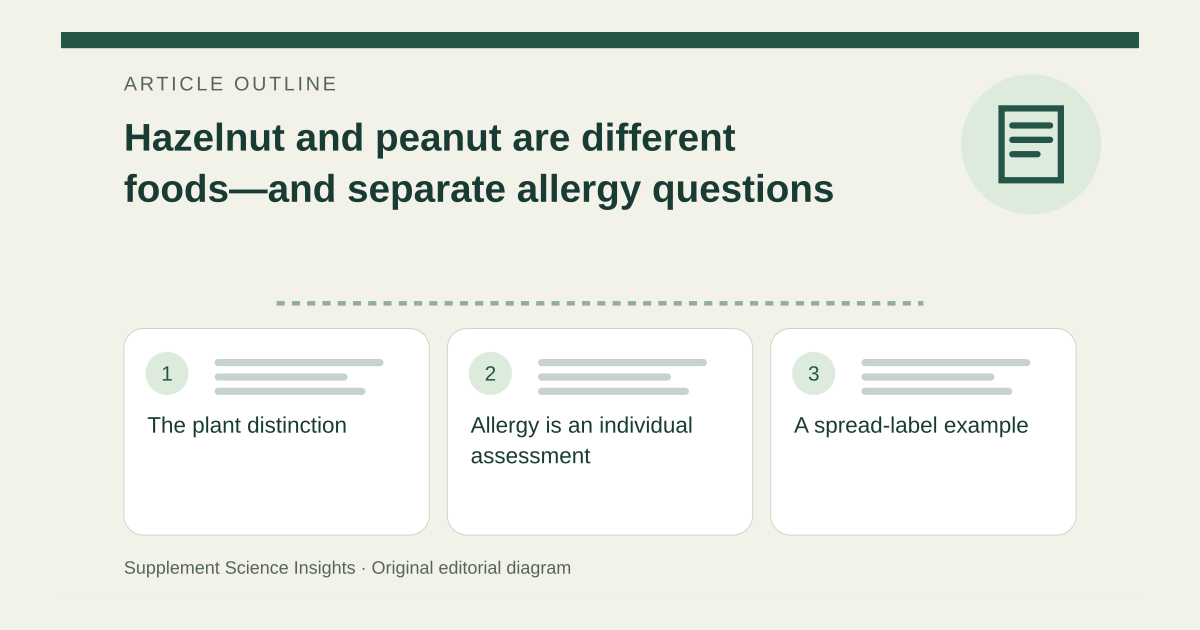
The plant distinction
Peanuts develop as underground pods after flowering above ground. They are a legume crop, despite nut in the common name. Hazelnut, also called filbert, appears in FDA’s tree-nut allergen list. The two ingredients should not be treated as synonyms when reading a recipe or label. [1][2]
Allergy is an individual assessment
FDA lists peanuts and tree nuts separately among major food allergens. A different plant category does not prove tolerance, and a person may need to avoid more than one food. Follow an allergy-specific plan and evaluate the full product, including relevant cross-contact information, rather than testing a suspected allergen at home. [3]
A spread-label example
Imagine a spread contains hazelnuts but no listed peanut ingredient. That identifies its recipe; it does not certify suitability for someone with a peanut or tree-nut allergy. Read the current full label and obtain clarification where needed. A substitution that works for flavor can still be unsuitable for the person who will eat it. [3]
| Hypothetical term | Meaning |
|---|---|
| Peanut | Legume crop |
| Hazelnut or filbert | Tree nut |
| Different botanical category | Not proof of personal allergy safety |
Sources for this article
- Kew — Plant proteins: Can they grow in the UK?
Source consulted: 2026-09-20. This is a reference resource, not a claim that we conducted the studies or tested a product. - FDA Food Allergen Questions and Answers, Edition5
Source consulted: 2026-09-20. This is a reference resource, not a claim that we conducted the studies or tested a product. - Food Allergies: What You Need to Know | FDA
Source consulted: 2026-09-20. This is a reference resource, not a claim that we conducted the studies or tested a product.