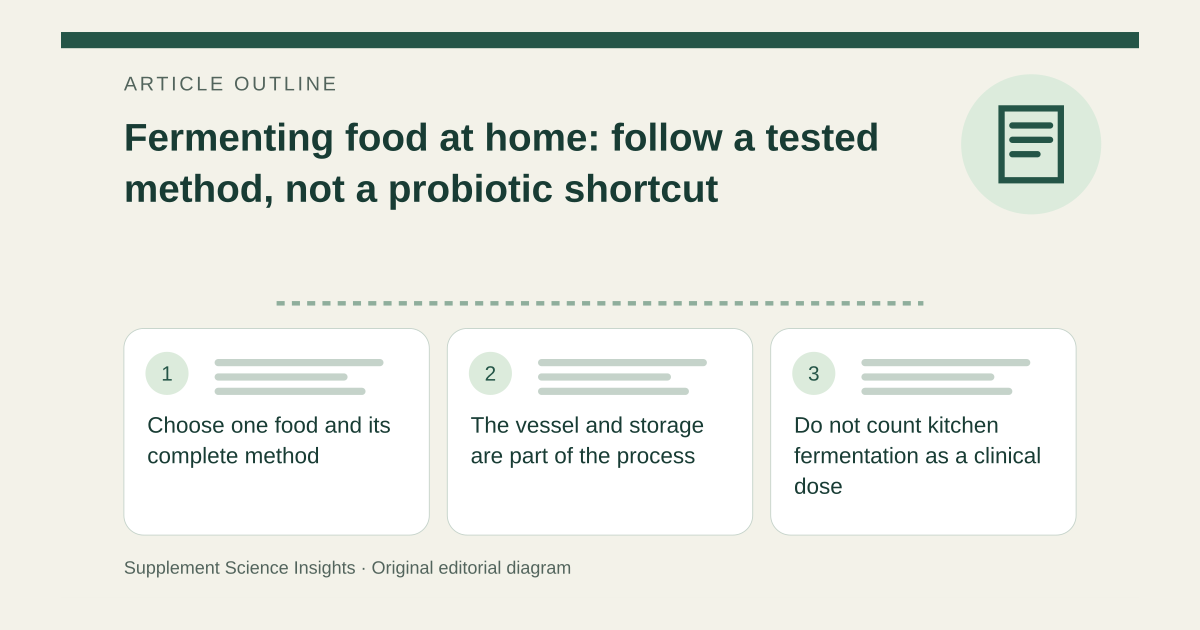
Choose one food and its complete method
Use a tested recipe for that specific food. For example, NCHFP sauerkraut uses 3 tablespoons canning or pickling salt per 5 pounds cabbage, packed so juice covers the cabbage. Its typical 70–75°F fermentation takes about 3–4 weeks. Follow the complete linked instructions, including additional brine and monitoring, rather than improvising salt or transferring the timing to other foods. [1]
The vessel and storage are part of the process
Use clean food-grade equipment and the specified weights to keep cabbage under brine. NCHFP recommends 1–2 inches of brine coverage for fermenting cabbage or cucumbers. Finished sauerkraut can be refrigerated; shelf-stable canning requires a separate complete tested process. A sealed lid is not proof of preservation. [2][1]
Do not count kitchen fermentation as a clinical dose
Imagine making one jar to learn the method. Record the recipe and conditions and follow its handling guidance, rather than chasing more bubbles or a longer ferment. Even a successful batch does not identify an evidence-supported probiotic strain and dose for treating a condition. [3][1]
| Situation | Interpretation |
|---|---|
| New food or recipe | Use its own tested method |
| Vegetables above brine | Correct the recipe setup |
| Successful ferment | No automatic treatment-dose claim |
Sources for this article
- Sauerkraut - National Center for Home Food Preservation
Source consulted: 2026-09-20. This is a reference resource, not a claim that we conducted the studies or tested a product. - Suitable Containers, Covers, and Weights for Fermenting Food - National Center for Home Food Preservation
Source consulted: 2026-09-20. This is a reference resource, not a claim that we conducted the studies or tested a product. - Probiotics - Health Professional Fact Sheet
Source consulted: 2026-09-20. This is a reference resource, not a claim that we conducted the studies or tested a product.