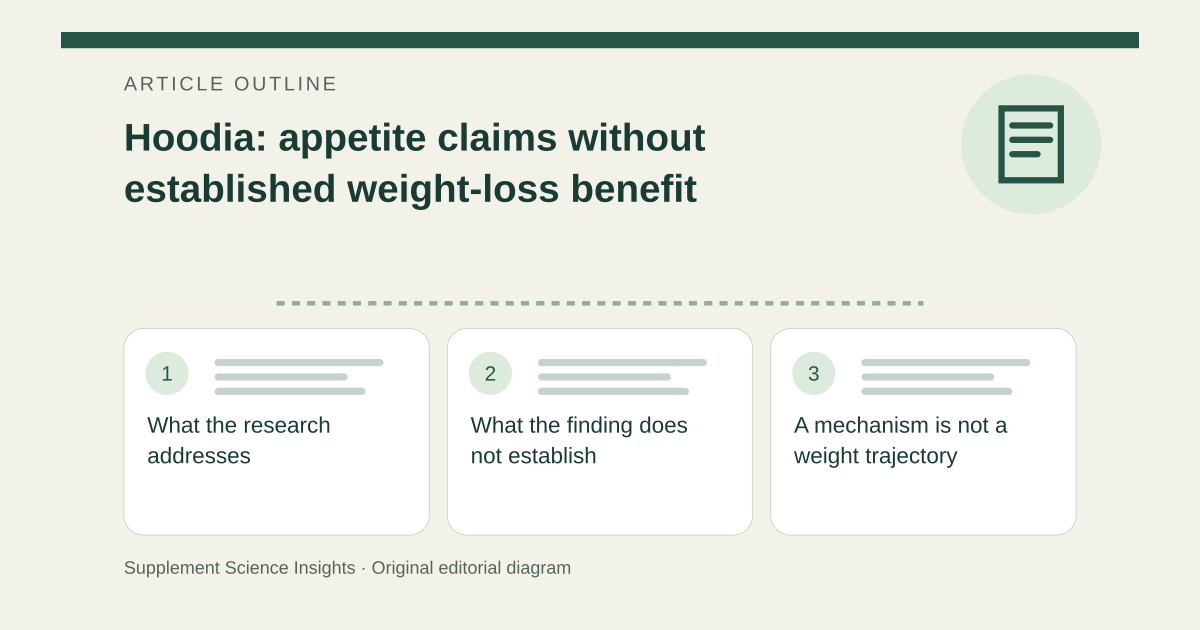
What the research addresses
Hoodia gordonii is promoted for appetite suppression and weight loss. MSK describes animal findings and traditional use, but reports that a studied extract did not change body weight in overweight women. That does not support a dependable weight-loss claim. [1]
What the finding does not establish
Eating less in an animal experiment, reporting less hunger and losing weight over time are separate outcomes. A product advertisement should not present the first as proof of the last. [1]
A mechanism is not a weight trajectory
Suppose a supplement changes a short-term appetite score. To support a sustained weight-loss claim, a study would still need to measure weight over a relevant period, compare it fairly and account for discontinuations and adverse effects. The appetite score alone cannot supply those results.
A before-and-after photograph offers even less information about cause. Diet, activity, illness and other interventions may change at the same time. Look for a defined preparation and a controlled comparison, and retain negative findings instead of replacing them with a story about traditional use.
| Hypothetical finding or choice | What it means |
|---|---|
| An animal eats less | Not a human weight-loss trial |
| A short-term appetite score changes | Not necessarily sustained weight loss |
| A studied extract shows no weight effect | A limitation the claim must acknowledge |
Safety and treatment considerations
Reported effects include headache, dizziness, altered skin sensation and nausea. A laboratory finding suggests possible CYP3A4-related drug interactions, but the clinical importance is uncertain. Limited benefit evidence does not justify assuming an unstudied product is low risk. [1]
A practical next step
No Hoodia product or dose is recommended. A useful weight-management discussion should consider options with meaningful outcome evidence and a plan for monitoring benefit and tolerability.
Sources for this article
- Memorial Sloan Kettering Cancer Center — Hoodia
Source consulted: 2026-09-17. This is a reference resource, not a claim that we conducted the studies or tested a product.