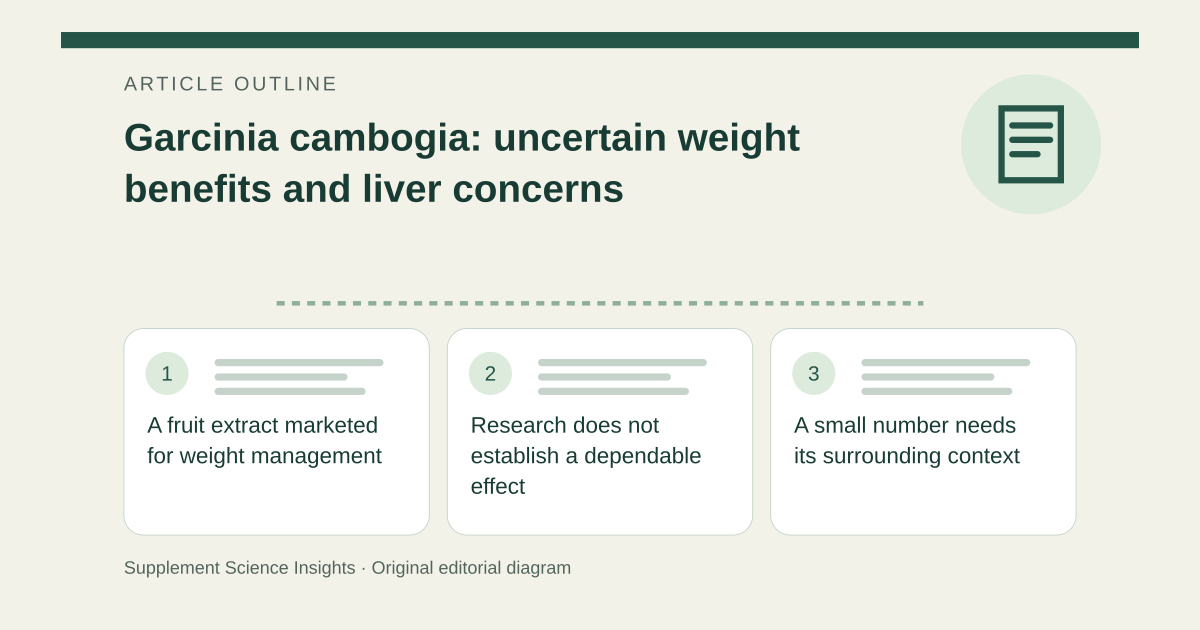
A fruit extract marketed for weight management
Garcinia cambogia products are commonly promoted for weight loss and often highlight hydroxycitric acid, abbreviated HCA. A retail product may contain garcinia alone or combine it with caffeine, other botanicals and additional ingredients. [1]
The full formula matters. A result or adverse event involving a blend should not be attributed to one ingredient without evidence, but uncertainty about attribution does not make the blend safe. Record what was actually used before judging a claim. [1]
Research does not establish a dependable effect
According to NCCIH, some studies suggest a modest weight effect and others show none. The evidence does not establish a reliable benefit that can be assumed for a current retail product. Evidence for other uses is even more limited. [1]
A weight study needs the duration, comparator and background diet or activity program. A change observed while several interventions occur together cannot simply be assigned to garcinia. Short-term weight change also does not establish sustained maintenance or improved health outcomes. [1]
A small number needs its surrounding context
Consider whether a study reports average weight, waist measurement or the proportion of people reaching a predefined goal. These outcomes describe different aspects of a result. Missing participants and differences in adherence can also affect interpretation.
The relevant comparison is the difference between groups, not merely the amount lost by the supplement group. If both groups follow a structured program, improvement in both may reflect that program. A prominent before-and-after photograph does not supply the missing comparison or the adverse-event record.
Liver injury is a material concern
Liver damage, including severe cases, has been reported with garcinia-containing products. NCCIH notes that consuming these products may be unsafe. The apparent rarity of severe reports does not establish a predictable safe threshold for an individual or a guarantee for a particular blend. [1]
Other reported effects include headache and digestive symptoms. Interactions with some liver-related medicines and medicines affecting serotonin have been reported. Pregnancy and breastfeeding safety are poorly established. A product's natural origin does not resolve these concerns. [1]
Compare groups rather than a single headline
Imagine a fictional trial reports average losses of 3 kg with a supplement and 2.5 kg with placebo while both groups receive the same dietary program. The between-group difference is 0.5 kg, not 3 kg.
That calculation alone does not show statistical reliability, durability or a favorable benefit-to-harm balance. All three would need separate evidence.
| Hypothetical result | Interpretation |
|---|---|
| Supplement group: −3 kg | Within-group change |
| Comparison group: −2.5 kg | Background program also matters |
| Difference: −0.5 kg | Not proof of durable benefit |
Do not separate modest benefit claims from harms
A useful decision requires both credible benefit evidence and an acceptable safety profile. This overview does not recommend garcinia or supply a weight-loss regimen. Report the exact product and all ingredients when discussing an exposure with a clinician.
Sources for this article
- NCCIH — Garcinia cambogia: Usefulness and Safety
Source consulted: 2026-09-17. This is a reference resource, not a claim that we conducted the studies or tested a product.