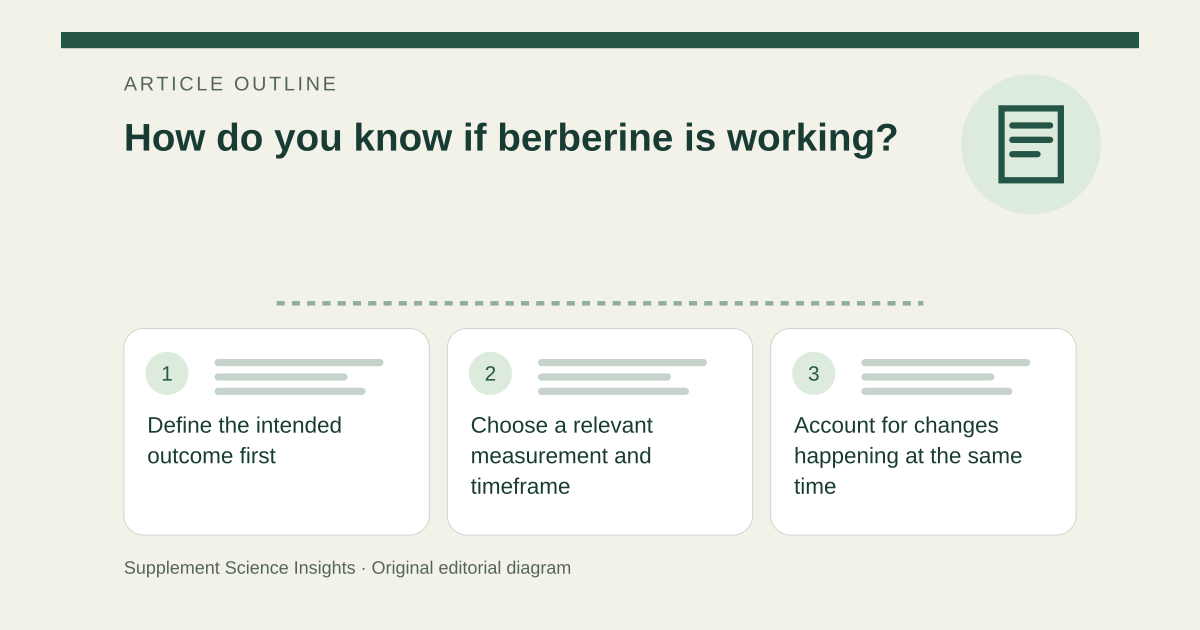
Define the intended outcome first
Weight, blood glucose, lipids and digestive symptoms are different outcomes. A change in one cannot establish all the others. NCCIH considers weight-loss findings inconclusive because the studies vary and many have important risks of bias. [1]
Choose a relevant measurement and timeframe
Use the outcome appropriate to the clinical question and compare trends under reasonably consistent conditions. A single scale reading or glucose value is easily misinterpreted. Study duration is not a promise of the day a person will notice benefit, and an adverse effect does not prove efficacy. [1]
Account for changes happening at the same time
Diet, activity, medicines and illness can affect the result. If several things change together, improvement cannot be attributed solely to berberine. Have any glucose-lowering regimen reviewed because the supplement may interact with treatment. [1][2]
Agree when to reconsider use
Imagine a person changes meals and begins walking while starting berberine, then loses weight. The improvement is real, but its cause is not isolated. At the review point, weigh the uncertain contribution, tolerability, interactions and cost instead of escalating automatically. [1]
| Observation | What it establishes |
|---|---|
| Nausea after a capsule | Possible intolerance, not benefit |
| One lower glucose reading | Insufficient to judge a trend |
| Weight change with several changes | Cannot isolate the supplement |
| Defined outcome over time | A basis for a clinical review |
Sources for this article
- Berberine and Weight Loss: What You Need To Know | NCCIH
Source consulted: 2026-09-21. This is a reference resource, not a claim that we conducted the studies or tested a product. - Berberine-Drug Interactions: Mechanisms, Clinical Relevance and Risk Stratification—A Narrative Review - PMC
Source consulted: 2026-09-21. This is a reference resource, not a claim that we conducted the studies or tested a product.