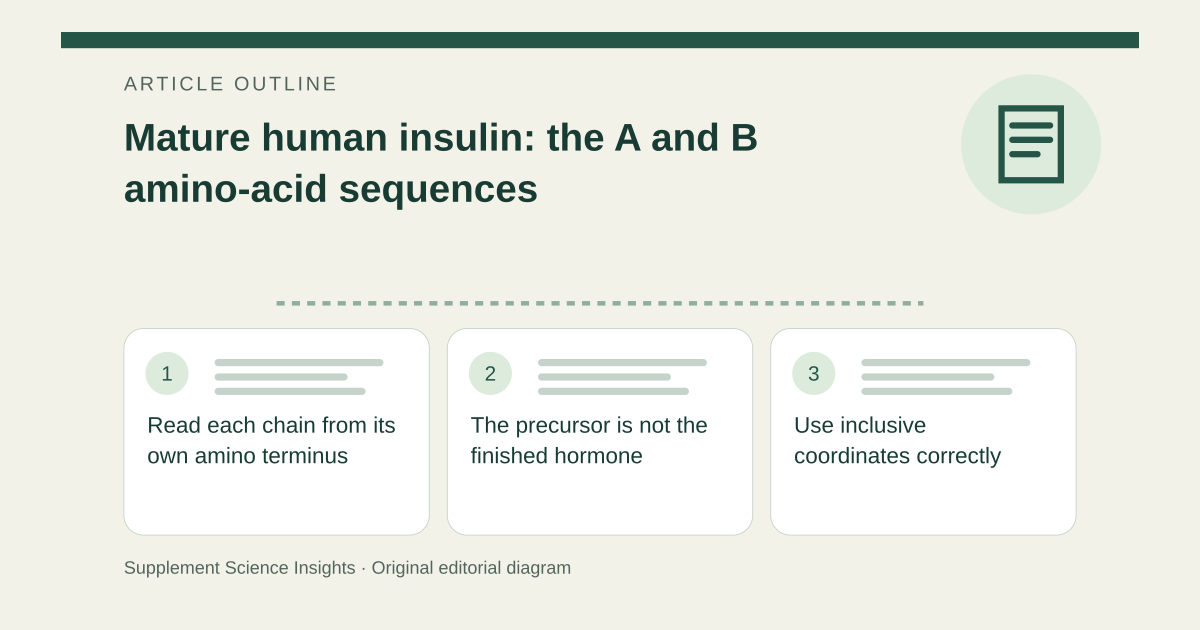
Read each chain from its own amino terminus
The A-chain sequence is GIVEQCCTSICSLYQLENYCN. The B-chain sequence is FVNQHLCGSHLVEALYLVCGERGFFYTPKT. These are one-letter amino-acid codes for mature human insulin. [1]
UniProt annotates the B chain at precursor positions 25–54 and the A chain at positions 90–110. Those precursor coordinates should not be mistaken for numbering within the mature chains. [1]
The precursor is not the finished hormone
MedlinePlus describes processing of proinsulin into A and B chains connected by disulfide bonds. The curated sequence record also distinguishes a signal peptide and the mature-chain features. [1][2]
A 110-residue precursor and a 51-residue mature hormone therefore do not represent conflicting counts. Also specify human insulin when comparing sequences: an engineered insulin analogue need not have the same sequence or modifications. [1][2]
Use inclusive coordinates correctly
The precursor interval 25–54 contains 54 minus 25 plus 1, or 30 residues. The interval 90–110 contains 21. Together they account for the 51 residues of the mature A and B chains.
| Detail | Interpretation |
|---|---|
| A chain | 21 residues |
| B chain | 30 residues |
| Precursor | 110 residues before processing |
Sources for this article
- UniProt P01308 — human insulin, reviewed sequence and processing annotations
Source consulted: 2026-09-17. This is a reference resource, not a claim that we conducted the studies or tested a product. - INS gene: MedlinePlus Genetics
Source consulted: 2026-09-17. This is a reference resource, not a claim that we conducted the studies or tested a product.