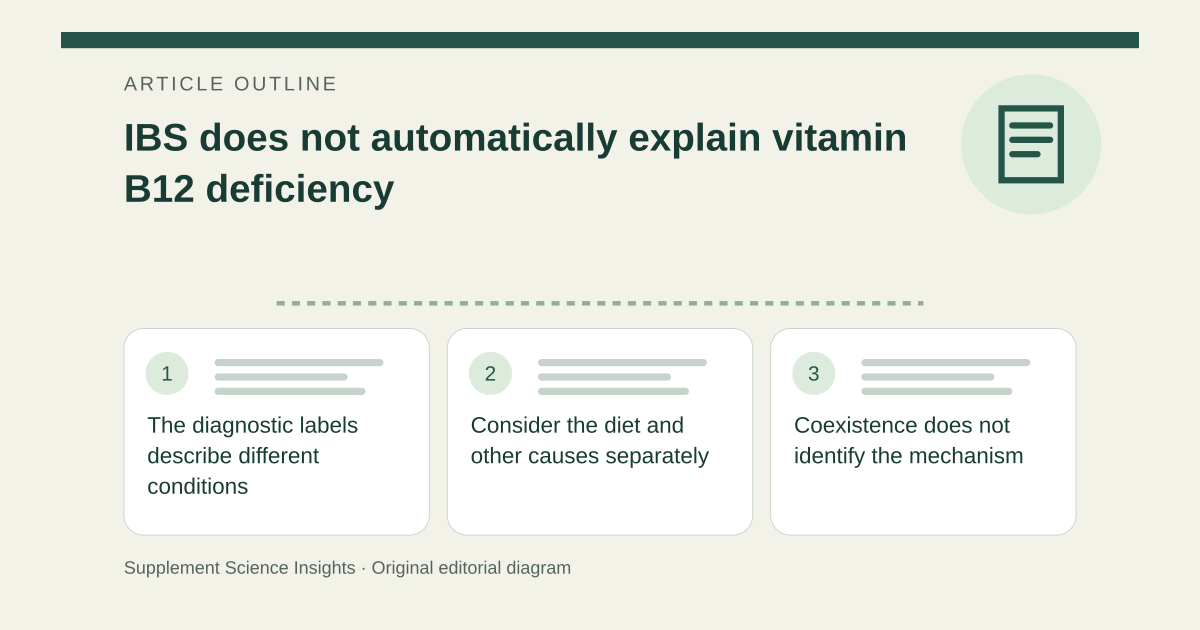
The diagnostic labels describe different conditions
NIDDK describes IBS as abdominal pain and altered bowel movements without visible signs of damage or disease in the digestive tract. This differs from inflammatory conditions that can affect absorption. [1][2]
NIH ODS discusses B12 absorption problems in gastrointestinal diseases such as celiac disease and in some circumstances involving Crohn’s disease. Those findings cannot simply be transferred to everyone diagnosed with IBS. [1][2]
Consider the diet and other causes separately
A person with IBS may also follow a restricted diet or have another condition affecting B12. The IBS label alone does not distinguish inadequate intake from malabsorption or another explanation. [3][2]
NICE recommends investigating the cause when deficiency is identified. Bring dietary exclusions, medicines and relevant gastrointestinal history to the assessment rather than treating a persistent low result as an inevitable feature of IBS. [3][2]
Coexistence does not identify the mechanism
Imagine someone with IBS stops eating most B12-containing foods and later has a low result. The change in intake is relevant; it still does not prove that IBS damaged the absorption pathway.
| Detail | Interpretation |
|---|---|
| IBS | Disorder of gut-brain interaction |
| B12 deficiency | Requires its own explanation |
| Food restrictions | Part of the assessment |
Sources for this article
- Definition & Facts for Irritable Bowel Syndrome - NIDDK
Source consulted: 2026-09-19. This is a reference resource, not a claim that we conducted the studies or tested a product. - Vitamin B12 - Health Professional Fact Sheet
Source consulted: 2026-09-19. This is a reference resource, not a claim that we conducted the studies or tested a product. - Recommendations | Vitamin B12 deficiency in over 16s: diagnosis and management | Guidance | NICE
Source consulted: 2026-09-19. This is a reference resource, not a claim that we conducted the studies or tested a product.