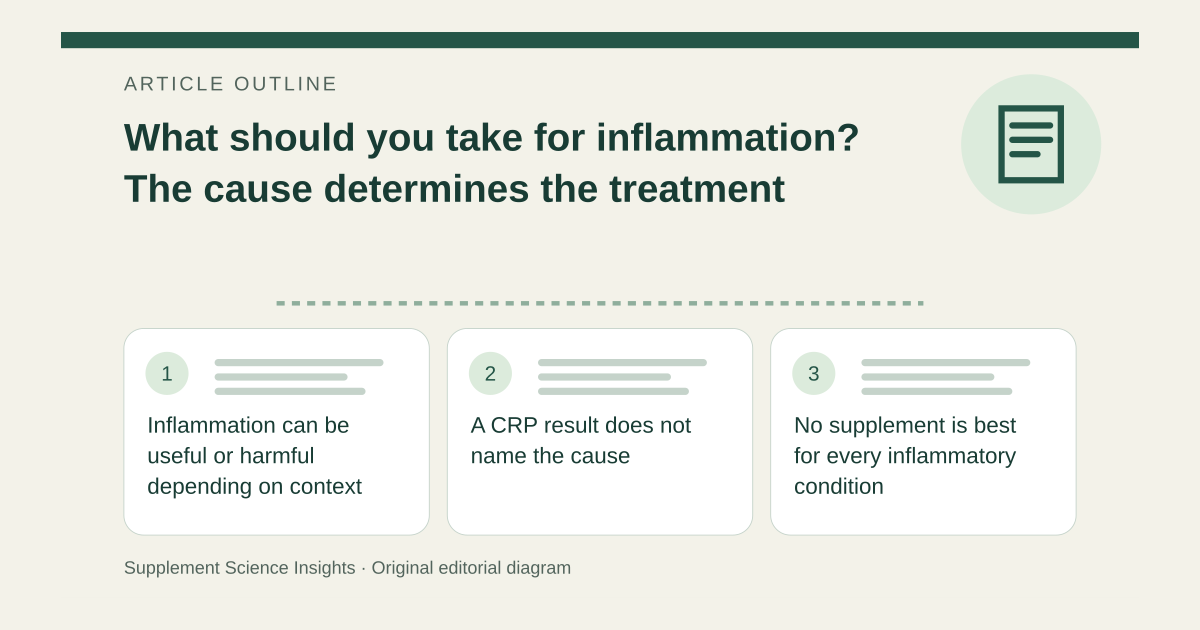
Inflammation can be useful or harmful depending on context
MedlinePlus describes acute inflammation as part of protection and healing. Persistent inflammation can damage tissue, but simply trying to suppress every inflammatory response is not a useful health goal. Establish what is causing symptoms and whether treatment is needed. [1]
A CRP result does not name the cause
C-reactive protein rises with inflammation and can be used in clinical assessment or monitoring. It does not by itself identify where the problem is or choose its treatment. Infection, inflammatory disease and other contexts can produce an elevated result; interpretation depends on symptoms and other findings. [1]
No supplement is best for every inflammatory condition
NCCIH finds insufficient evidence for many supplements marketed for musculoskeletal inflammation, while omega-3s may modestly help some rheumatoid-arthritis symptoms. That finding does not establish treatment for every inflammatory illness or a universal anti-inflammatory vitamin dose. Correcting a nutrient deficiency is a separate indication. [2][3]
Medicines have specific uses and risks
NSAIDs can relieve pain and inflammation in suitable circumstances, but stomach bleeding, kidney problems and medicine interactions matter. They are not appropriate for everyone, including some people who are pregnant or have relevant medical conditions. A chronic autoimmune disorder may require disease-modifying treatment rather than an over-the-counter painkiller or supplement alone. [4][5]
Food and sleep support care without replacing it
A varied diet can address nutrient needs, and regular sleep habits support general health. Neither is a stand-alone treatment for an unexplained inflammatory illness. Avoid highly restrictive diets or large supplement stacks based only on an anti-inflammatory label; review the actual nutritional and clinical goal. [3][6]
There is no universal time to work
The cause, treatment and outcome determine the timeline. Pain relief, a changing laboratory marker and control of an underlying disease are different endpoints. Imagine a person feels better after a new supplement while an inflammatory condition remains untreated: symptom improvement alone cannot establish disease control. Agree on the outcome and follow-up appropriate to the diagnosis. [1][5]
| Outcome | What it does not automatically establish |
|---|---|
| Less pain | Underlying disease controlled |
| Lower CRP | Specific cause identified |
| Adequate nutrient intake | Inflammatory illness cured |
Sources for this article
- C-Reactive Protein (CRP) Test: MedlinePlus Medical Test
Source consulted: 2026-09-20. This is a reference resource, not a claim that we conducted the studies or tested a product. - 7 Tips: Nutritional Approaches for Musculoskeletal Inflammation | NCCIH
Source consulted: 2026-09-20. This is a reference resource, not a claim that we conducted the studies or tested a product. - Dietary Supplements: What You Need to Know
Source consulted: 2026-09-20. This is a reference resource, not a claim that we conducted the studies or tested a product. - NSAIDs - NHS
Source consulted: 2026-09-20. This is a reference resource, not a claim that we conducted the studies or tested a product. - Rheumatoid arthritis - Treatment - NHS
Source consulted: 2026-09-20. This is a reference resource, not a claim that we conducted the studies or tested a product. - Sleep Deprivation and Deficiency - Healthy Sleep Habits | NHLBI, NIH
Source consulted: 2026-09-20. This is a reference resource, not a claim that we conducted the studies or tested a product.