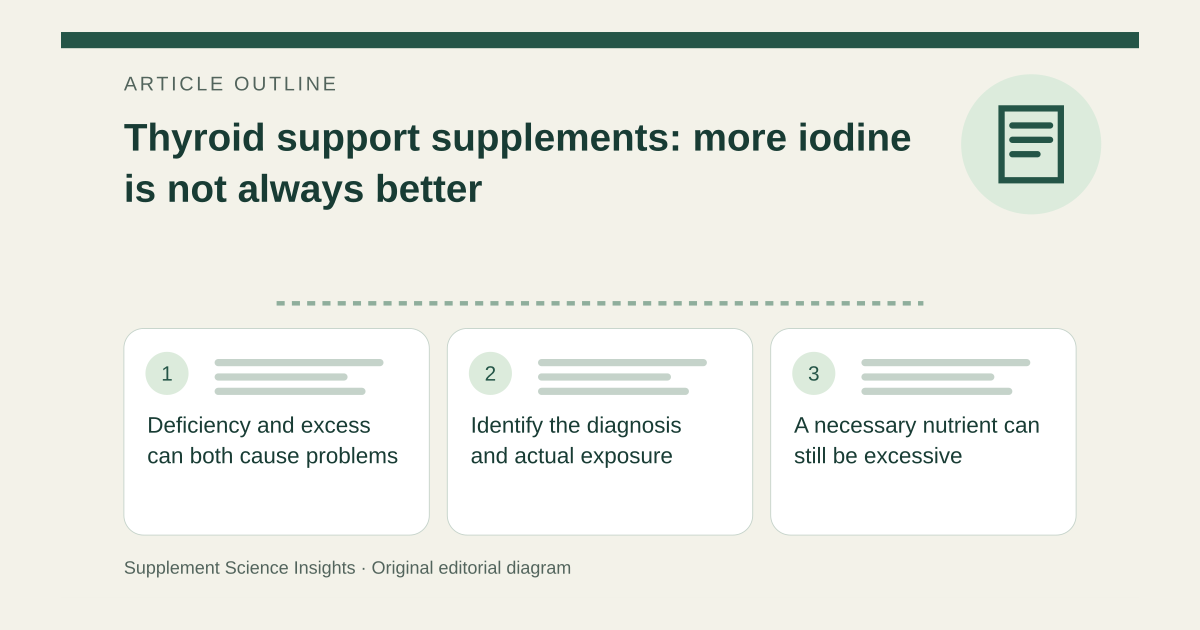
Deficiency and excess can both cause problems
NIH ODS describes goiter and hypothyroidism as possible consequences of excessive iodine intake in susceptible people, and high intake can also trigger hyperthyroidism. The direction of the effect cannot be predicted from the word support. [1]
People with autoimmune thyroid disease or other susceptibility may react at intakes tolerated by the general population. A general upper limit is therefore not a personal treatment target. [1]
Identify the diagnosis and actual exposure
A supplement decision should account for the thyroid diagnosis, diet, existing products and medicines. Do not assume that an underactive thyroid always means iodine deficiency or that a multi-ingredient thyroid blend corrects the cause. [1]
The ingredient amount and the complete formula matter. Adding a nutrient because it participates in normal hormone physiology is different from demonstrating that the addition treats the person’s disease. [1]
A necessary nutrient can still be excessive
Imagine someone already obtains adequate iodine and adds a high-iodine thyroid-support product. The nutrient’s normal role does not establish that the extra amount is beneficial; it creates an exposure that needs assessment.
| Detail | Interpretation |
|---|---|
| Iodine requirement | Normal physiology |
| Extra iodine | May disrupt function |
| Thyroid diagnosis | Guides the decision |
Sources for this article
- Iodine - Health Professional Fact Sheet
Source consulted: 2026-09-17. This is a reference resource, not a claim that we conducted the studies or tested a product.