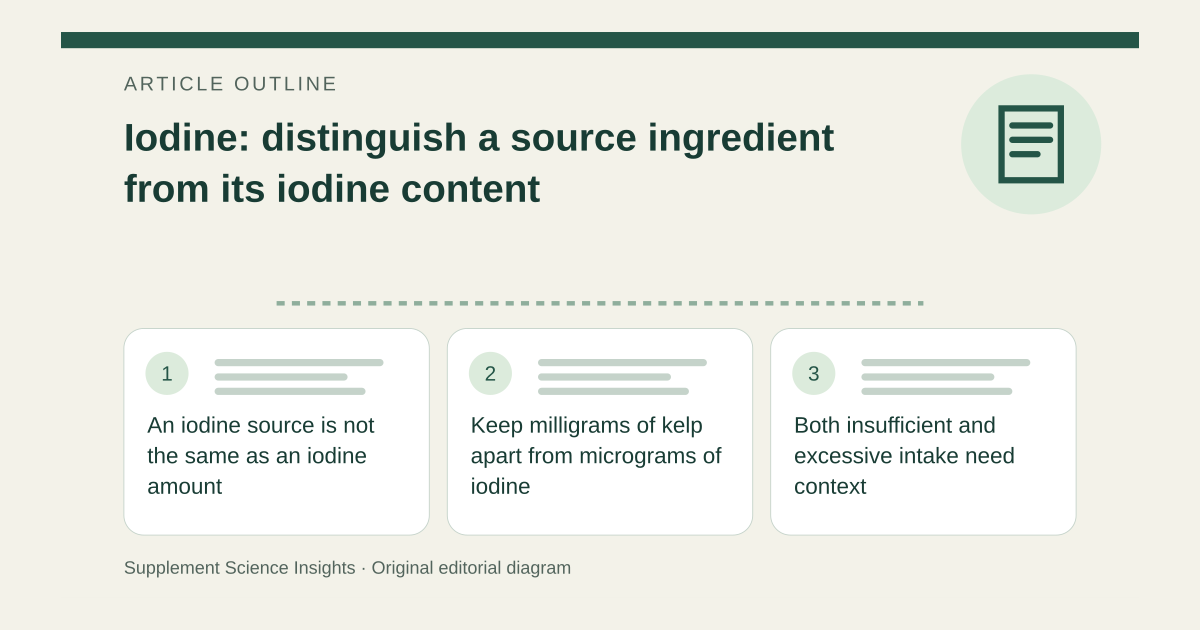
An iodine source is not the same as an iodine amount
Iodine supplements commonly use potassium iodide or sodium iodide; kelp-containing preparations are also available. NIH ODS notes that iodine amounts vary greatly between seaweed species. [1]
Record the declared iodine quantity and its source separately. A large kelp-weight claim does not tell you the iodine amount unless that nutrient is also declared. Do not substitute a typical value for another species or product when the actual label is incomplete. [1]
Keep milligrams of kelp apart from micrograms of iodine
An invented label lists 200 mg kelp material per serving and separately declares 100 micrograms iodine. The first entry describes the source material; the second describes its declared iodine contribution. They are not alternative units for the same quantity.
The example does not establish the rest of the kelp composition, actual batch content or an appropriate intake. If a different label listed only kelp mass, the iodine entry would remain unknown. Do not reconstruct it from this invented preparation.
| Label field | Declaration | Interpretation |
|---|---|---|
| Kelp material | 200 mg | Mass of source material |
| Iodine | 100 micrograms | Declared iodine within the serving |
| Appropriate intake | Not established | Requires individual context |
Both insufficient and excessive intake need context
Excess iodine can disrupt thyroid function, including causing hypothyroidism or hyperthyroidism in susceptible people. High iodine intake can also add to the effects of antithyroid medicines. A thyroid diagnosis is a reason for clinical review, not a prompt to increase intake automatically. [1]
Bring the exact product and medicine list to the treating clinician. Do not use a supplement label to explain a thyroid test result or change a prescribed treatment. This page supplies no iodine loading, titration or detoxification schedule. [1]
A missing food-label entry does not establish zero iodine
ODS explains that Nutrition Facts labels usually need not show iodine unless it has been added. An absent iodine line on a food label therefore cannot reliably identify foods with no naturally occurring iodine. [1]
If a clinician has prescribed a special diet, use their specific instructions rather than creating a food list from missing nutrient entries. Preserve the reason for the diet and its intended duration; an online supplement comparison is not a substitute. [1]
Separate what is declared from what is inferred
A useful record has fields for iodine quantity, unit, named source, total source-material mass, serving size and directions. Keep a dated photograph so another reader can confirm which entry belongs to which ingredient.
Mark an inferred quantity as unresolved. If the label uses unfamiliar units or leaves out iodine content, ask the manufacturer for the complete specification. Do not turn a name such as kelp into a numerical promise.
A label worksheet does not treat thyroid disease
The fictional example clarifies two different quantities. It cannot determine nutritional need, diagnose deficiency, assess a medicine interaction in an individual or verify a retail batch.
The government synthesis supports the cited background distinctions. This page does not independently appraise all iodine interventions or establish a pregnancy-specific intake plan. Scientific and editorial approval remains pending.
Sources for this article
- NIH ODS — Iodine: Health Professional Fact Sheet
Source consulted: 2026-09-17. This is a reference resource, not a claim that we conducted the studies or tested a product.