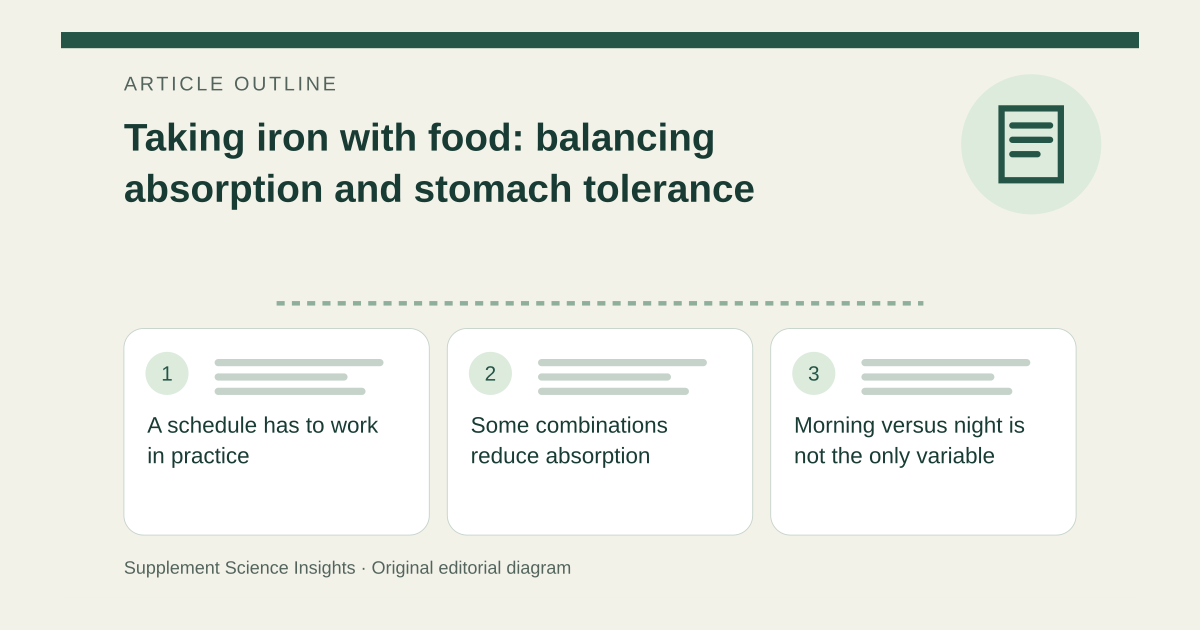
A schedule has to work in practice
MedlinePlus explains that oral iron is best absorbed on an empty stomach, while a small amount of food may help if it causes cramps, nausea or diarrhea. A regimen that is theoretically ideal for absorption but repeatedly skipped can fail in practice. [1]
This is a reason to discuss tolerability with the prescriber, not to assume that every food prevents iron treatment from working. The actual product and instructions remain the starting point. [1]
Some combinations reduce absorption
Milk, calcium products and antacids should not be taken at the same time as iron according to MedlinePlus. It also identifies high-fiber foods and caffeinated drinks as timing considerations. These are treatment-timing questions, not instructions to permanently remove nutritious foods from the diet. [1][2]
ODS explains that vitamin C can enhance nonheme iron absorption, while phytate and some polyphenols can reduce it. Effects across an entire diet are more complex than a single food-pairing experiment. A food being an inhibitor does not mean it cancels all iron in a meal. [1][2]
Morning versus night is not the only variable
A clock time alone does not describe whether iron was taken near food, calcium or an interacting medicine. Someone’s evening schedule may be easier or harder to fit than their morning schedule. There is no universal best hour supplied by these sources. [1][2]
Drug-specific instructions can require particular separation intervals. Have a pharmacist reconcile the whole schedule rather than applying a generic two-hour rule to every medicine. [1][2]
Map the conflicts before moving the dose
Imagine an iron dose is scheduled with breakfast, a calcium-containing product and another medicine. Moving it to bedtime changes the clock but only helps if the new time avoids the relevant conflicts and is tolerated. A simple schedule showing meals and exact medicines makes the question concrete.
| Record | Why it matters |
|---|---|
| Iron with breakfast | Record the food and other products |
| Calcium or antacid nearby | Check separation instructions |
| Proposed bedtime use | Review the new schedule, not just the hour |
Do not change treatment frequency by guesswork
If nausea or bowel symptoms interfere with use, ask about the preparation and schedule. Do not double a later dose to compensate for uncertain absorption or decide that iron is ineffective after one uncomfortable day. [1]
This article describes the absorption–tolerability tradeoff from authoritative guidance. It does not prescribe alternate-day dosing, a meal plan or an individual replacement amount. [1]
Sources for this article
- MedlinePlus — Taking iron supplements
Source consulted: 2026-09-17. This is a reference resource, not a claim that we conducted the studies or tested a product. - NIH ODS — Iron: Health Professional Fact Sheet
Source consulted: 2026-09-17. This is a reference resource, not a claim that we conducted the studies or tested a product.