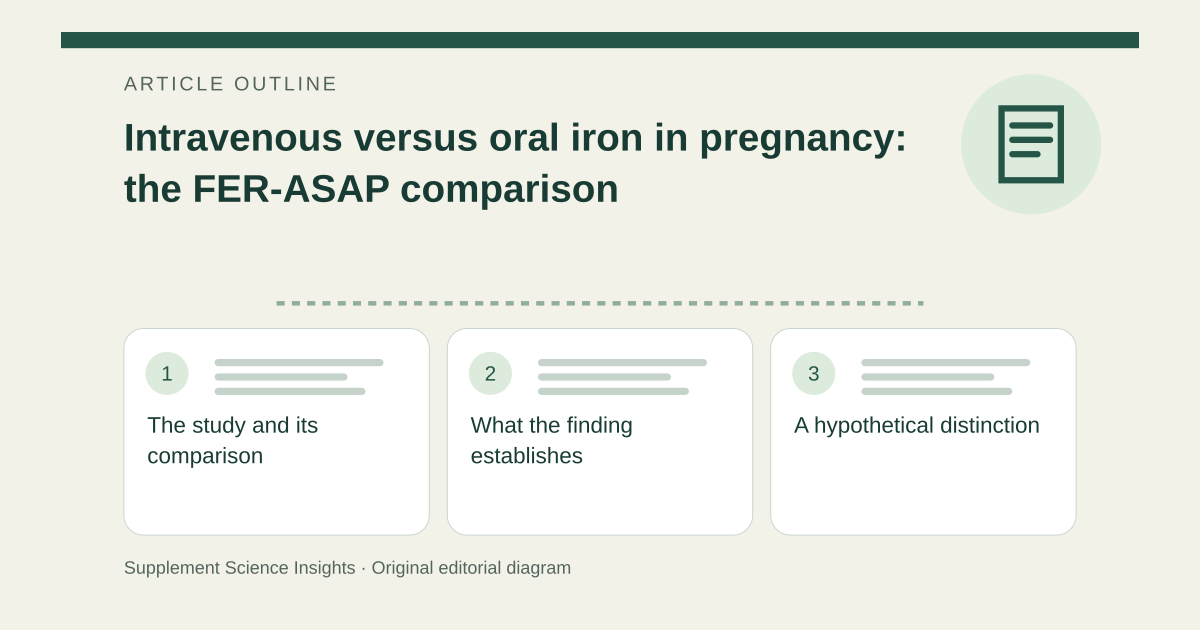
The study and its comparison
FER-ASAP randomized 252 women with iron-deficiency anemia at 16–33 weeks of pregnancy to intravenous ferric carboxymaltose or oral ferrous sulfate for twelve weeks. [1]
Anemia correction occurred in 84 percent versus 70 percent, with median times of 3.4 versus 4.3 weeks. Gastrointestinal adverse events were more common with oral treatment, and reported newborn characteristics were similar. [1]
What the finding establishes
The open-label design and specific pregnancy setting limit generalization. Similar newborn characteristics do not establish absence of every uncommon risk. Funding and conflicts were not established from the abstract. The findings do not make an infusion a self-selected alternative to routine prenatal care. [1]
A hypothetical distinction
Imagine one route reaches a laboratory threshold sooner. Route choice still requires the clinical setting and treatment risks.
| Detail | Interpretation |
|---|---|
| Measured outcome | Keep the endpoint specific |
| Study preparation | Not every retail product |
| Remaining uncertainty | Not resolved by a mechanism |
Sources for this article
- Ferric carboxymaltose vs. oral iron in the treatment of pregnant women with iron deficiency anemia: an international, open-label, randomized controlled trial (FER-ASAP).
Source consulted: 2026-09-19. This is a reference resource, not a claim that we conducted the studies or tested a product.