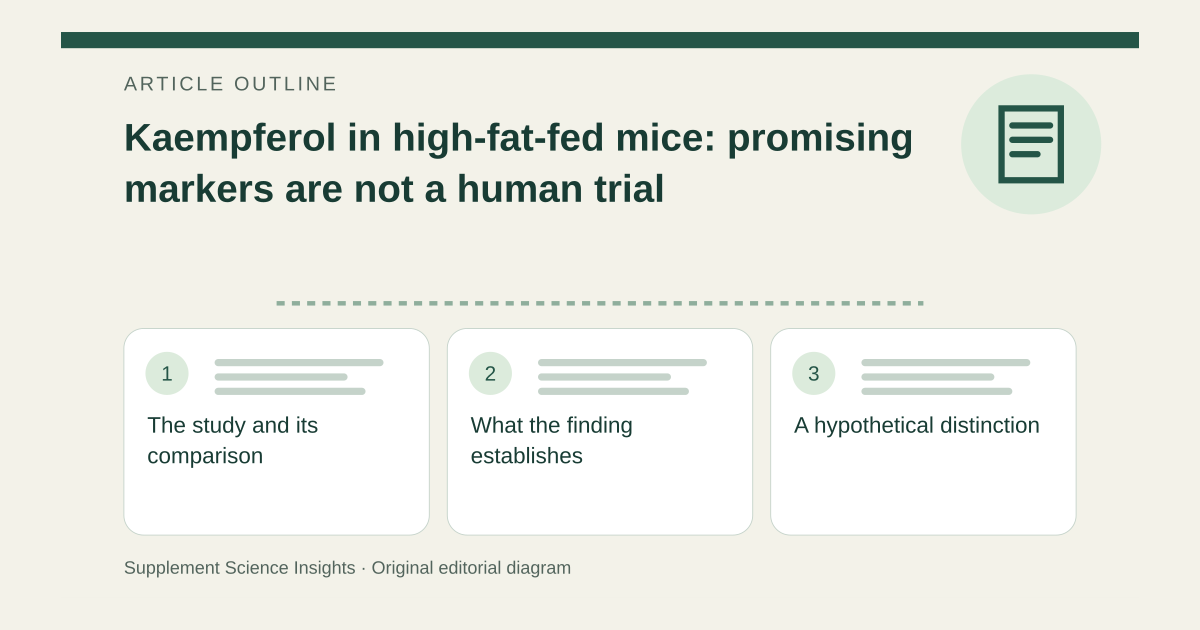
The study and its comparison
Thirty male mice were divided among normal diet, high-fat diet and high-fat diet containing kaempferol for sixteen weeks. The paper also included experiments in cultured fat-cell precursors. [1]
Compared with high-fat feeding alone, kaempferol reduced selected fat depots and improved several lipid, liver and inflammatory measurements. The study used a defined experimental diet rather than an ordinary food comparison. [1]
What the finding establishes
The results do not establish weight loss or diabetes prevention in people. Male mice and cultured cells cannot define a safe or effective human supplement dose. Authors declared no potential conflicts; complete funding was not established from the retrieved record. Multiple biochemical findings should not be presented as multiple proven clinical benefits. [1]
A hypothetical distinction
Imagine several markers improve in one animal experiment. They remain one preclinical evidence setting, not several patient trials.
| Detail | Interpretation |
|---|---|
| Measured outcome | Keep the endpoint specific |
| Study preparation | Not every retail product |
| Remaining uncertainty | Not resolved by a mechanism |
Sources for this article
- Kaempferol ameliorates metabolic syndrome by inhibiting inflammation and oxidative stress in high-fat diet-induced obese mice.
Source consulted: 2026-09-19. This is a reference resource, not a claim that we conducted the studies or tested a product.