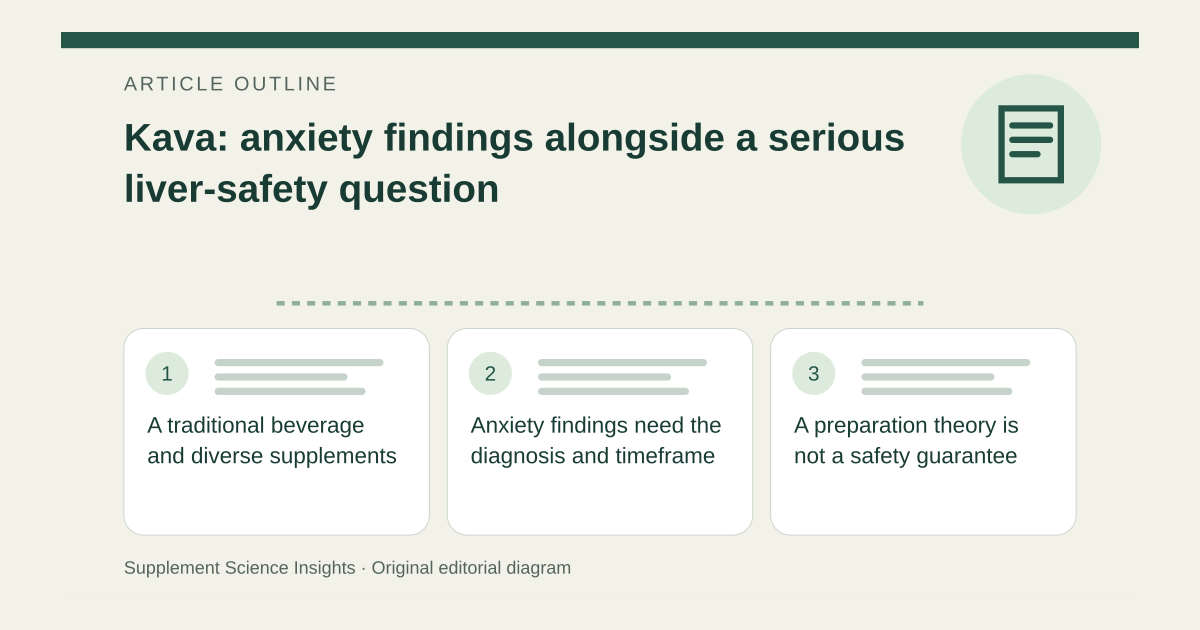
A traditional beverage and diverse supplements
Kava comes from Piper methysticum and is used in beverages and supplements. Preparation methods, plant parts and varieties differ. Those differences may matter, but they do not establish a simple division between a safe category and an unsafe one. [1]
NCCIH notes that liver-injury reports have involved both solvent-extracted products and water-prepared beverages. A claim that water preparation alone guarantees safety would therefore go beyond the available evidence. [1]
Anxiety findings need the diagnosis and timeframe
Some research suggests that kava supplements may help certain anxiety symptoms after several weeks. NCCIH separately notes that benefit has not been apparent for generalized anxiety disorder. Those statements should remain distinct rather than becoming a universal anxiety-treatment claim. [1]
Evidence for other conditions is insufficient. A brief feeling of relaxation, a questionnaire change and sustained recovery from an anxiety disorder are different outcomes. The population, preparation, comparison and timing determine what a particular result can support. [1]
A preparation theory is not a safety guarantee
Investigators have considered several possible contributors to liver injury, including plant variety, plant part, contamination, accompanying alcohol and individual susceptibility. These are possible explanations, not a validated consumer checklist that eliminates risk. [1]
A seller may emphasize a preferred variety or traditional method. That information can describe the product, but it cannot establish that serious harm is impossible. Benefit and harm should be evaluated together rather than placing a reassuring origin story in front of an unresolved safety question. Reported product details are useful for investigation without resolving every causal question. [1]
Liver injury and additive sedation are material risks
Rare liver injuries associated with kava have sometimes been severe or fatal. Digestive symptoms, headache and dizziness can also occur. Prolonged high exposure can cause a characteristic skin disorder with dry, scaly skin and other changes. [1]
Kava should not be combined with substances that have sedative effects, including alcohol or benzodiazepines. Review medicines with the treating team. Pregnancy and breastfeeding present additional concerns about harmful constituents, so ordinary supplement marketing is not an adequate safety assessment. [1]
Anxiety scores and diagnoses are not interchangeable
Imagine a fictional four-week trial enrolls people with transient stress symptoms and reports an improved anxiety questionnaire score. It does not establish effectiveness in people with a diagnosed generalized anxiety disorder, nor does it establish long-term safety.
A fair description retains the study's enrollment criteria. It does not broaden the population simply because a product package uses the same word anxiety.
| Hypothetical feature | Limit |
|---|---|
| Transient-stress participants | Different from a defined disorder |
| Four-week follow-up | No long-term conclusion |
| Water preparation | Not a guarantee against liver injury |
Do not separate the hoped-for effect from the risk
The relevant question is whether a defined preparation offers meaningful benefit with an acceptable safety profile in the intended setting. This reference does not recommend kava, a dose or a substitute for anxiety care. The liver and sedation concerns remain central.
Sources for this article
- NCCIH — Kava: Usefulness and Safety
Source consulted: 2026-09-17. This is a reference resource, not a claim that we conducted the studies or tested a product.