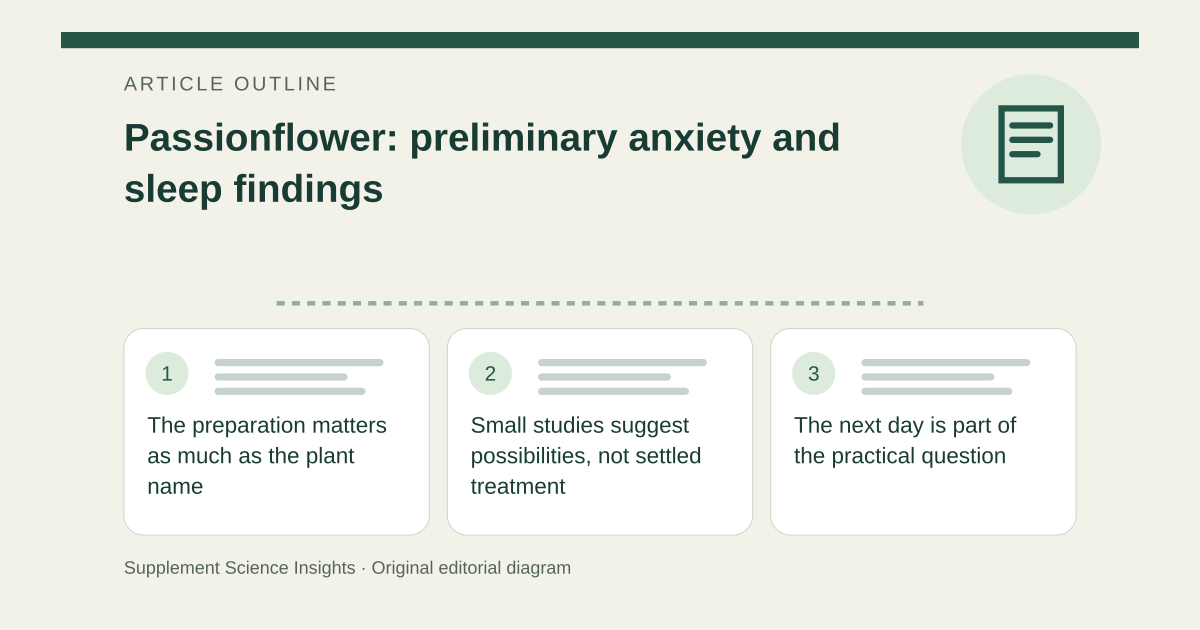
The preparation matters as much as the plant name
Passionflower supplements commonly refer to Passiflora incarnata. Teas, extracts and multi-herb products should be distinguished when matching a product to research. A food flavoring and a concentrated preparation do not necessarily produce comparable exposure. [1]
A useful evidence summary names the route, preparation and duration. If a blend also contains other calming herbs, a finding for the blend cannot establish passionflower's independent contribution or its safety when combined with a reader's medicines. [1]
Small studies suggest possibilities, not settled treatment
NCCIH describes limited research suggesting possible reductions in anxiety symptoms, including anxiety before procedures. The findings are not definitive. Importantly, a procedural setting involves clinical supervision and cannot be turned into advice to take passionflower before an operation. [1]
Some sleep research suggests a possible increase in total sleep time, while results for falling asleep and staying asleep are mixed. These are distinct outcomes. An improvement in one should not become a claim that all aspects of insomnia improve. [1]
The next day is part of the practical question
A sleep intervention should ideally be assessed alongside daytime alertness and function. More time recorded asleep does not by itself establish that a person feels better or can perform usual activities more safely.
Also check how sleep was measured: a diary, a questionnaire and an objective recording are not identical. A personal impression can be useful, but it should retain its method. A trial's comparison group helps distinguish the product from changes in bedtime routine, expectations or other treatments.
Sedation and anesthesia can interact
Passionflower can cause drowsiness, dizziness or confusion. Combining it with anesthesia or medicines used around surgery may excessively slow nervous-system activity. Inform the clinical team well before a planned procedure and do not use it as unsupervised preoperative anxiety treatment. [1]
Pregnancy use is not recommended because of possible uterine contractions and other concerns. Breastfeeding information is limited, and topical safety is uncertain. Short-term tea or extract findings do not establish that every preparation is safe indefinitely. [1]
Report each sleep outcome separately
Imagine a fictional study reports 20 more minutes of total sleep but no clear difference in time to fall asleep. Its result is about sleep duration, not demonstrated faster sleep onset.
If next-day function was not measured, that remains unknown. The invented numbers illustrate accurate reporting and are not an expected effect from passionflower or a suggested dose.
| Hypothetical finding | Scope |
|---|---|
| 20 minutes more sleep | Total duration |
| Onset unchanged | No faster-onset claim |
| Daytime function unmeasured | Practical benefit unresolved |
A precise sleep question is more useful
Identify whether the concern is sleep onset, awakenings, total sleep or daytime function before reading a claim. This reference does not recommend passionflower for insomnia or procedural anxiety. Its uncertain benefits and sedating effects should be considered together.
Sources for this article
- NCCIH — Passionflower: Usefulness and Safety
Source consulted: 2026-09-17. This is a reference resource, not a claim that we conducted the studies or tested a product.