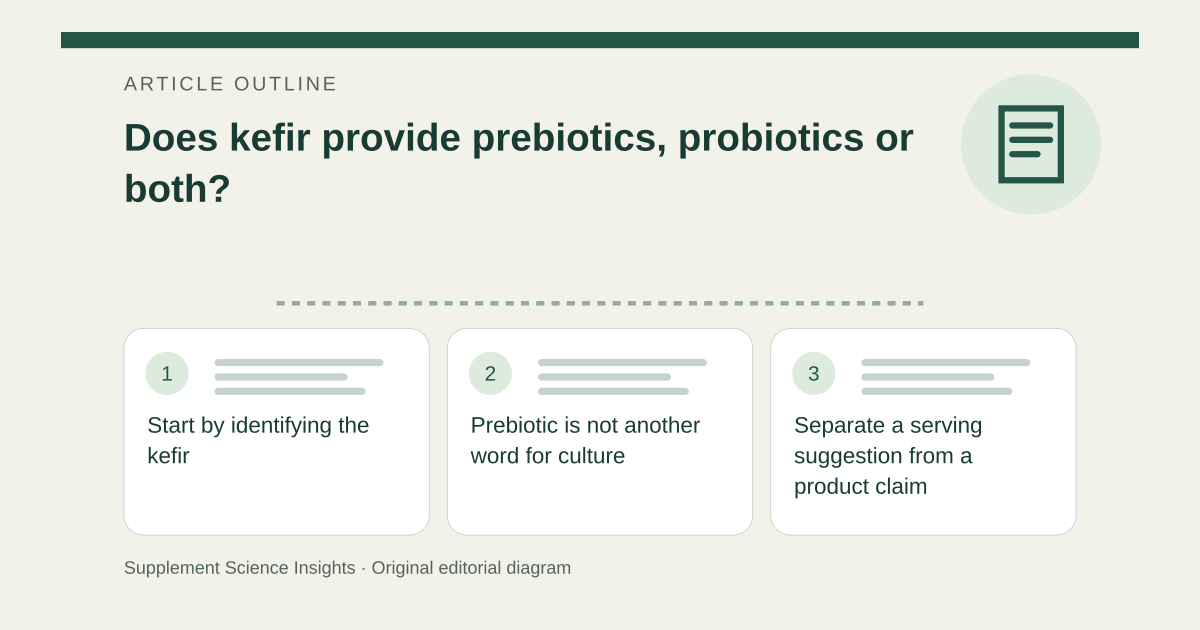
Start by identifying the kefir
Milk kefir and water kefir have different starting ingredients. Their bacteria and yeasts contribute to fermentation, but the resulting food does not automatically have a defined clinical probiotic dose. The specific product and how it was handled matter. [1][2]
Prebiotic is not another word for culture
Probiotics are live organisms; prebiotics are substrates used by microorganisms in ways that confer a health benefit. A plain kefir label cannot establish both merely because it is fermented. Check whether a separate ingredient, such as an identified added fiber, is present and whether the claimed amount and benefit are supported. [2][3]
Separate a serving suggestion from a product claim
Imagine adding oats or fruit to kefir. You have changed the meal, but that does not create a measured synbiotic treatment or prove that the combination treats symptoms. Use ingredient and nutrient information for food choices, and require specific evidence for stronger microbial claims. [4][2]
| Situation | Interpretation |
|---|---|
| Live cultures | Organisms, not automatically prebiotics |
| Added fiber | Check identity and amount |
| Kefir with fruit | A meal combination, not a verified treatment |
Sources for this article
- Safety of Fermented Foods: Kefir — BCCDC December 2024
Source consulted: 2026-09-20. This is a reference resource, not a claim that we conducted the studies or tested a product. - Probiotics - Health Professional Fact Sheet
Source consulted: 2026-09-20. This is a reference resource, not a claim that we conducted the studies or tested a product. - ISAPP: Prebiotics
Source consulted: 2026-09-20. This is a reference resource, not a claim that we conducted the studies or tested a product. - How to Understand and Use the Nutrition Facts Label | FDA
Source consulted: 2026-09-20. This is a reference resource, not a claim that we conducted the studies or tested a product.