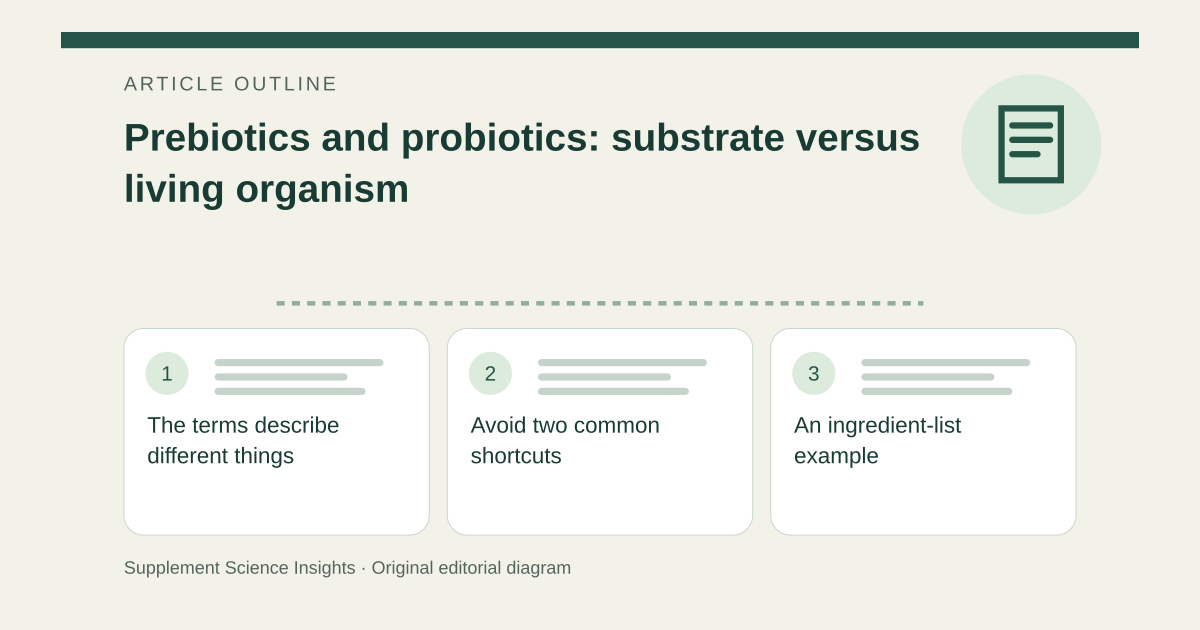
The terms describe different things
Probiotics are living microorganisms administered for a demonstrated health benefit. Prebiotics are substrates selectively used by host microorganisms in a way that confers a health benefit. The distinction is what is supplied: an organism versus material that microorganisms use. Neither term is a synonym for all supplements marketed for the gut. [1][2]
Avoid two common shortcuts
Not every dietary fiber has established prebiotic effects, and not every fermented food is a proven probiotic. For a prebiotic, the substrate and evidence matter; for a probiotic, identify the strain and suitable amount. A marketing phrase combining the two categories does not by itself demonstrate that the exact mixture has been tested. [1][2]
An ingredient-list example
Imagine a product supplies a specified fermentable substrate and a named live bacterial strain. Evaluate the substrate claim and strain claim separately before concluding the combination benefits a particular symptom. The presence of both categories is not enough to infer a therapeutic dose or promise that everyone will respond. [1][2]
| Hypothetical ingredient description | Category question |
|---|---|
| Named live bacterial strain | Does strain-specific probiotic evidence support the use? |
| A fiber ingredient | Is selective use with a health benefit established? |
| Both together | What evidence concerns the actual combination? |
Sources for this article
- ISAPP: Prebiotics
Source consulted: 2026-09-20. This is a reference resource, not a claim that we conducted the studies or tested a product. - Probiotics - Health Professional Fact Sheet
Source consulted: 2026-09-20. This is a reference resource, not a claim that we conducted the studies or tested a product.