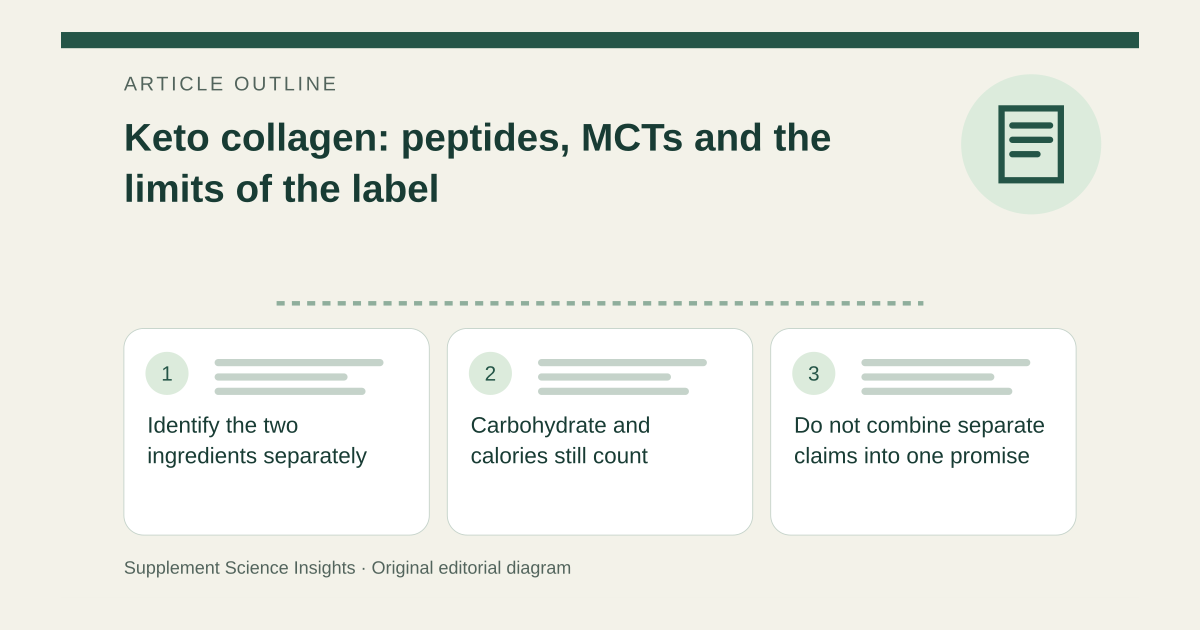
Identify the two ingredients separately
Collagen peptides are a protein preparation. MCTs are medium-chain triglycerides, a type of dietary fat; MCT powders may also contain carriers and other ingredients. A product can combine them, but their presence does not establish a special clinically proven keto-collagen effect. [1][2]
Carbohydrate and calories still count
Read total carbohydrate, protein, fat and calories for the actual serving, including mixers. Harvard describes keto as a whole-diet pattern with varying carbohydrate limits. A low-carbohydrate product can fit some plans without guaranteeing ketosis, and low carbohydrate does not mean calorie-free. [3][4]
Do not combine separate claims into one promise
Evidence about collagen and joint or skin outcomes does not demonstrate the same benefit from every MCT blend. Cleveland Clinic describes limited support for many MCT health claims. Adding fat to a collagen product is not proof that it produces greater weight loss or directs collagen to a particular tissue. [5][2]
Digestive tolerance and other risks matter
MCT products can cause abdominal discomfort, nausea, vomiting or diarrhea, especially in larger amounts. Collagen sources and additives may matter for allergies or medicine review. More scoops are not a reliable route to faster results. [2][6][7]
Compare the prepared drink with the goal
Imagine adding keto collagen and creamer to coffee while otherwise eating the same meals. Include all the added calories and carbohydrate when evaluating the change. The product may be convenient, but its label does not establish a weight-loss result or replace a medically prescribed diet plan. [3][4]
| Component | Question |
|---|---|
| Collagen | What amount and form? |
| MCT powder | What carriers and serving size? |
| Prepared drink | Total calories and carbohydrate? |
| Benefit claim | Evidence for the actual formula? |
Sources for this article
- Collagen Supplementation for Joint Health: The Link between Composition and Scientific Knowledge - PMC
Source consulted: 2026-09-21. This is a reference resource, not a claim that we conducted the studies or tested a product. - Potential Health Benefits of MCT Oil
Source consulted: 2026-09-21. This is a reference resource, not a claim that we conducted the studies or tested a product. - How to Understand and Use the Nutrition Facts Label | FDA
Source consulted: 2026-09-21. This is a reference resource, not a claim that we conducted the studies or tested a product. - Diet Review: Ketogenic Diet for Weight Loss • The Nutrition Source
Source consulted: 2026-09-21. This is a reference resource, not a claim that we conducted the studies or tested a product. - Collagen | Memorial Sloan Kettering Cancer Center
Source consulted: 2026-09-21. This is a reference resource, not a claim that we conducted the studies or tested a product. - Food Allergies: What You Need to Know | FDA
Source consulted: 2026-09-21. This is a reference resource, not a claim that we conducted the studies or tested a product. - Dietary Supplements: What You Need to Know
Source consulted: 2026-09-21. This is a reference resource, not a claim that we conducted the studies or tested a product.