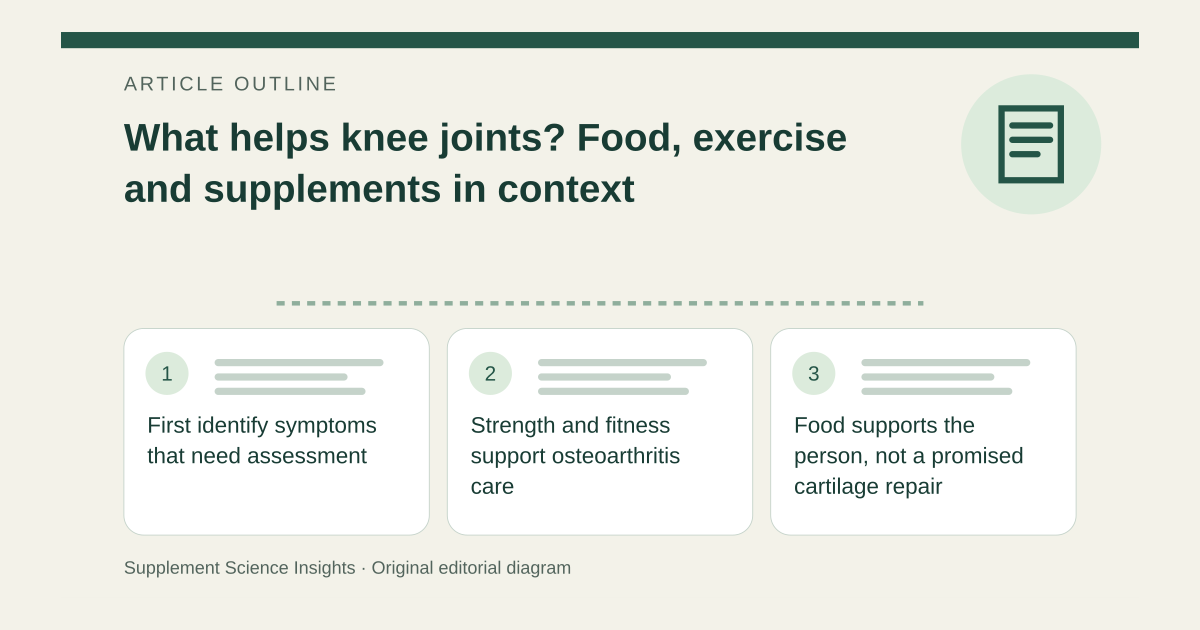
First identify symptoms that need assessment
NHS advises urgent help for severe pain, inability to bear weight or move the knee, major swelling or deformity, locking or giving way, or fever with a hot red knee. Those features should not wait for a food or supplement experiment. [1]
Strength and fitness support osteoarthritis care
For osteoarthritis, NHS recommends exercise that builds muscle strength and general fitness, tailored to the person. A physiotherapist can help select and progress activities. Doing too much too quickly or using an unsuitable exercise can worsen problems, so the plan should fit the diagnosis and ability. [2]
Food supports the person, not a promised cartilage repair
A varied pattern with vegetables, fruit, higher-fiber starches, protein foods and dairy or fortified alternatives supplies general nutritional needs. Protein supports tissue maintenance; calcium and vitamin D are relevant to bone health. No single food in this guidance is a demonstrated way to regrow damaged knee cartilage. [3][4]
Weight management may help when relevant
For people with overweight and knee osteoarthritis, reducing excess load through an appropriate weight-management plan can improve the overall approach. The aim is a sustainable diet and activity plan, not aggressive restriction that compromises nutrition or strength. [2][3]
Keep supplement claims proportional
The NHS osteoarthritis guidance does not recommend routine glucosamine or chondroitin because strong evidence is lacking. Correcting a confirmed nutrient deficiency is different from treating all knee pain with a vitamin. Pain relief, rehabilitation and sometimes other treatments may be more relevant than adding another product. [2][5]
Choose a plan around a useful activity
Imagine the goal is climbing stairs more comfortably with diagnosed osteoarthritis. Discuss strengthening, activity progression, nutrition and suitable pain relief, then track that activity. A supplement’s cartilage label does not provide the same individualized plan or guarantee restoration of the joint. [2][3]
| Area | Practical goal |
|---|---|
| Exercise | Tailored strength and general fitness |
| Food | Adequate varied nutrition |
| Weight when relevant | Reduce excess joint load sustainably |
| Supplements | Treat a demonstrated need, avoid repair promises |
Sources for this article
- Knee pain - NHS
Source consulted: 2026-09-21. This is a reference resource, not a claim that we conducted the studies or tested a product. - Osteoarthritis - Treatment and support - NHS
Source consulted: 2026-09-21. This is a reference resource, not a claim that we conducted the studies or tested a product. - Eating a balanced diet - NHS
Source consulted: 2026-09-21. This is a reference resource, not a claim that we conducted the studies or tested a product. - Vitamin D - Health Professional Fact Sheet
Source consulted: 2026-09-21. This is a reference resource, not a claim that we conducted the studies or tested a product. - Dietary Supplements: What You Need to Know
Source consulted: 2026-09-21. This is a reference resource, not a claim that we conducted the studies or tested a product.