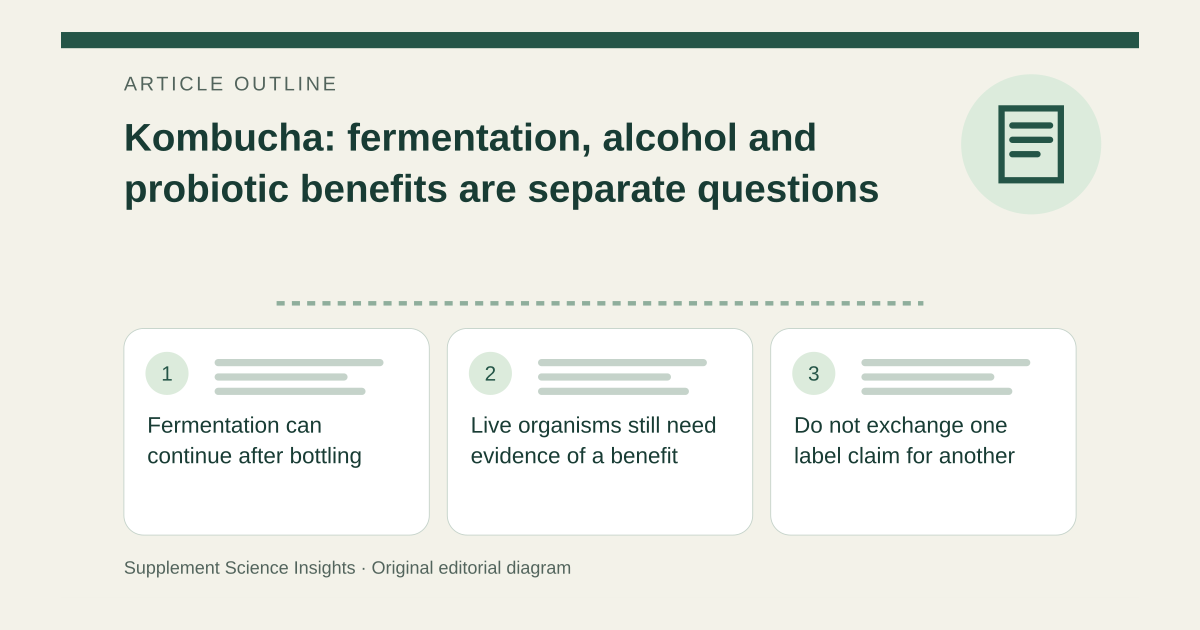
Fermentation can continue after bottling
TTB explains that its alcohol rules apply when kombucha reaches 0.5% alcohol by volume or more, including when continued fermentation raises the level after bottling. The level at one production stage is not always the final answer. [1][2]
This is a U.S. regulatory threshold, not a guarantee of zero alcohol below it or a personal safety limit. [1][2]
Live organisms still need evidence of a benefit
NIH ODS lists kombucha among fermented foods that can contain live cultures without established probiotic microorganisms. A health claim needs the relevant organisms, amount and demonstrated outcome. [1][2]
Hard kombucha’s alcohol content does not supply that missing evidence. Treat alcohol exposure, live-culture content and health effects as separate attributes of the exact beverage. [1][2]
Do not exchange one label claim for another
Imagine a bottle says live cultures. That phrase does not establish its alcohol concentration or show that a serving reproduces a clinical probiotic benefit.
| Detail | Interpretation |
|---|---|
| Fermentation | Production process |
| Alcohol content | Separate exposure |
| Probiotic benefit | Requires specific evidence |
Sources for this article
- General TTB Requirements | TTB: Alcohol and Tobacco Tax and Trade Bureau
Source consulted: 2026-09-18. This is a reference resource, not a claim that we conducted the studies or tested a product. - Probiotics - Health Professional Fact Sheet
Source consulted: 2026-09-18. This is a reference resource, not a claim that we conducted the studies or tested a product.