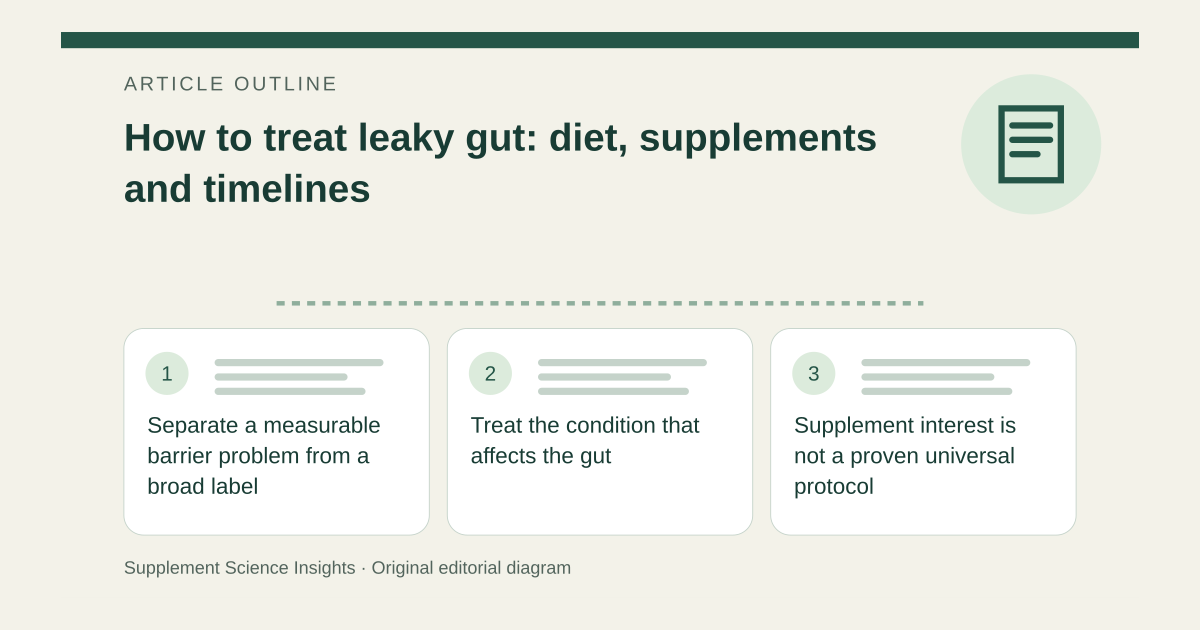
Separate a measurable barrier problem from a broad label
Cleveland Clinic distinguishes intestinal permeability associated with conditions such as celiac disease or IBD from the catch-all syndrome used in wellness marketing. Bloating, fatigue or food sensitivity alone does not establish that diagnosis. [1]
Treat the condition that affects the gut
Appropriate treatment for the underlying disease can improve the intestinal lining. Nutrition should support adequacy and individual tolerance. A restrictive elimination diet or a general gut-repair supplement should not delay testing and condition-specific care. [1]
Supplement interest is not a proven universal protocol
Probiotics, prebiotics and selected nutrients are being studied, but a possible barrier effect does not establish a standard combination for every person. Product, population and outcome matter. Correcting a deficiency is a different claim from curing an unspecified syndrome. [1][2]
Set follow-up around the diagnosis, not a sales deadline
Imagine a plan promises complete repair in two weeks. No universal timeline follows from the inspected guidance. Track symptoms and any clinically relevant tests with the care team; feeling less bloated does not by itself prove normalized permeability. [1]
| Question | Practical interpretation |
|---|---|
| Vague symptoms | Not diagnostic of permeability |
| Celiac disease or IBD | Treat the underlying condition |
| Supplement combination | Needs specific evidence |
| Two-week promise | Not a universal healing timeline |
Sources for this article
- Leaky Gut Syndrome: Symptoms, Diet, Tests & Treatment
Source consulted: 2026-09-21. This is a reference resource, not a claim that we conducted the studies or tested a product. - Dietary Supplements: What You Need to Know - Consumer
Source consulted: 2026-09-21. This is a reference resource, not a claim that we conducted the studies or tested a product.