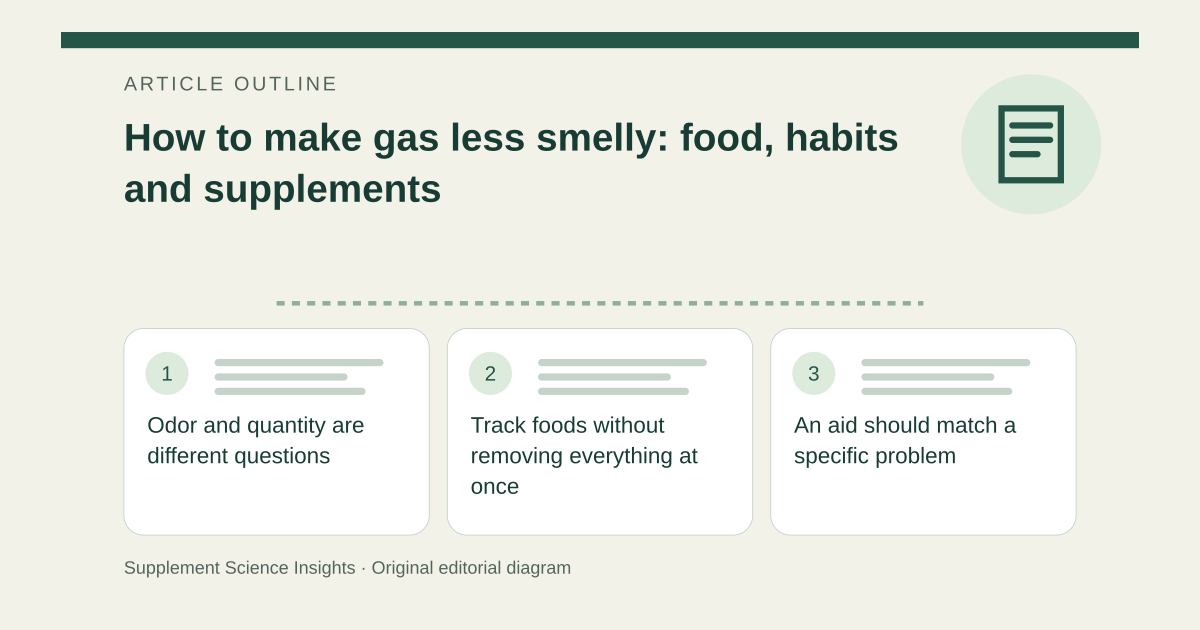
Odor and quantity are different questions
NIDDK notes that sulfur in flatus may cause unpleasant odor. Gas also comes from swallowed air and bacterial breakdown of undigested carbohydrates. Smell alone cannot identify a particular organism or diagnose dysbiosis. [1]
Track foods without removing everything at once
Use a short food-and-symptom record to identify consistent patterns. NIDDK describes individualized changes to foods or drinks that provoke gas. Broadly excluding vegetables or multiple food groups can reduce diet quality without proving which change helped. [2]
An aid should match a specific problem
Treating a known food-digestion issue is different from taking an all-purpose deodorizing or cleanse blend. Eating more slowly and reducing swallowed air may help overall gas symptoms, but should not be advertised as a guaranteed odor cure. [2][3]
Know when the pattern needs assessment
Imagine odor worsens after a new protein blend, but diarrhea and weight loss also develop. Review the label and seek medical assessment rather than merely masking the smell. Sudden changes, persistent pain or other bowel symptoms deserve attention. [1]
| Question | Practical interpretation |
|---|---|
| Sulfur smell | Not a specific infection diagnosis |
| Food diary | Look for repeated patterns |
| Less swallowed air | May affect volume more than odor |
| Pain, diarrhea or weight loss | Medical assessment |
Sources for this article
- Symptoms & Causes of Gas in the Digestive Tract - NIDDK
Source consulted: 2026-09-21. This is a reference resource, not a claim that we conducted the studies or tested a product. - Treatment for Gas in the Digestive Tract - NIDDK
Source consulted: 2026-09-21. This is a reference resource, not a claim that we conducted the studies or tested a product. - Dietary Supplements: What You Need to Know - Consumer
Source consulted: 2026-09-21. This is a reference resource, not a claim that we conducted the studies or tested a product.