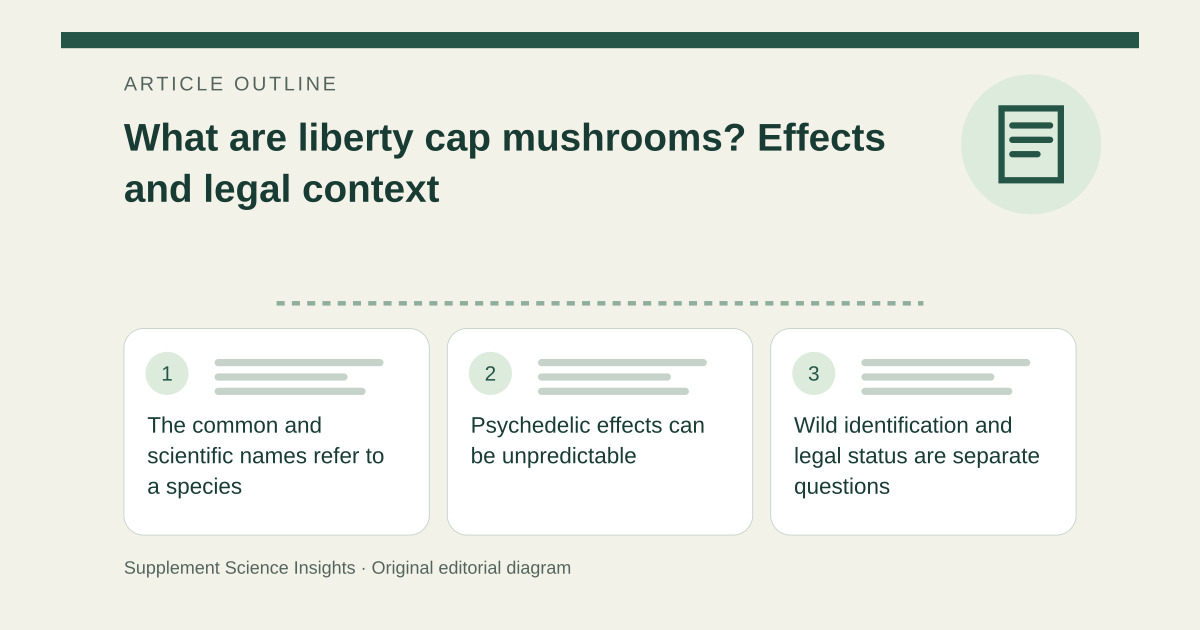
The common and scientific names refer to a species
NCBI lists liberty cap as a common name of P. semilanceata. Taxonomy identifies the organism discussed in literature; it does not confirm that a mushroom found outdoors belongs to that species. [1]
Psychedelic effects can be unpredictable
Psilocybin-containing mushrooms can alter mood, perception and the sense of time. Unpleasant effects include nausea, panic and confusion, with physical risks as well. A small-looking mushroom is not a measure of a safe or known exposure. [2]
Wild identification and legal status are separate questions
Poisonous look-alikes can cause serious illness. In the United States, psilocybin remains federally controlled; state or local frameworks vary. Check the law for the specific place and activity rather than assuming a common natural species is unrestricted. [3][2]
Do not turn a species article into an edibility test
Imagine a photograph resembles an online liberty-cap image. That resemblance cannot establish species, chemical content or safety. Do not consume an unknown specimen; get prompt poison-control advice if one has already been swallowed. [3]
| Question | Limit |
|---|---|
| Is this the common name? | Taxonomy can answer |
| Is my specimen this species? | A short description cannot verify |
| Will it be safe? | Name does not establish safety |
| Is it legal here? | Jurisdiction and activity matter |
Sources for this article
- Taxonomy browser Taxonomy Browser (Psilocybe semilanceata)
Source consulted: 2026-09-21. This is a reference resource, not a claim that we conducted the studies or tested a product. - Psilocybin for Mental Health and Addiction: What You Need To Know | NCCIH
Source consulted: 2026-09-21. This is a reference resource, not a claim that we conducted the studies or tested a product. - Magic Mushrooms (Psilocybin) Safety | California Poison Control System
Source consulted: 2026-09-21. This is a reference resource, not a claim that we conducted the studies or tested a product.