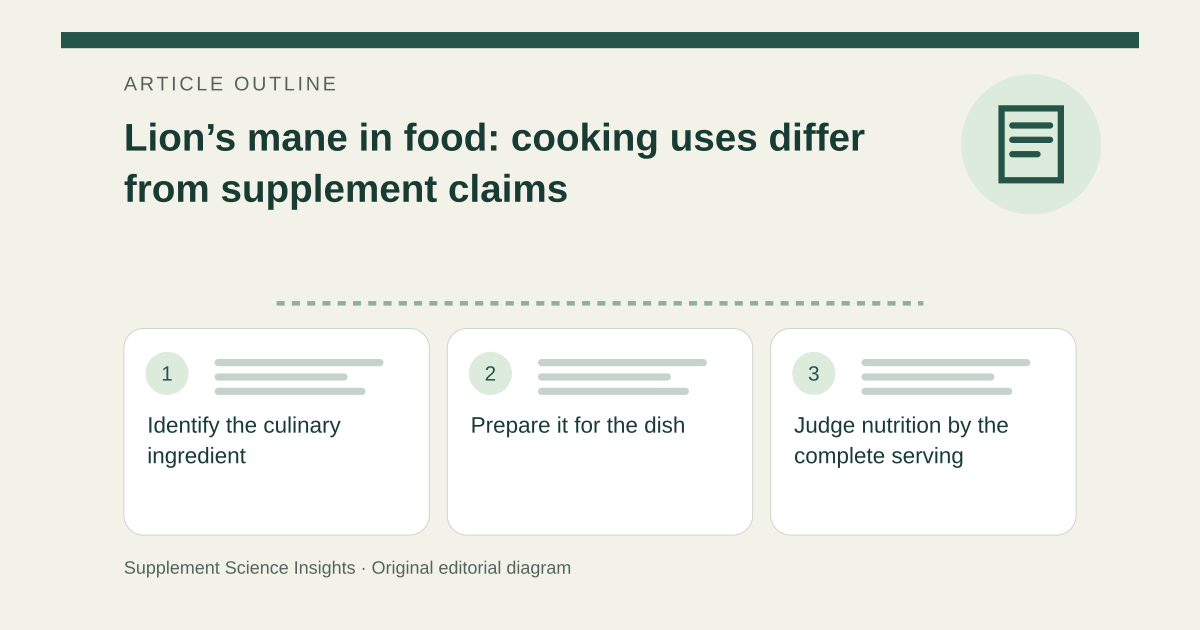
Identify the culinary ingredient
The Mushroom Council identifies culinary lion’s mane as Hericium erinaceus and describes a mildly sweet flavor and texture reminiscent of shellfish. This can make it useful in a saute, a cooked filling or a mushroom-based alternative to a seafood-style dish. Flavor similarity does not establish the same protein or micronutrient profile as seafood. [1][2]
Prepare it for the dish
Choose sound food-grade mushrooms. Brush away debris or briefly rinse and pat dry rather than soaking the fresh mushroom. The Council suggests dry-sauteing until moisture releases and the edges brown, then adding butter or other seasonings. Use a cooked preparation and adjust piece size to the recipe rather than claiming a universal treatment portion. [1]
Judge nutrition by the complete serving
A plain cooked mushroom portion, a breaded patty and a creamy sauce are different meals. Added oil, salt and other ingredients change the nutrition. Compare the actual serving rather than assigning an extract’s label or a seafood nutrient profile to the mushroom by analogy. [2]
Supplements ask a different evidence question
MSK describes limited human findings for cognition or mood alongside inconsistent results; laboratory findings do not establish broad clinical benefits. Abdominal discomfort, nausea and rash have been reported. There is no reason to assume a capsule is necessary simply because the mushroom is edible. [3]
Choose by purpose
Imagine the goal is a savory dinner ingredient. Cooking food-grade lion’s mane answers that goal without needing a memory-treatment claim. If the goal is persistent cognitive symptoms, seek assessment and review any proposed supplement rather than treating a culinary ingredient as a proven neurological therapy. [4][3]
| Goal | Relevant comparison |
|---|---|
| Cook a meal | Flavor, handling and whole-recipe nutrition |
| Evaluate a supplement | Exact preparation, evidence and safety |
| Address memory symptoms | Assessment rather than a food analogy |
Sources for this article
- Lion's Mane Mushrooms | Mushroom Varieties 101
Source consulted: 2026-09-21. This is a reference resource, not a claim that we conducted the studies or tested a product. - How to Understand and Use the Nutrition Facts Label | FDA
Source consulted: 2026-09-21. This is a reference resource, not a claim that we conducted the studies or tested a product. - Lion's Mane Mushroom | Memorial Sloan Kettering Cancer Center
Source consulted: 2026-09-21. This is a reference resource, not a claim that we conducted the studies or tested a product. - Dietary Supplements: What You Need to Know
Source consulted: 2026-09-21. This is a reference resource, not a claim that we conducted the studies or tested a product.