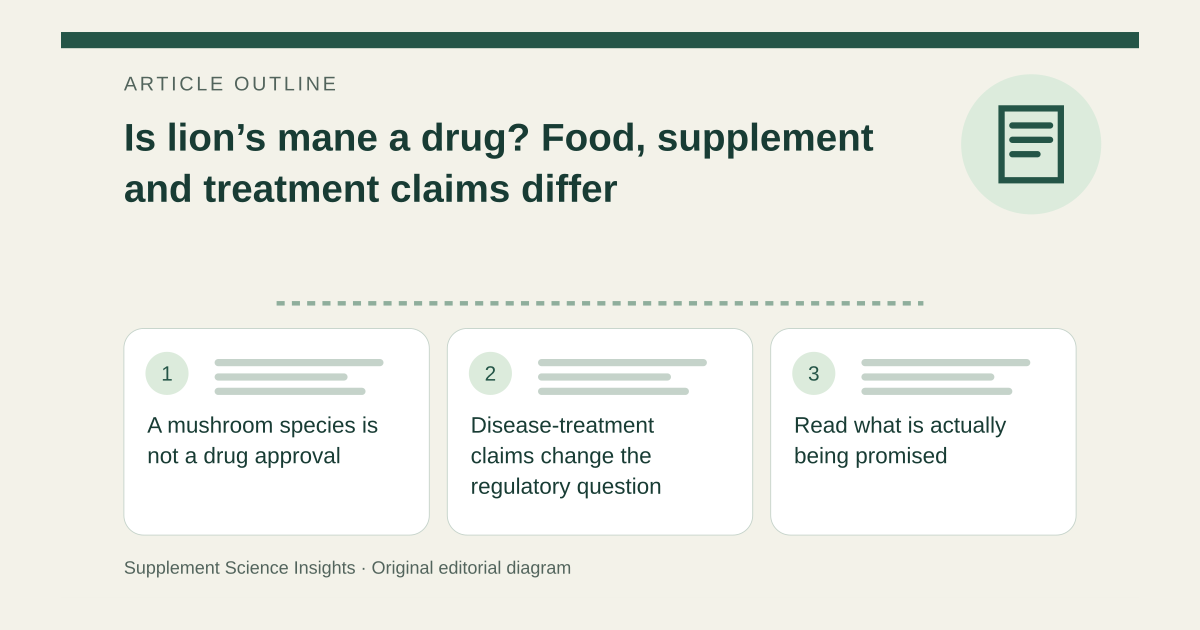
A mushroom species is not a drug approval
OPSS lists lion’s mane among functional mushrooms used in supplements and distinguishes these non-psychoactive species. A retail blend may contain additional ingredients, so the species name alone does not characterize the whole product. [1]
Disease-treatment claims change the regulatory question
FDA explains that products intended to diagnose, treat, cure or prevent disease generally fall within the drug category even if labeled supplements. In 2019, FTC and FDA challenged disease claims for products including lion’s mane. This is an enforcement example, not evidence that the mushroom itself was approved as a medicine. [2][3]
Read what is actually being promised
Imagine a food powder is marketed as an Alzheimer’s treatment. That claim needs a different evidentiary and regulatory basis from a culinary mushroom description. Do not treat ordinary supplement availability as proof of an approved neurological treatment. [3][1]
| Evidence | What it can establish |
|---|---|
| Food mushroom | A culinary use |
| Dietary supplement | A separate marketed preparation |
| Disease-treatment claim | Raises drug-regulation requirements |
Sources for this article
- Mushroom Dietary Supplements
Source consulted: 2026-09-20. This is a reference resource, not a claim that we conducted the studies or tested a product. - FDA 101: Dietary Supplements | FDA
Source consulted: 2026-09-20. This is a reference resource, not a claim that we conducted the studies or tested a product. - FTC and FDA Send Warning Letters to Companies Selling Dietary Supplements Claiming to Treat Alzheimer’s Disease and Remediate or Cure Other Serious Illnesses Such as Parkinson’s, Heart Disease, and Cancer | Federal Trade Commission
Source consulted: 2026-09-20. This is a reference resource, not a claim that we conducted the studies or tested a product.