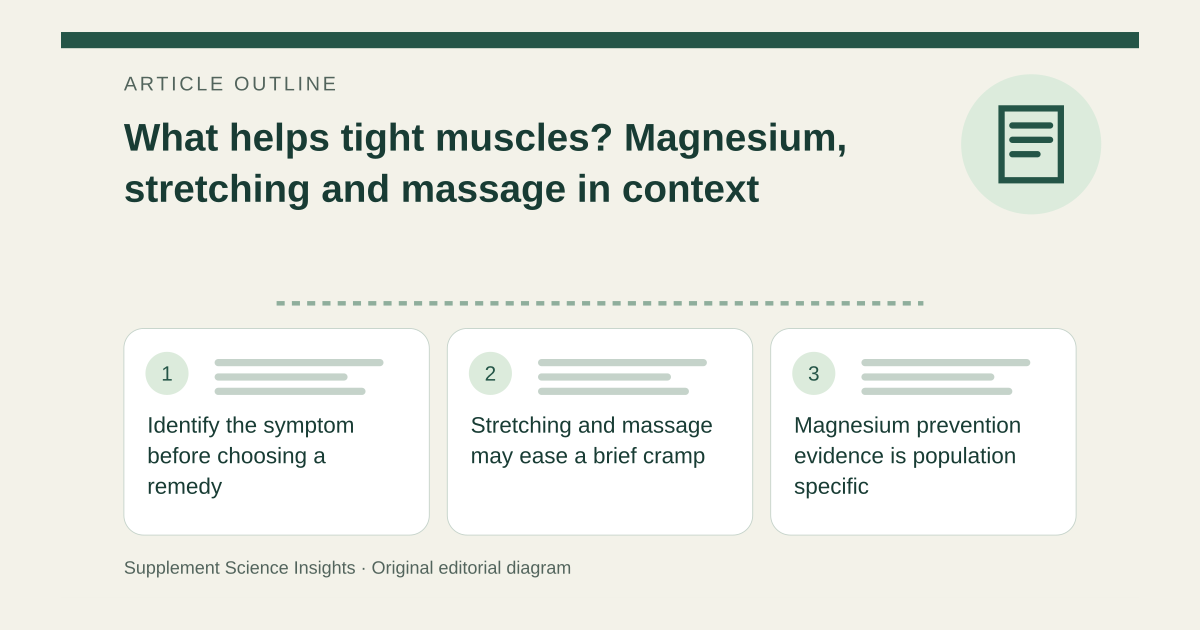
Identify the symptom before choosing a remedy
A sudden painful cramp differs from delayed exercise soreness or ongoing neurological stiffness. Magnesium contributes to normal muscle function, but that fact does not identify the cause of tightness. Note the location, duration, triggers and associated symptoms. [1][2]
Stretching and massage may ease a brief cramp
NHS guidance notes that stretching and massaging the affected muscle may ease a leg cramp; many cramps also resolve on their own. Regular calf stretching may reduce recurrence for some people. Avoid forcing a painful movement or assuming every swollen or injured area should be massaged. [2][3]
Magnesium prevention evidence is population specific
The Cochrane review found that meaningful prevention benefits were unlikely for older adults with ordinary skeletal-muscle cramps. Pregnancy-related findings were conflicting, and evidence in other settings was limited. This does not rule out treatment of an actual magnesium deficiency. [4][1]
Massage benefits and risks should both be considered
NCCIH describes possible short-term benefits for some pain conditions but generally limited evidence. Rare serious harms have been reported, particularly with vigorous massage or vulnerable patients. An appropriately trained practitioner should know about relevant medical conditions and medicines. [3]
Use the response to guide follow-up, not a deficiency diagnosis
Imagine a brief calf cramp eases after gentle stretching. That does not show that a magnesium dose is needed. Recurrent cramps disrupting sleep, persistent symptoms, numbness or swelling warrant clinical review rather than progressively stronger massage or supplement doses. [2][1]
| Complaint | Useful distinction |
|---|---|
| Brief calf cramp | Gentle stretching may help |
| Persistent or unusual pain | Assess the cause |
| Routine magnesium claim | Not universal cramp prevention |
| Swelling or neurological symptoms | Review before vigorous massage |
Sources for this article
- Magnesium - Health Professional Fact Sheet
Source consulted: 2026-09-21. This is a reference resource, not a claim that we conducted the studies or tested a product. - Leg cramps - NHS
Source consulted: 2026-09-21. This is a reference resource, not a claim that we conducted the studies or tested a product. - Massage Therapy: What You Need To Know | NCCIH
Source consulted: 2026-09-21. This is a reference resource, not a claim that we conducted the studies or tested a product. - Magnesium for muscle cramps | Cochrane
Source consulted: 2026-09-21. This is a reference resource, not a claim that we conducted the studies or tested a product.