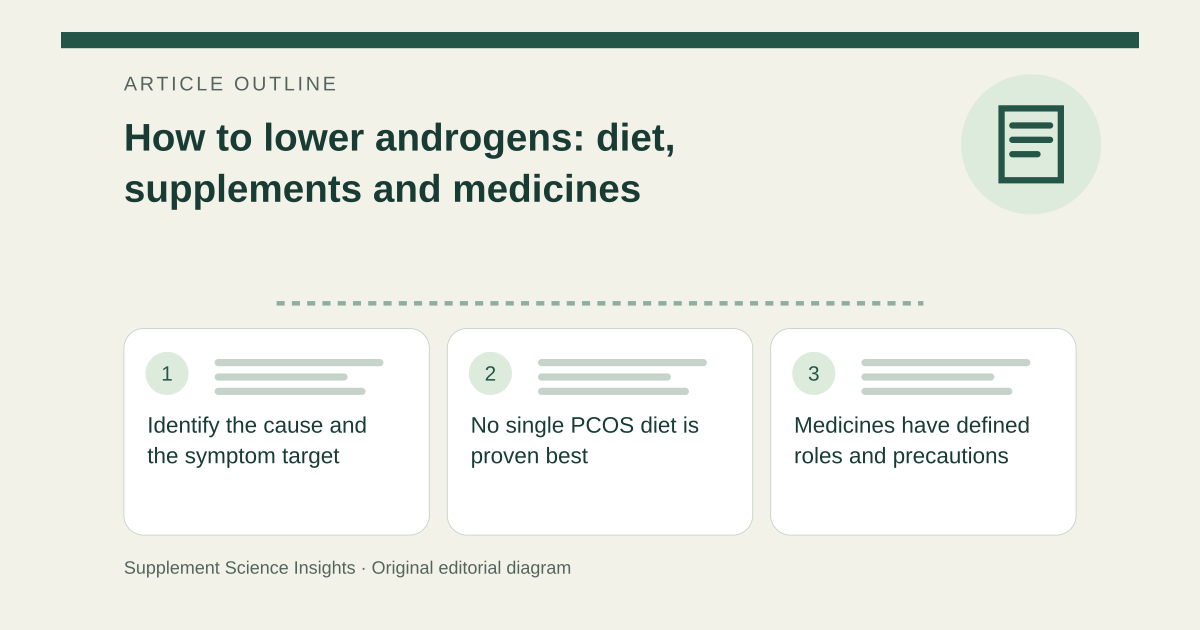
Identify the cause and the symptom target
Irregular cycles, acne, excess facial hair or scalp hair loss may prompt hormonal assessment. The 2023 international PCOS guideline supports a structured diagnosis and assessment for other causes. A treatment for unwanted hair is not automatically a fertility treatment or a cure for every high androgen result. [1]
No single PCOS diet is proven best
The guideline recommends sustainable healthy eating and physical activity, with benefits even without weight loss. It finds no clearly superior diet composition for hormonal or reproductive outcomes. Avoid restrictive protocols that promise to eliminate androgens by excluding entire food groups. [1]
Medicines have defined roles and precautions
Combined oral contraceptives can help selected PCOS symptoms. Antiandrogens may be considered for persistent hirsutism, with effective contraception when pregnancy is possible. Metformin primarily addresses metabolic indications; choices depend on goals, contraindications and prior response. [1]
Treat inositol claims cautiously
The guideline describes limited clinical benefits and does not establish a preferred inositol type or dose. Imagine a blend promises lower testosterone, clear skin and restored fertility at once: separate those outcomes and discuss the best-supported plan for each. [1]
| Issue | Practical interpretation |
|---|---|
| High result | Confirm cause and context |
| Nutrition | Sustainable, not a single proven diet |
| Antiandrogen medicine | Pregnancy precautions matter |
| Inositol | Limited clinical evidence |
Sources for this article
- Recommendations From the 2023 International Evidence-based Guideline for the Assessment and Management of Polycystic Ovary Syndrome - PMC
Source consulted: 2026-09-21. This is a reference resource, not a claim that we conducted the studies or tested a product.