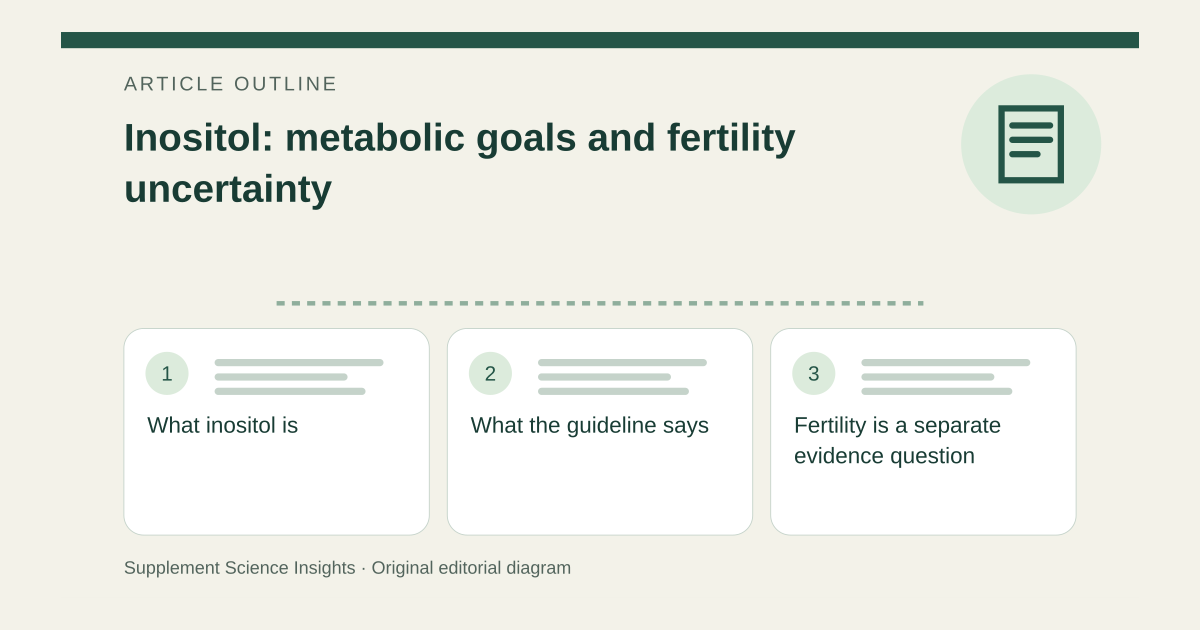
What inositol is
Inositol is a sugar-related compound made by the body and found in foods. Cleveland Clinic notes that the label “vitamin B8” is misleading: inositol is not actually a vitamin. Myo-inositol and D-chiro-inositol are names readers commonly encounter in supplement discussions. [1]
What the guideline says
The international guideline hosted by ASRM allows consideration of inositol according to individual preferences for the condition widely known as PCOS, now described on that source as PMOS. It notes possible metabolic improvements but limited clinical benefits for outcomes such as ovulation, excess hair growth and weight. It does not recommend a specific type, dose or combination because evidence quality is inadequate. [2]
Fertility is a separate evidence question
For infertility in this condition, the guideline considers inositol experimental. Benefits, risks and effects on pregnancy and live birth remain too uncertain to recommend it as a fertility therapy. That is more cautious than interpreting a possible change in a laboratory measurement as proof of improved chances of having a baby. [2]
Keep the outcome you want in view
A useful discussion begins by naming the goal: a metabolic measurement, a symptom, ovulation or a pregnancy outcome. These are not interchangeable endpoints. Ask whether the evidence measures the chosen outcome directly, and whether it compares the proposed preparation against an appropriate alternative.
Suppose a product promotes a particular ratio as the key reason to choose it. The ratio tells you about the stated composition. To establish that it is the best ratio, evidence would need to compare relevant alternatives and demonstrate a meaningful advantage. An explanation of biological plausibility does not perform that comparison.
This also changes how to read a positive testimonial. A personal improvement may be important to that person, but it does not show which part of a changing care plan produced it. A controlled comparison is intended to address that attribution problem.
| Claim or observation | What can be concluded | What cannot be assumed |
|---|---|---|
| A metabolic measurement changes | That marker changed in the study | A live-birth benefit |
| A ratio appears on a label | The stated composition | The optimal ratio |
| A personal testimonial reports improvement | An individual experience | The supplement caused it |
Discuss use alongside the existing care plan
Cleveland Clinic lists gastrointestinal symptoms, headache, fatigue and dizziness among possible side effects, and advises against replacing prescribed treatment without discussing it with the clinician. Its general tolerability summary should not override the guideline’s uncertainty about fertility use. Pregnancy planning and any proposed supplement belong in the same care discussion. [1][2]
Make the decision measurable
If inositol is being considered with a clinician, agree on the goal and how it would be assessed. Include the cost, inconvenience and uncertainty in that conversation. This overview does not identify a best brand, ratio or dose, and does not turn a shared decision to try a supplement into evidence that it works.
Sources for this article
- Cleveland Clinic — Inositol
Source consulted: 2026-09-17. This is a reference resource, not a claim that we conducted the studies or tested a product. - ASRM — International evidence-based guideline, sections 4.7 and 5.8
Source consulted: 2026-09-17. This is a reference resource, not a claim that we conducted the studies or tested a product.