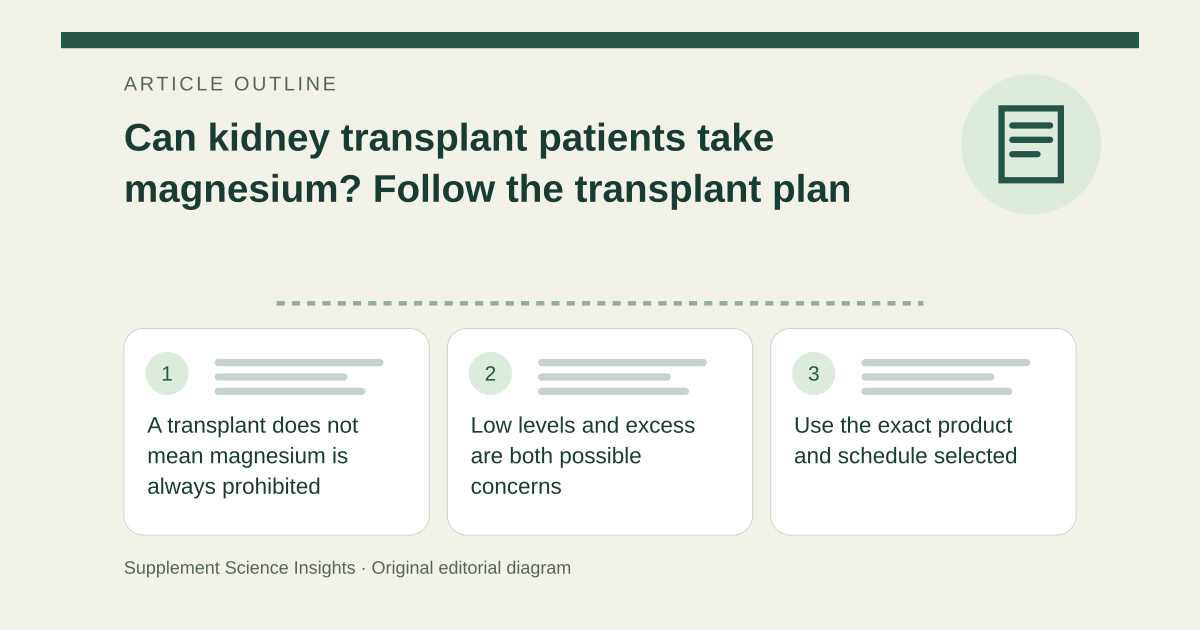
A transplant does not mean magnesium is always prohibited
The National Kidney Foundation explains that transplant medicines can lower magnesium and other mineral levels. A clinician may therefore identify a reason for replacement. This is different from independently taking magnesium for sleep, cramps or a general wellness claim. [1]
Low levels and excess are both possible concerns
Magnesium handling depends partly on kidney function. NIH warns that impaired clearance increases toxicity risk from supplements or medicines. The fact that a previous test was low does not establish that the same dose will always be appropriate as the clinical situation changes. [2]
Use the exact product and schedule selected
Bring the magnesium label and all prescription medicines to the transplant team or pharmacist. Nutritional supplements, antacids and laxatives can contain different amounts and additional ingredients. Do not assume a timing rule found for another medicine is correct for an immunosuppressant regimen. [2][1]
Diet advice should fit the current transplant context
The Foundation recommends working with the transplant team on food choices because medicines can also affect potassium, glucose, blood pressure and other factors. A blanket instruction to eat unlimited high-magnesium foods may not fit every accompanying restriction. [1]
Do not change anti-rejection treatment to fix a mineral result
Imagine a recipient sees a low magnesium result and doubles a supplement or skips a transplant medicine thought to cause it. The appropriate response is to contact the transplant team for a coordinated plan, including any repeat testing, rather than adjusting either treatment independently. [1][2]
| Situation | Reason for team review |
|---|---|
| Low magnesium result | May justify individualized replacement |
| Changing kidney function | Can change clearance and dose suitability |
| Antacid or laxative use | May add magnesium exposure |
| Diet or medicine change | Must fit the full transplant plan |
Sources for this article
- What to Eat After First Kidney Transplant | National Kidney Foundation
Source consulted: 2026-09-21. This is a reference resource, not a claim that we conducted the studies or tested a product. - Magnesium - Health Professional Fact Sheet
Source consulted: 2026-09-21. This is a reference resource, not a claim that we conducted the studies or tested a product.