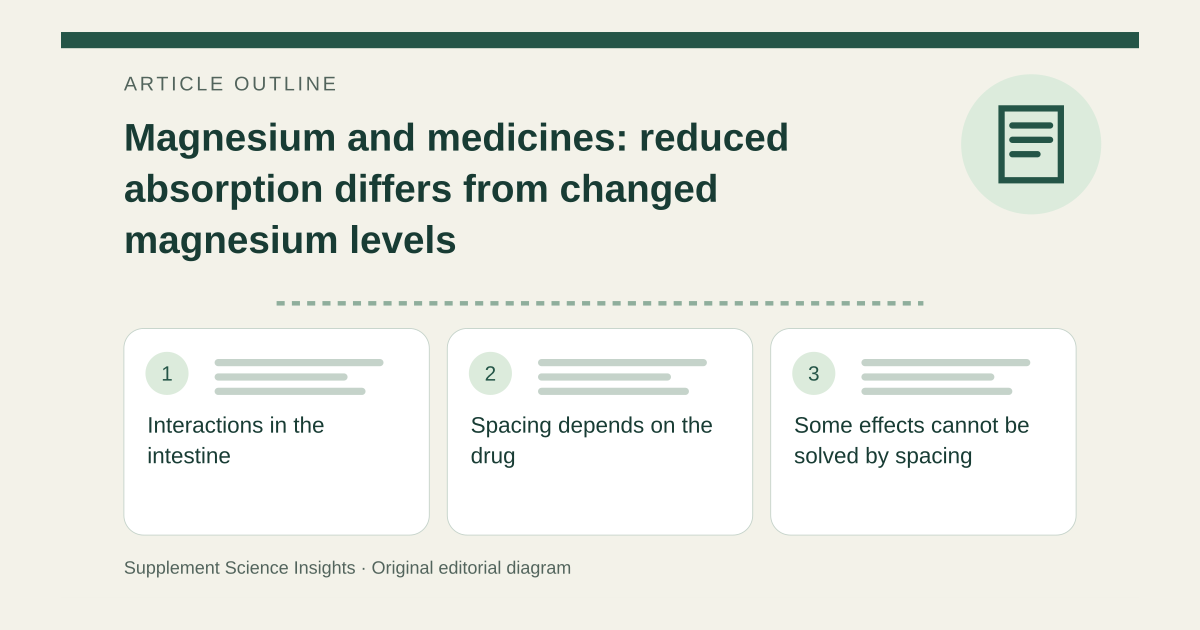
Interactions in the intestine
Magnesium can reduce absorption of certain oral bisphosphonates and form complexes with tetracycline or quinolone antibiotics. NIH ODS gives examples including alendronate, doxycycline and ciprofloxacin. These are examples rather than a complete medication screen; check the actual medicine’s directions with a pharmacist. [1]
Spacing depends on the drug
ODS describes at least two hours separation for oral bisphosphonates and taking affected antibiotics at least two hours before or four to six hours after magnesium. These are general examples, not a replacement for a specific prescription label. Applying the same two-hour rule to every medicine can be wrong. [1]
Some effects cannot be solved by spacing
Long-term proton-pump inhibitors can lower magnesium, while loop or thiazide diuretics can increase urinary losses. Potassium-sparing diuretics can reduce excretion. Imagine someone takes a PPI and a magnesium supplement: moving the capsule to another hour does not establish that the underlying magnesium-status concern is resolved. Review the full list and relevant monitoring rather than stopping prescribed treatment independently. [1]
| Hypothetical medicine category | Interaction question |
|---|---|
| Affected oral antibiotic | Drug-specific spacing from magnesium |
| Long-term PPI | Whether magnesium-status assessment is indicated |
| Diuretic | Which type and effect on magnesium losses |
Sources for this article
- Magnesium - Health Professional Fact Sheet
Source consulted: 2026-09-20. This is a reference resource, not a claim that we conducted the studies or tested a product.