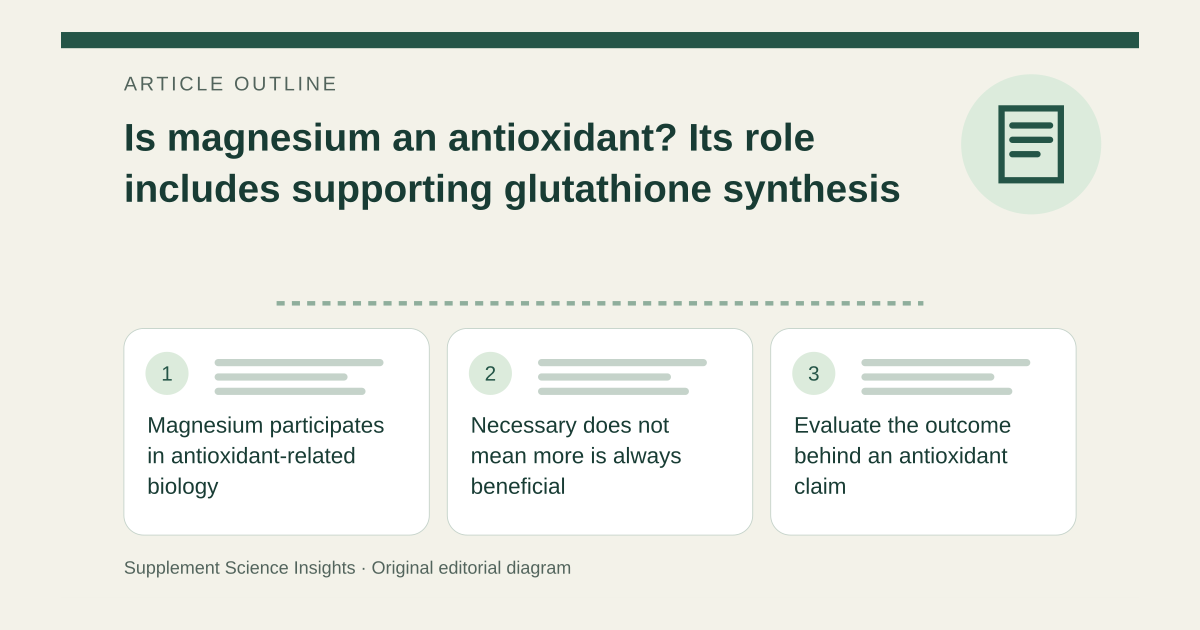
Magnesium participates in antioxidant-related biology
NIH ODS explains that magnesium is needed for glutathione synthesis, as well as energy production and other cellular functions. An ingredient can support an antioxidant pathway without being interchangeable with the antioxidant molecule itself. Magnesium and glutathione are different substances. [1]
Necessary does not mean more is always beneficial
A pathway’s requirement for magnesium does not establish that extra supplemental magnesium improves it proportionally in an adequately nourished person. Nor does it show that a capsule prevents a disease simply because oxidative stress is discussed in that disease. [1][2]
Evaluate the outcome behind an antioxidant claim
A laboratory marker and a meaningful clinical result are different kinds of evidence. Ask what was measured in people, with which preparation and in what nutritional setting. An antioxidant label alone does not establish a personal dose or treatment indication. [2][1]
Keep intake and risk in view
Imagine someone adds several magnesium products to increase antioxidant protection. The result is more elemental magnesium exposure, not a proven increase in protection. Excess supplemental intake can cause gastrointestinal effects, and kidney impairment changes the safety assessment. [1]
| Statement | What it supports |
|---|---|
| Needed for glutathione synthesis | A normal biochemical role |
| More magnesium consumed | Higher exposure, not automatic benefit |
| Antioxidant marketing | A claim requiring outcome evidence |
Sources for this article
- Magnesium - Health Professional Fact Sheet
Source consulted: 2026-09-21. This is a reference resource, not a claim that we conducted the studies or tested a product. - Dietary Supplements: What You Need to Know
Source consulted: 2026-09-21. This is a reference resource, not a claim that we conducted the studies or tested a product.