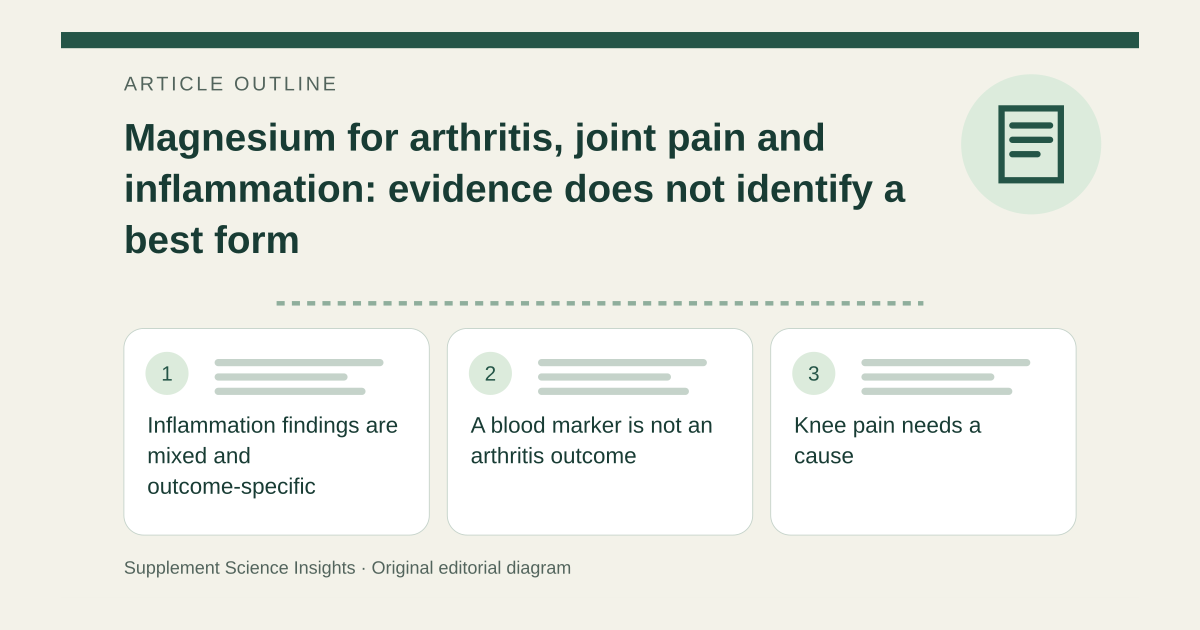
Inflammation findings are mixed and outcome-specific
A 2022 meta-analysis reported lower C-reactive protein with magnesium. A broader 2026 synthesis found no significant pooled CRP change, while another inflammatory marker, interleukin-6, improved. Different studies, populations and outcomes can produce different results; neither finding establishes treatment of every inflammatory condition. [1][2]
A blood marker is not an arthritis outcome
The relevant questions for arthritis include pain, stiffness, function and prevention of joint damage. A biomarker change alone does not answer them. The reviewed evidence should not be used to replace rheumatoid-arthritis disease-modifying treatment or a diagnosis-specific pain plan. [1][3]
Knee pain needs a cause
Knee discomfort may involve osteoarthritis, injury or another problem. NHS osteoarthritis guidance emphasizes therapeutic exercise, weight management where relevant and appropriate symptom treatment. Magnesium is not established by the inspected sources as a general knee-pain remedy or a way to rebuild damaged cartilage. [4][5]
Glycinate is not an established anti-inflammatory winner
Citrate, glycinate, oxide and other forms differ in formulation, elemental amount and tolerance. Absorption differences do not prove superior arthritis relief. The 2026 review still identifies uncertainty about optimal formulation and dose, and does not establish a glycinate-specific joint-treatment regimen. [6][2]
Correct a nutrient problem without escalating a pain experiment
Deficiency may warrant treatment, but excess supplemental magnesium can cause diarrhea and, especially with kidney impairment, toxicity. A hot swollen joint with fever or feeling unwell needs urgent assessment. Do not keep increasing magnesium while waiting for such symptoms to settle. [6][5]
Match the evidence to the decision
Imagine a person with rheumatoid arthritis sees a lower-CRP headline and wants to replace prescribed treatment with glycinate. That would substitute a biomarker finding for disease-control evidence. Review the supplement separately while maintaining the arthritis care plan. [3][1]
| Claim | Missing distinction |
|---|---|
| Lower inflammatory marker | Not necessarily less pain or damage |
| Better absorbed form | Not proven superior for joints |
| Painful knee | Cause must be assessed |
| Hot swollen joint with fever | Urgent care |
Sources for this article
- Effect of Magnesium Supplementation on Inflammatory Parameters: A Meta-Analysis of Randomized Controlled Trials - PMC
Source consulted: 2026-09-21. This is a reference resource, not a claim that we conducted the studies or tested a product. - Comprehensive Effects of Magnesium Supplementation on Cardiometabolic Risk Factors: A Systematic Review and Dose–Response Meta-Analysis - PMC
Source consulted: 2026-09-21. This is a reference resource, not a claim that we conducted the studies or tested a product. - Rheumatoid arthritis - Treatment - NHS
Source consulted: 2026-09-21. This is a reference resource, not a claim that we conducted the studies or tested a product. - Osteoarthritis - Treatment and support - NHS
Source consulted: 2026-09-21. This is a reference resource, not a claim that we conducted the studies or tested a product. - Joint pain - NHS
Source consulted: 2026-09-21. This is a reference resource, not a claim that we conducted the studies or tested a product. - Magnesium - Health Professional Fact Sheet
Source consulted: 2026-09-21. This is a reference resource, not a claim that we conducted the studies or tested a product.