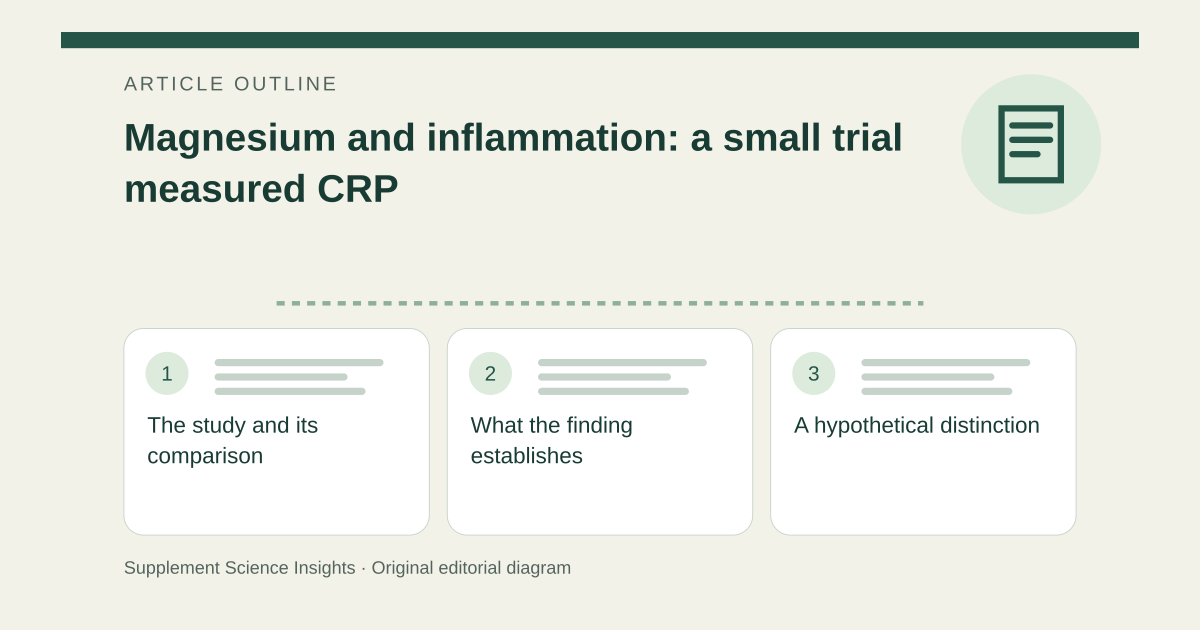
The study and its comparison
Sixty-two adults with newly diagnosed prediabetes and low blood magnesium entered a blinded randomized trial. They received magnesium chloride solution or a control solution daily for three months. [1]
The magnesium group had higher serum magnesium and lower high-sensitivity C-reactive protein at follow-up. The study measured these biochemical changes rather than long-term disease events. [1]
What the finding establishes
The selected low-magnesium population limits generalization to people with adequate status. A marker difference does not demonstrate less pain, fewer heart attacks or diabetes prevention. Funding and conflicts were not established from the retrieved abstract. This was a specific formulation, not a comparison of every magnesium salt. [1]
A hypothetical distinction
Imagine CRP falls while no cardiovascular events are studied. The event-prevention question remains unanswered.
| Detail | Interpretation |
|---|---|
| Measured outcome | Keep the endpoint specific |
| Study preparation | Not every retail product |
| Remaining uncertainty | Not resolved by a mechanism |
Sources for this article
- Oral magnesium supplementation decreases C-reactive protein levels in subjects with prediabetes and hypomagnesemia: a clinical randomized double-blind placebo-controlled trial.
Source consulted: 2026-09-19. This is a reference resource, not a claim that we conducted the studies or tested a product.