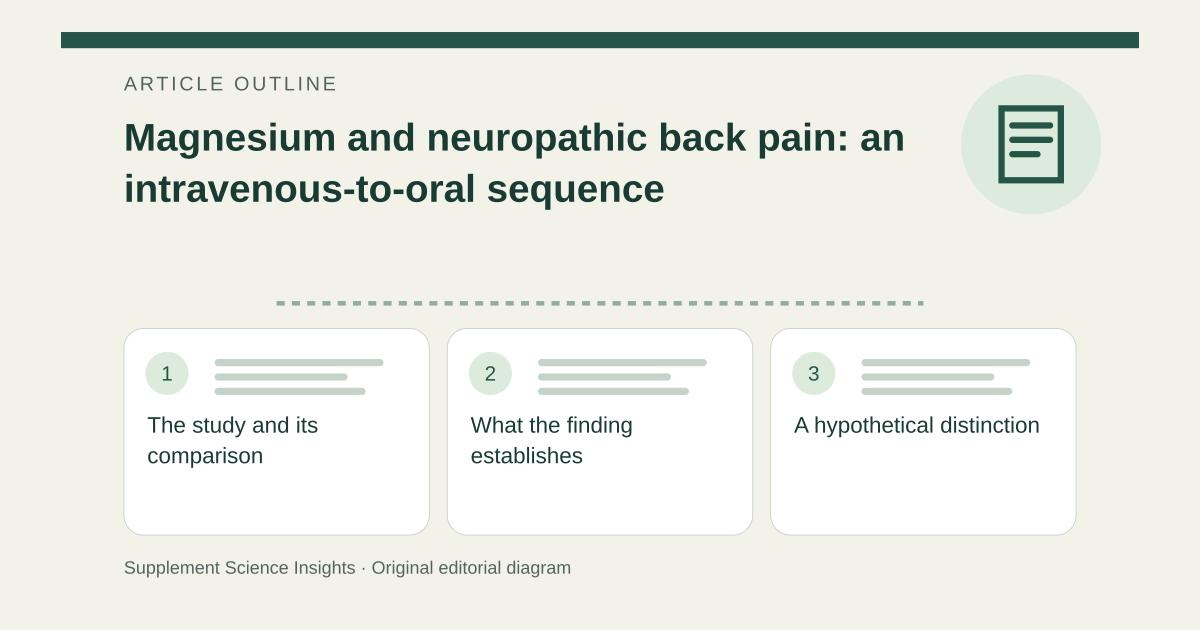
The study and its comparison
Eighty patients with chronic low-back pain and a neuropathic component received physical therapy and medicines. Half also received intravenous magnesium for two weeks followed by oral capsules for four weeks; the comparison group received placebo. [1]
Pain and lumbar mobility improved in the magnesium group during follow-up. The abstract emphasizes changes from that group’s baseline and provides limited detail for the corresponding between-group estimates. [1]
What the finding establishes
The route sequence and background treatments prevent transferring the result directly to a retail capsule or all sciatica. Mechanistic discussion about nerve sensitization is not independent proof of benefit. Funding and conflicts were not established from the retrieved abstract. The report does not provide a home infusion protocol. [1]
A hypothetical distinction
Imagine intravenous and oral treatment are delivered sequentially. The study cannot isolate the oral phase’s contribution.
| Detail | Interpretation |
|---|---|
| Measured outcome | Keep the endpoint specific |
| Study preparation | Not every retail product |
| Remaining uncertainty | Not resolved by a mechanism |
Sources for this article
- A double-blinded randomised controlled study of the value of sequential intravenous and oral magnesium therapy in patients with chronic low back pain with a neuropathic component.
Source consulted: 2026-09-19. This is a reference resource, not a claim that we conducted the studies or tested a product.