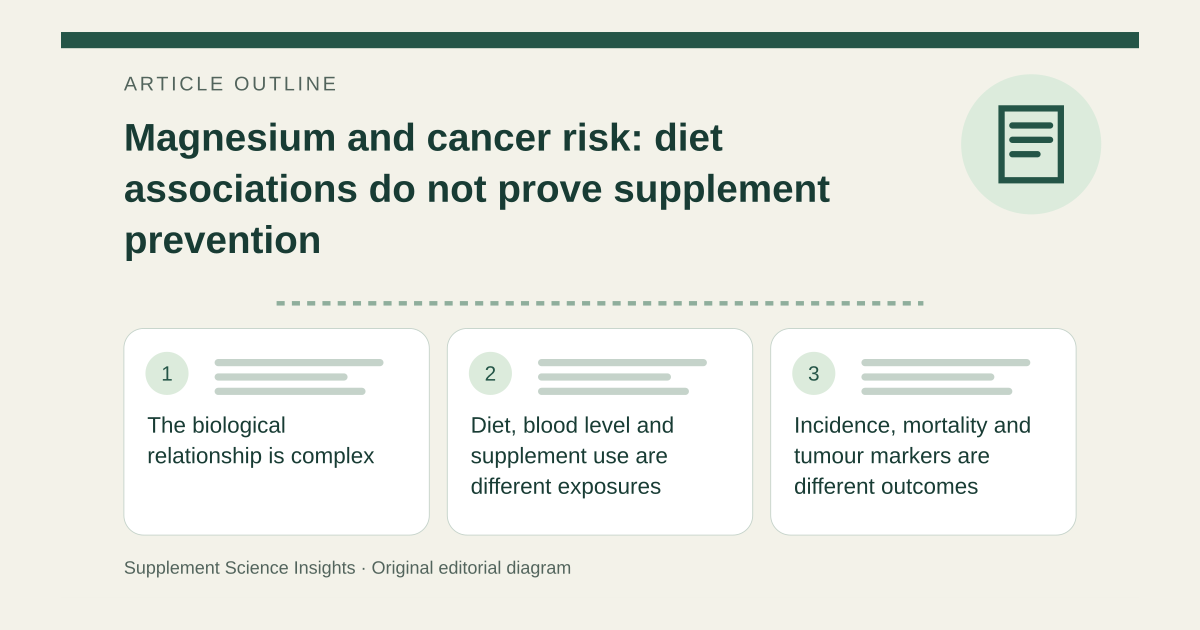
The biological relationship is complex
A 2025 narrative review describes conflicting experimental, epidemiological and clinical findings. Magnesium participates in normal cell functions and also in processes used by tumour cells. This complexity does not justify either a universal anticancer claim or advice to deliberately become magnesium deficient. [1]
Diet, blood level and supplement use are different exposures
The review discusses observational associations, including signals involving colorectal cancer, while noting limitations of dietary surveys. People with higher magnesium intake may differ in other dietary and lifestyle factors. Such evidence cannot establish a preventive supplement dose or transfer one cancers findings to every cancer. [1]
Incidence, mortality and tumour markers are different outcomes
A study about cancer deaths does not necessarily show fewer new cancers, and a laboratory mechanism does not show longer survival in people. NCI states that evidence is insufficient to recommend vitamin or mineral supplements as general cancer prevention. [2][1]
Replacement during treatment has a different purpose
Some anticancer treatments can cause low magnesium through renal or gastrointestinal effects. Monitoring and replacement may be clinically necessary, but correcting an electrolyte problem is not proof that magnesium directly treats the tumour. The oncology team should guide the route and dose. [1]
Keep preventive claims proportional to the evidence
The narrative review reported no external funding or conflicts, but its selected literature does not provide a randomized prevention result for every cancer. Imagine a supplement advertisement turns a dietary association into a guaranteed cancer-risk reduction: the exposure and causal claim have changed. Discuss supplements during cancer care and maintain established screening and prevention advice. [1][2]
| Finding | What it does not establish |
|---|---|
| Higher dietary intake associated with risk | A causal pill effect |
| Cell or animal mechanism | Human clinical benefit |
| Less treatment-related deficiency | Direct tumour treatment |
| One cancer type | The same effect for every cancer |
Sources for this article
- A Practical Narrative Review on the Role of Magnesium in Cancer Therapy - PMC
Source consulted: 2026-09-21. This is a reference resource, not a claim that we conducted the studies or tested a product. - Cancer Prevention Overview - NCI
Source consulted: 2026-09-21. This is a reference resource, not a claim that we conducted the studies or tested a product.