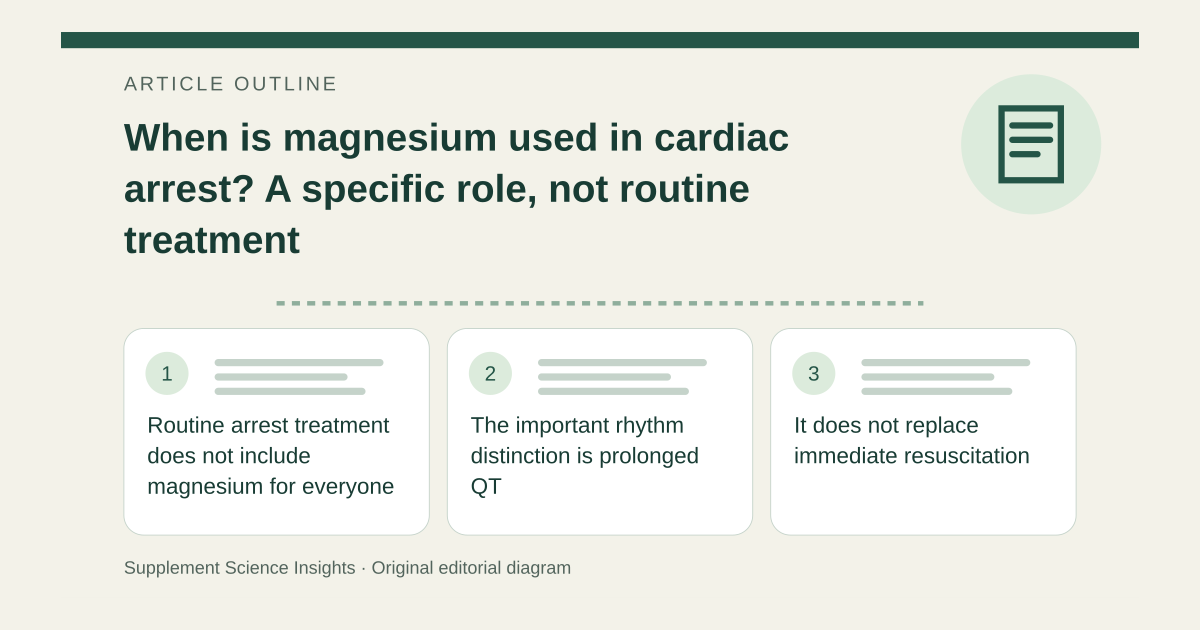
Routine arrest treatment does not include magnesium for everyone
The AHA recommendation is against routine magnesium in adult cardiac arrest. Giving a mineral simply because the heart has stopped is not the same as treating a specific rhythm or identified electrolyte problem. Resuscitation follows a structured clinical protocol. [1]
The important rhythm distinction is prolonged QT
The guideline allows consideration of magnesium for recurrences of polymorphic ventricular tachycardia associated with a long QT interval, called torsades de pointes. It does not recommend routine magnesium for polymorphic ventricular tachycardia with a normal QT interval. Rhythm interpretation belongs to the resuscitation team. [1]
It does not replace immediate resuscitation
The guideline recommends immediate unsynchronized shock for sustained polymorphic ventricular tachycardia. For bystanders facing a suspected cardiac arrest, the priorities are an emergency call, CPR and prompt AED use. Do not delay these actions to look for a supplement or give something by mouth. [1][2]
Prescription magnesium requires controlled administration
Injectable magnesium sulfate is a medicine with dose, route and monitoring requirements. Excess can depress reflexes or breathing and affect blood pressure or cardiac conduction. Nutritional magnesium products and bath salts are not interchangeable with it. [3][4]
Keep the indication specific
Imagine one patient receives magnesium during treatment of recurrent long-QT torsades while another arrest patient does not. The difference can reflect the rhythm and clinical context, not an omission of a universal remedy. This explanation is not an instruction for self-administering an emergency drug. [1][3]
| Situation | Guideline distinction |
|---|---|
| Routine adult cardiac arrest | Magnesium not routinely recommended |
| Recurrent long-QT torsades | Clinicians may consider magnesium |
| Polymorphic VT with normal QT | No routine magnesium recommendation |
| Suspected arrest witnessed | Emergency call, CPR and AED |
Sources for this article
- 2025 AHA Guidelines: Part 9 Adult Advanced Life Support
Source consulted: 2026-09-21. This is a reference resource, not a claim that we conducted the studies or tested a product. - AHA: Cardiac Arrest vs Heart Attack
Source consulted: 2026-09-21. This is a reference resource, not a claim that we conducted the studies or tested a product. - DailyMed - MAGNESIUM SULFATE- magnesium sulfate heptahydrate injection, solution
Source consulted: 2026-09-21. This is a reference resource, not a claim that we conducted the studies or tested a product. - Magnesium - Health Professional Fact Sheet
Source consulted: 2026-09-21. This is a reference resource, not a claim that we conducted the studies or tested a product.