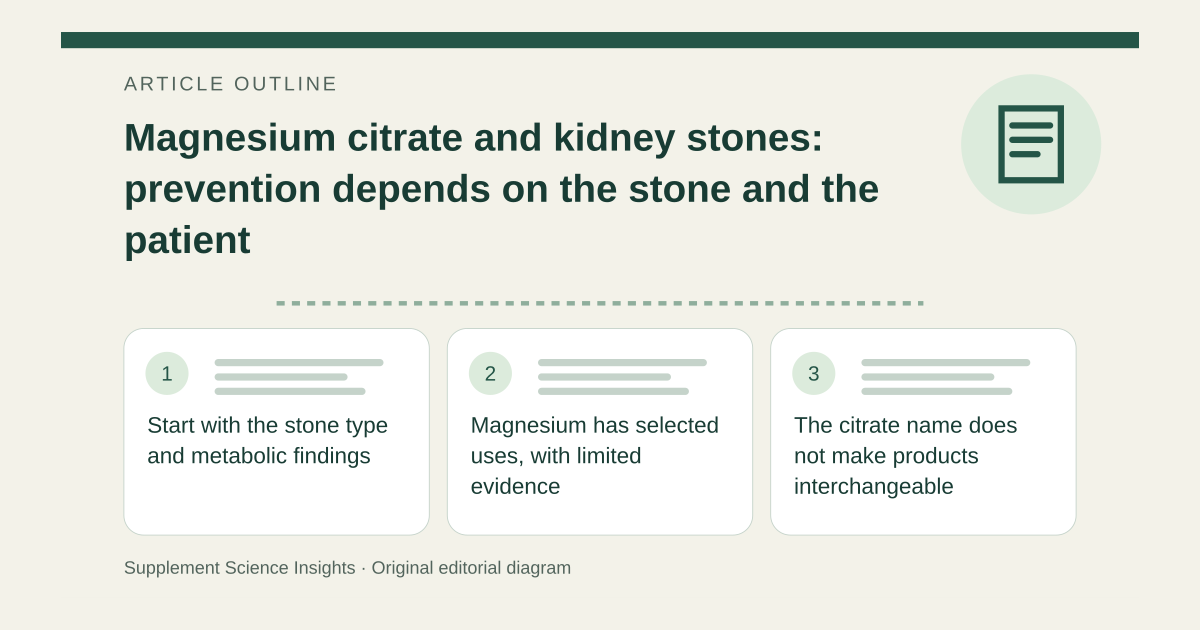
Start with the stone type and metabolic findings
Calcium oxalate, calcium phosphate, uric acid and other stones do not share one prevention plan. EAU guidance emphasizes stone analysis and appropriate metabolic evaluation. NIDDK similarly tailors dietary advice to the type of stone and the person. [1][2]
Magnesium has selected uses, with limited evidence
EAU lists magnesium for isolated low urinary magnesium or enteric hyperoxaluria in calcium oxalate stone care and marks the evidence as low level. That is a specific clinical context, not evidence that everyone who has had a stone should buy magnesium citrate. Kidney impairment requires particular caution. [1]
The citrate name does not make products interchangeable
Magnesium citrate is also sold as a saline laxative. A laxative label does not establish a stone-prevention indication, and it is not interchangeable with a prescribed alkali-citrate regimen selected from urine chemistry. Product purpose, elemental magnesium and the actual prescription matter. [3][1]
Causation and safety are separate questions
The inspected guidance does not describe magnesium or magnesium citrate as a routine stone cause. That does not make unlimited intake safe: diarrhea and serious excess remain possible, particularly with impaired kidney function. A stone occurring after a supplement starts does not by itself show that the supplement caused it. [4][2]
Use the prevention plan that fits the findings
Hydration and dietary changes should fit medical restrictions and stone type; indiscriminately eliminating dietary calcium is not a universal solution. Imagine a calcium oxalate stone former with low urinary magnesium: a clinician may consider targeted treatment, but a friend with a different stone cannot assume the same product will help. [2][1]
| Question | Needed information |
|---|---|
| Which stone? | Analysis and clinical history |
| Is magnesium indicated? | Selected metabolic findings |
| Is citrate a laxative? | Actual product indication |
| Are kidneys impaired? | Specialist safety review |
Sources for this article
- Metabolic Evaluation and Recurrence Prevention - EAU Guidelines on Urolithiasis - Uroweb
Source consulted: 2026-09-21. This is a reference resource, not a claim that we conducted the studies or tested a product. - Eating, Diet, & Nutrition for Kidney Stones - NIDDK
Source consulted: 2026-09-21. This is a reference resource, not a claim that we conducted the studies or tested a product. - Magnesium Citrate: MedlinePlus Drug Information
Source consulted: 2026-09-21. This is a reference resource, not a claim that we conducted the studies or tested a product. - Magnesium - Health Professional Fact Sheet
Source consulted: 2026-09-21. This is a reference resource, not a claim that we conducted the studies or tested a product.