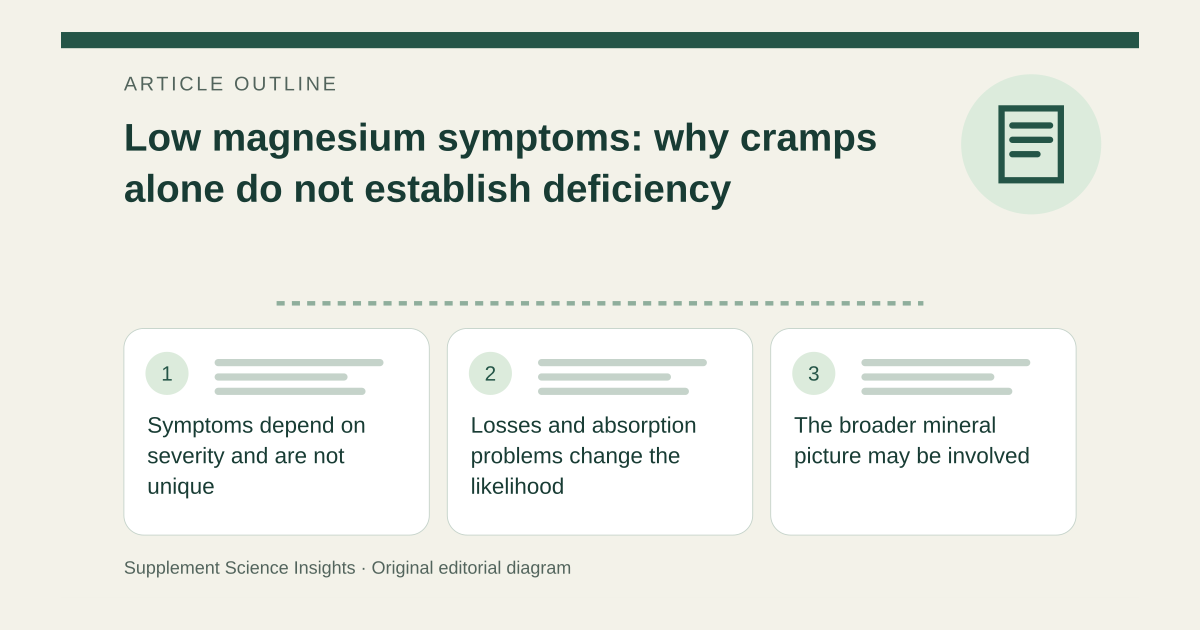
Symptoms depend on severity and are not unique
NIH ODS lists loss of appetite, nausea, vomiting, fatigue and weakness among early features of magnesium deficiency. More severe deficiency can involve numbness, tingling, cramps, seizures or abnormal heart rhythms. No single common symptom, such as a cramp, proves the diagnosis. [1]
Symptomatic deficiency from low dietary intake alone is uncommon in otherwise healthy people because the kidneys can reduce magnesium loss. That does not mean chronically low intake is ideal, or that medical conditions cannot produce a serious deficit. [1]
Losses and absorption problems change the likelihood
Chronic diarrhea, malabsorption and certain intestinal operations can reduce magnesium status. Diabetes-related urinary losses, alcohol dependence and some medicines can also matter. Older adults may have lower intake alongside health conditions or medicines that alter magnesium handling. [1]
These factors help explain why the same symptom has a different significance in different people. The assessment should include what is being lost, what is being absorbed and which medicines are used, not just a list of magnesium-rich foods. [1]
The broader mineral picture may be involved
Severe magnesium deficiency can disrupt calcium and potassium balance. A clinical evaluation may therefore need to consider more than magnesium alone. Replacing one mineral without understanding the overall problem is not a reliable self-treatment strategy. [1]
Serum magnesium is commonly measured, but ODS notes its limits as a reflection of total stores. Testing and the history should be interpreted together rather than using a symptom checklist as a substitute for either. [1]
A cramp after exercise and persistent losses are different contexts
Imagine one person has an isolated muscle cramp after activity, while another has weeks of diarrhea, weakness and a medicine that affects magnesium. The shared cramp does not make the situations equivalent. The second history provides additional reasons for clinical assessment; neither history alone confirms deficiency.
| Observation | Interpretation |
|---|---|
| An isolated cramp | Not specific for magnesium deficiency |
| Ongoing diarrhea and weakness | Potential losses deserve assessment |
| Seizure or suspected arrhythmia | Urgent clinical problem, not routine supplement selection |
Do not turn severe symptoms into a supplement experiment
Seizures, fainting or a suspected heart-rhythm problem need urgent medical assessment. Persistent weakness or neurological symptoms also deserve attention. An online mineral guide should not delay evaluation while someone tries progressively larger supplement amounts. [1]
High magnesium intake can itself cause harm, particularly with impaired kidney function. This page identifies recognition and assessment issues without prescribing a correction dose or promising relief of every muscle symptom. [1]
Sources for this article
- NIH ODS — Magnesium: Health Professional Fact Sheet
Source consulted: 2026-09-17. This is a reference resource, not a claim that we conducted the studies or tested a product.