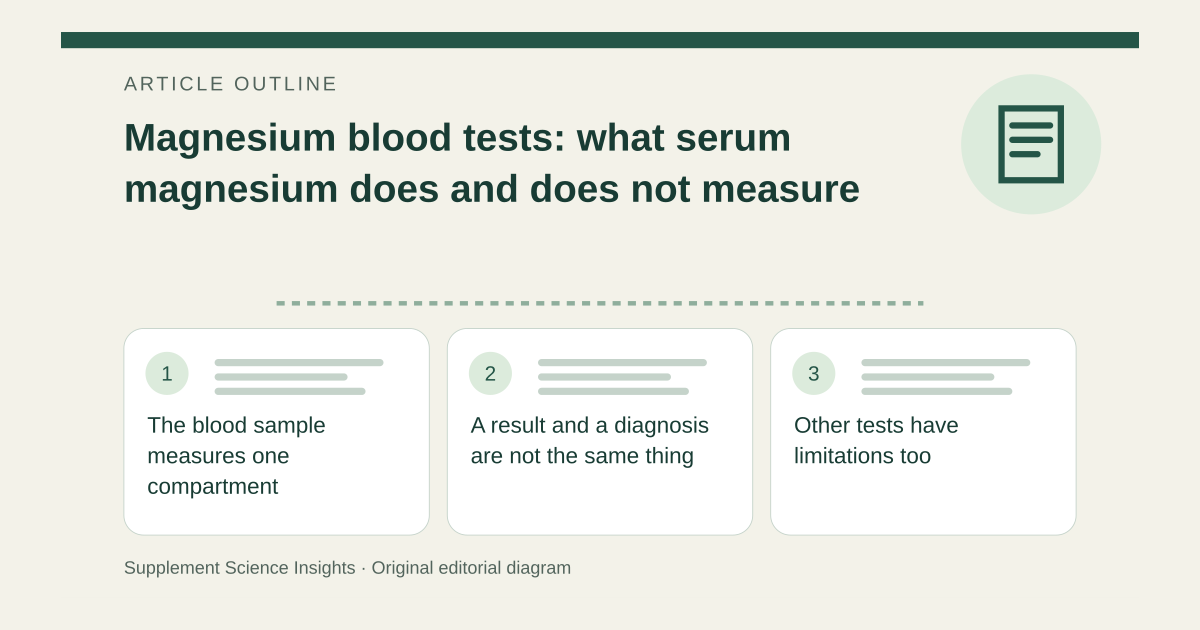
The blood sample measures one compartment
A serum magnesium test measures magnesium in the liquid portion of a blood sample. Less than 1% of the body’s magnesium is in serum; most is in bone and other tissues. The body also regulates the serum concentration closely. [1]
For those reasons, NIH ODS cautions that serum magnesium does not accurately reflect total body stores or the concentration in a particular tissue. This limitation does not make the test useless. It explains why one result is not a complete inventory of magnesium throughout the body. [1]
A result and a diagnosis are not the same thing
Interpret the value using its laboratory range, units and clinical context. Symptoms, medicines, gastrointestinal losses and kidney function can all be relevant. A supplement amount in milligrams is an intake quantity, while a serum result is a concentration; the numbers cannot be compared as a strength ranking. [1]
A normal serum result does not prove that every tissue store is optimal. It also does not justify declaring a hidden deficiency and taking high doses without assessment. Both overconfidence in the test and dismissal of it can lead to poor decisions. [1]
Other tests have limitations too
ODS describes measurements in red blood cells, urine and other samples, as well as loading tests. It states that no single method is considered satisfactory for a comprehensive assessment. A test marketed as intracellular is not automatically a complete answer. [1]
The useful question is what the test is intended to clarify and whether the result would change care. A clinician can decide whether another measurement adds information in the particular situation. [1]
Keep the denominator attached to the number
Imagine a report contains a magnesium concentration and a supplement label lists 200 mg per serving. The label does not tell you how much the blood concentration will increase. Preserve each value with its unit, date and source instead of subtracting one from the other.
| Observation | Interpretation |
|---|---|
| Serum result | Concentration in the sampled blood compartment |
| 200 mg per serving | Labeled oral amount |
| Symptoms and kidney function | Context needed for clinical interpretation |
Respond to abnormal results through the treating team
Both low and high magnesium can have important consequences, including effects on heart rhythm. Kidney impairment can make extra magnesium harder to remove. An abnormal result is therefore a reason to review the cause and treatment, not simply to maximize intake until a number rises. [1]
This explanation does not define a personal target or replace interpretation of a laboratory report. It supports a clearer discussion of what was measured and what remains uncertain. [1]
Sources for this article
- NIH ODS — Magnesium: Health Professional Fact Sheet
Source consulted: 2026-09-17. This is a reference resource, not a claim that we conducted the studies or tested a product.