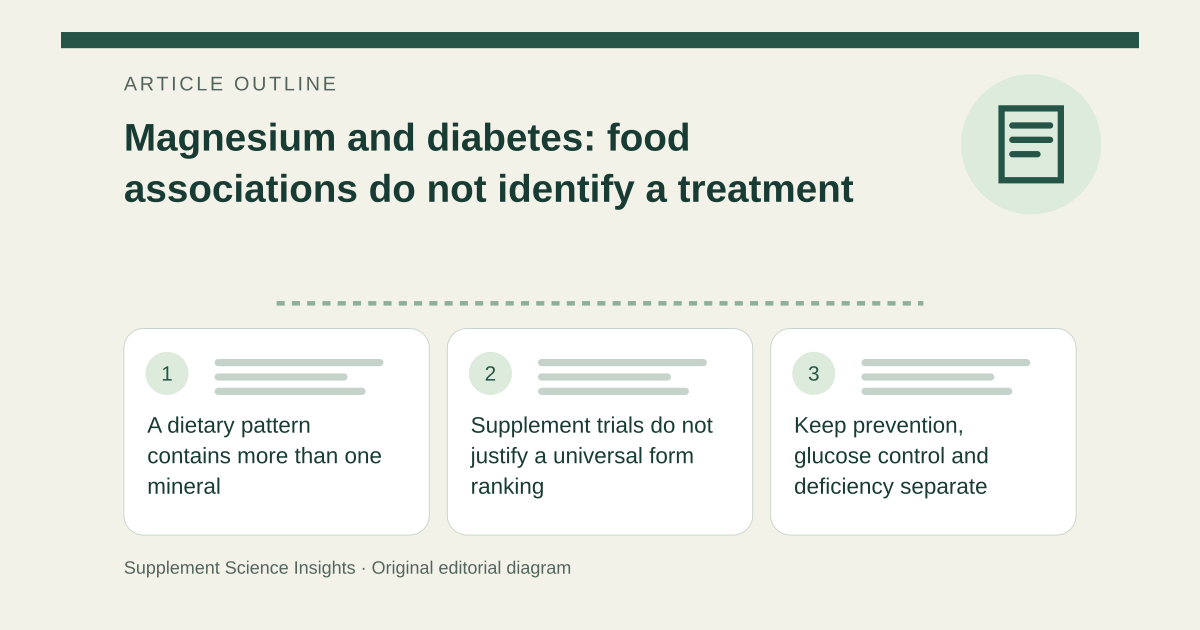
A dietary pattern contains more than one mineral
The ODS magnesium summary describes cohort studies linking higher magnesium intake with lower type 2 diabetes risk. These studies observe diets and later outcomes; they cannot isolate magnesium from correlated foods, activity and other factors. [1]
A high-magnesium diet often contains legumes, whole grains and other foods with multiple nutritional features. The association does not establish that a capsule reproduces the effect of that pattern. [1]
Supplement trials do not justify a universal form ranking
ODS characterizes the available supplementation trials for diabetes control as few, small and conflicting. This does not establish glycinate, citrate, taurate or another form as the best treatment for blood glucose. [1]
Diabetes can increase urinary magnesium losses, and a clinician may investigate a suspected deficiency. That assessment differs from prescribing magnesium to everyone with diabetes. Kidney impairment can also increase the risk from added magnesium, so a diagnosis alone does not settle suitability. [1]
Keep prevention, glucose control and deficiency separate
Imagine a person reads that magnesium-rich diets correlate with fewer new diabetes diagnoses, then seeks a capsule to lower an existing HbA1c result. The population and outcome have both changed. A study of incident disease cannot supply a treatment effect for established diabetes.
| Observation | Meaning |
|---|---|
| Risk of future diabetes | A prevention outcome |
| Change in HbA1c | A glucose-control outcome |
| Low magnesium confirmed | A deficiency assessment |
What has been tested in people with metabolic syndrome?
A randomized trial enrolled 198 people who already had metabolic syndrome and low serum magnesium. It compared a magnesium-chloride solution supplying 382 mg elemental magnesium daily with placebo for 16 weeks. At the end, 48% of the magnesium group and 77.5% of the placebo group still met the study’s metabolic-syndrome classification; several component measures also improved. [2]
This is treatment research in a selected low-magnesium population, not proof that supplementation prevents metabolic syndrome in people who do not have it. The study does not establish fewer heart attacks, a benefit for every person with normal magnesium status, or a personal dose. Keep baseline status, diagnostic criteria and measured component changes separate from long-term disease prevention. [2]
Sources for this article
- NIH ODS: Magnesium
Source consulted: 2026-09-17. This is a reference resource, not a claim that we conducted the studies or tested a product. - Rodríguez-Morán et al. — Oral Magnesium Supplementation and Metabolic Syndrome
Source consulted: 2026-10-28. This is a reference resource, not a claim that we conducted the studies or tested a product.