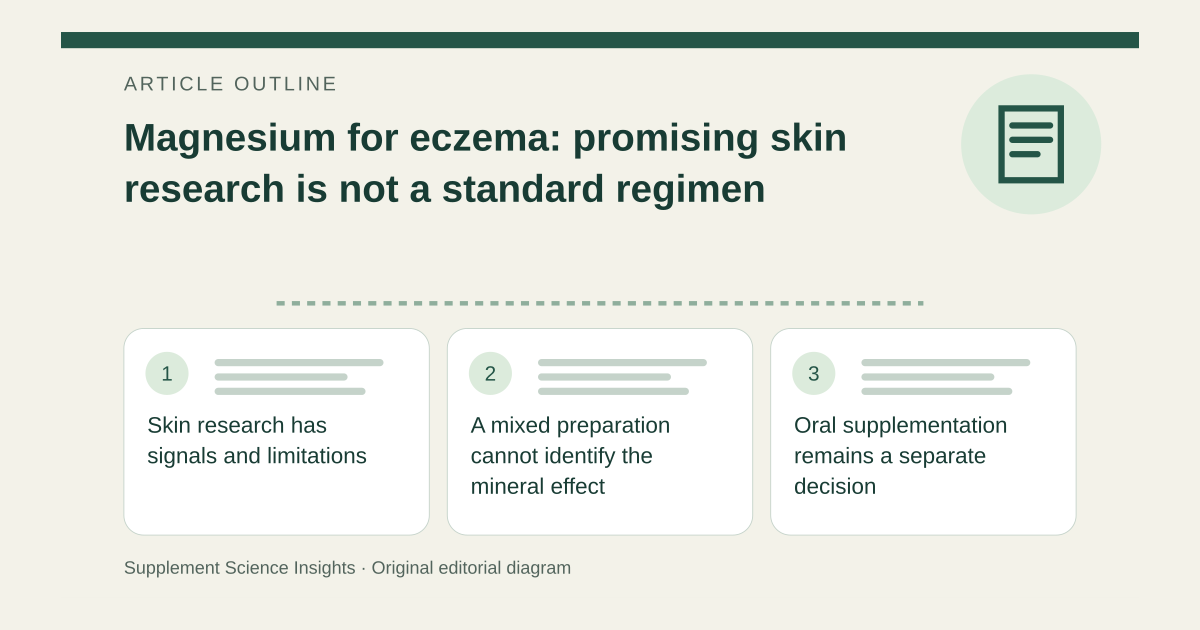
Skin research has signals and limitations
A recent dermatology review describes magnesium as a potential adjunct, while emphasizing small studies, differing formulations and variable outcomes. The inspected publisher abstract and discussion do not establish one validated eczema product or a routine dose. Larger comparative human studies remain needed. [1]
A mixed preparation cannot identify the mineral effect
Evidence involving a mineral-rich bath or a multi-ingredient cream cannot automatically be assigned to oral glycinate or a concentrated chloride spray. Improvement in skin hydration is also not proof that systemic magnesium status has corrected. Match the route, formulation and measured outcome to the claim. [1]
Oral supplementation remains a separate decision
A systematic review of nutritional supplements for atopic dermatitis found weak overall evidence for any one intervention. That is not a trial proving magnesium cannot help, but it does not supply a standard magnesium regimen. An identified nutritional deficiency can be treated separately. [2][3]
Use established skin care while reviewing an adjunct
NHS describes regular emollients, avoidance of triggers and prescribed topical anti-inflammatory treatment when appropriate. Do not replace this plan with a homemade salt mixture. A product that stings, irritates or worsens eczema should not be treated as evidence that it is working. [4]
Escalating symptoms need clinical assessment
Pain, warmth, swelling, pus, blistering or rapidly worsening eczema, especially with fever or feeling unwell, can indicate infection. Imagine an emollient and a magnesium product start together and dryness improves: that does not identify magnesium as the effective component or justify stopping prescribed care. [4]
| Evidence | Boundary |
|---|---|
| Skin hydration improves | Not proof of systemic replacement |
| Mixed mineral formulation | Not isolated magnesium efficacy |
| Oral nutrient role | Not an eczema dosing regimen |
| Infection signs | Need clinical assessment |
Sources for this article
- The role of magnesium in dermatology — indexed publisher abstract and discussion
Source consulted: 2026-09-21. This is a reference resource, not a claim that we conducted the studies or tested a product. - Clinical Efficacy of Nutritional Supplements in Atopic Dermatitis: Systematic Review - PMC
Source consulted: 2026-09-21. This is a reference resource, not a claim that we conducted the studies or tested a product. - Magnesium - Health Professional Fact Sheet
Source consulted: 2026-09-21. This is a reference resource, not a claim that we conducted the studies or tested a product. - Atopic eczema - NHS
Source consulted: 2026-09-21. This is a reference resource, not a claim that we conducted the studies or tested a product.