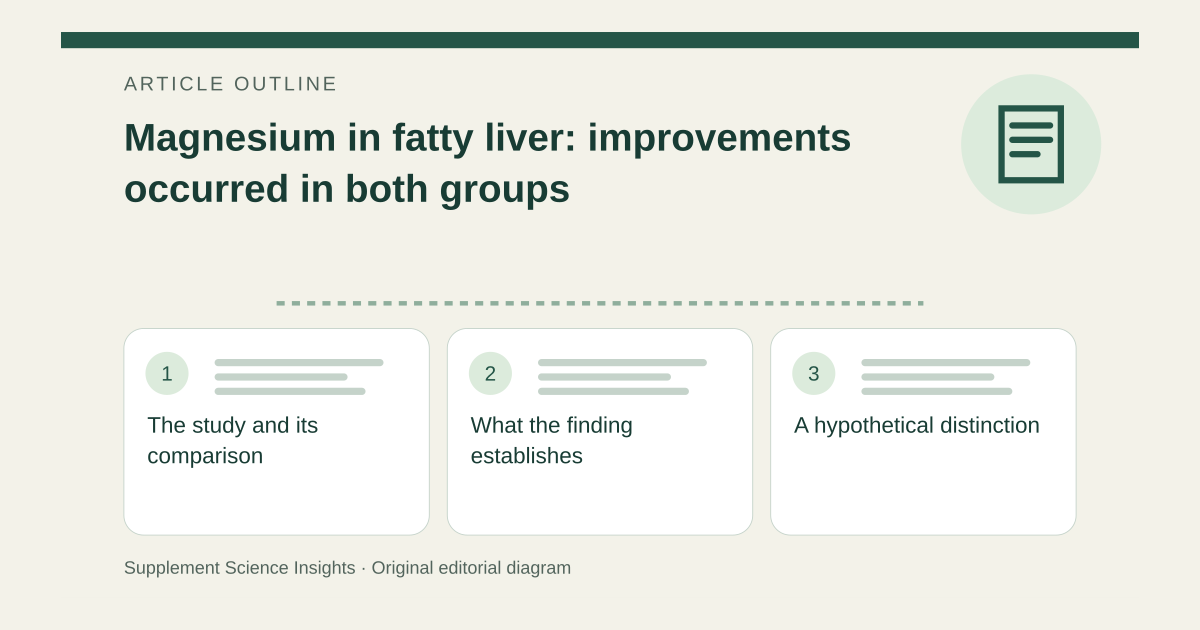
The study and its comparison
Sixty-eight adults with nonalcoholic fatty liver disease were assigned to 350 milligrams of elemental magnesium daily or placebo for 90 days. Both groups received advice on a lower-calorie diet and physical activity. [1]
Weight and several liver-related or metabolic measurements improved within both groups. Magnesium levels rose with supplementation, but the study did not find a meaningful between-group benefit for the clinical measurements. [1]
What the finding establishes
The shared improvements cannot be assigned to magnesium merely because they occurred during supplementation. The trial did not demonstrate reversal of fibrosis or prevention of liver complications. Its authors declared no conflicts; funding was not established from the retrieved record. Correcting an actual deficiency remains a different question from treating fatty liver. [1]
A hypothetical distinction
Imagine two groups lose weight while receiving the same lifestyle advice. Their shared improvement does not establish the supplement’s added effect.
| Detail | Interpretation |
|---|---|
| Measured outcome | Keep the endpoint specific |
| Study preparation | Not every retail product |
| Remaining uncertainty | Not resolved by a mechanism |
Sources for this article
- The effect of magnesium supplementation and weight loss on liver enzymes in patients with nonalcoholic fatty liver disease.
Source consulted: 2026-09-19. This is a reference resource, not a claim that we conducted the studies or tested a product.