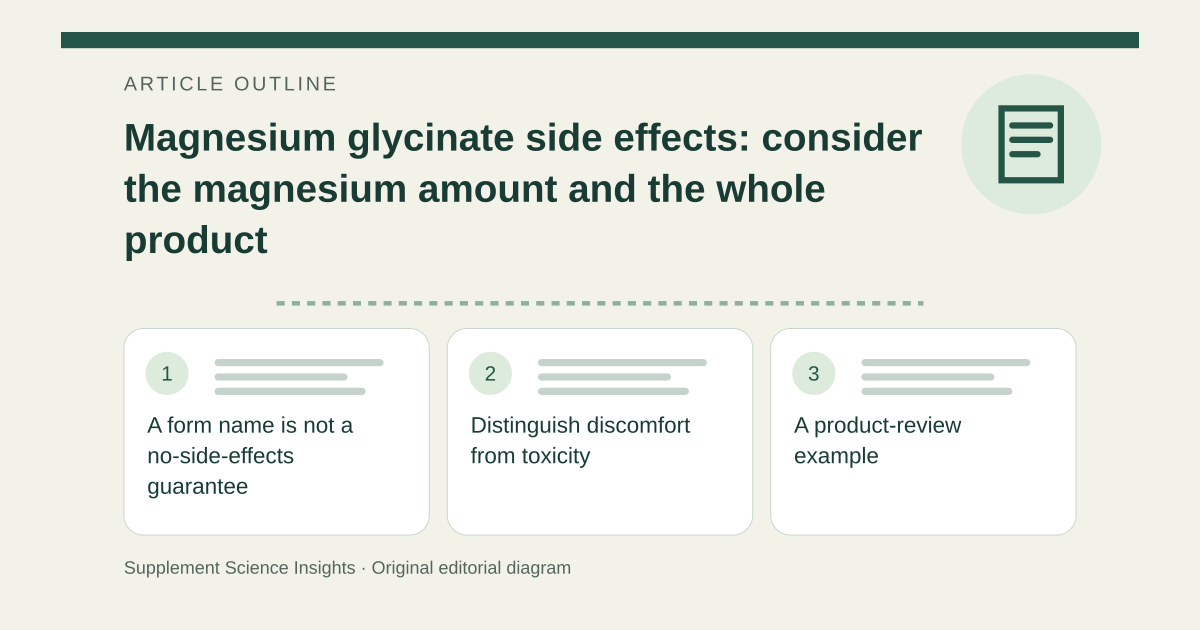
A form name is not a no-side-effects guarantee
NIH ODS identifies diarrhea, nausea and abdominal cramping as effects of high supplemental magnesium intake. Its summary does not establish a precise adverse-effect rate for every glycinate product. Therefore a claim that glycinate never causes digestive effects, or is guaranteed gentler for every person, goes beyond the cited evidence. [1]
Distinguish discomfort from toxicity
Unabsorbed magnesium can draw water into the intestine. Very high exposure can instead produce dangerous systemic toxicity, especially when kidneys cannot remove excess magnesium. Severe weakness, breathing difficulty or an irregular heartbeat after a large exposure requires urgent medical assessment. Such symptoms should not be explained away as proof the supplement is working. [1]
A product-review example
Imagine symptoms begin after switching from one capsule to a product whose serving is three capsules. Record the elemental amount, servings taken, other magnesium products and all added ingredients. Timing can suggest a possible association but does not identify the cause. Review persistent symptoms with a clinician or pharmacist rather than repeatedly increasing or rechallenging the product. [1]
| Hypothetical observation | Useful information |
|---|---|
| New abdominal symptoms | Dose, timing and ingredient changes |
| More than one magnesium product | Combined elemental nonfood intake |
| Kidney impairment | Reduced clearance changes risk |
Sources for this article
- Magnesium - Health Professional Fact Sheet
Source consulted: 2026-09-20. This is a reference resource, not a claim that we conducted the studies or tested a product.