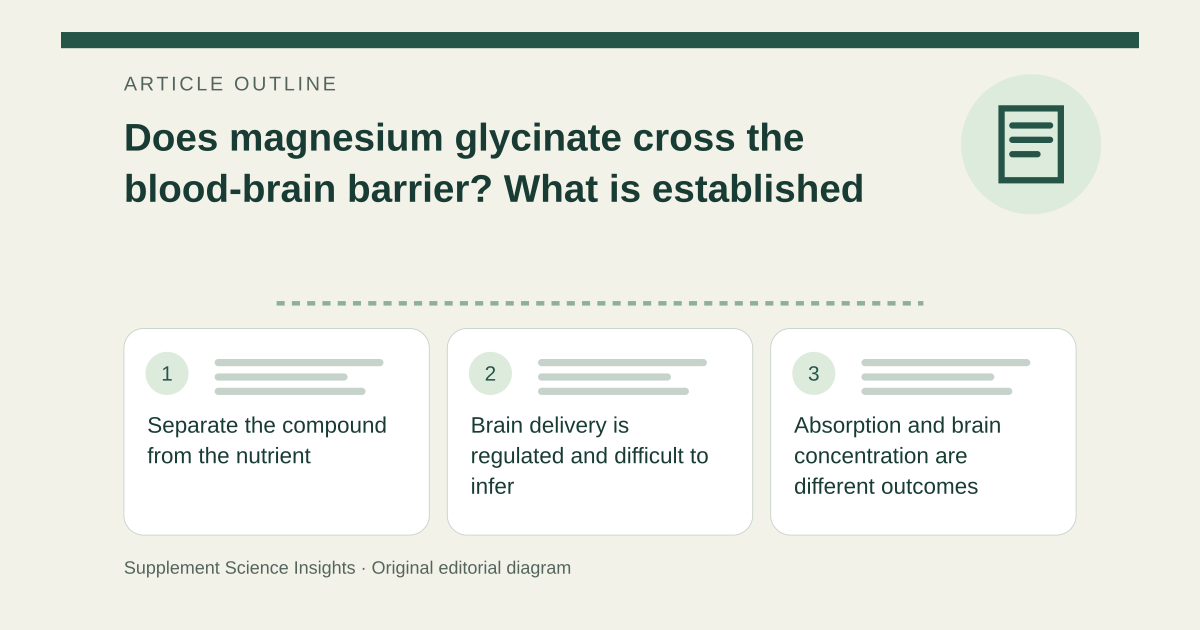
Separate the compound from the nutrient
Magnesium glycinate is a compound supplying magnesium with glycine-related ligands. Its chemical identity does not show how much of an oral dose reaches a particular brain compartment or whether the intact compound enters it. A supplement label is not a brain-distribution study. [1][2]
Brain delivery is regulated and difficult to infer
A 2023 mini-review abstract identifies limited blood-brain barrier permeability as a challenge for therapeutic magnesium delivery. It discusses experimental approaches and distinguishes animal findings from human safety and effectiveness questions. That summary does not establish a human glycinate-specific advantage. [3]
Absorption and brain concentration are different outcomes
A product can supply magnesium without proving preferential delivery to the brain. Likewise, a change in blood magnesium is not itself a direct measurement of brain magnesium. Claims of superior brain entry need a study measuring the relevant form, route and compartment. [2][3]
A proposed mechanism is not a clinical result
Even demonstrated brain delivery would not automatically establish treatment of insomnia or a neurological disorder. NCCIH describes limited high-quality magnesium insomnia evidence. A calming testimonial cannot identify a blood-brain barrier mechanism. [4][3]
Do not escalate the dose to force brain entry
Imagine a person doubles glycinate because a label describes it as brain-friendly. The claim does not provide a validated brain-targeting dose. Gastrointestinal effects, kidney function and medicine interactions remain relevant regardless of the proposed mechanism. [2]
| Evidence | What it does not establish |
|---|---|
| Chemical identity | Intact passage into the human brain |
| Intestinal absorption | Preferential brain delivery |
| Animal experiment | Human clinical effectiveness |
| Improved sleep report | A specific transport mechanism |
Sources for this article
- PubChem: Magnesium Glycinate, CID84645
Source consulted: 2026-09-21. This is a reference resource, not a claim that we conducted the studies or tested a product. - Magnesium - Health Professional Fact Sheet
Source consulted: 2026-09-21. This is a reference resource, not a claim that we conducted the studies or tested a product. - A Mini Review on the Various Facets Effecting Brain Delivery of Magnesium and Its Role in Neurological Disorders.
Source consulted: 2026-09-21. This is a reference resource, not a claim that we conducted the studies or tested a product. - Sleep Disorders and Complementary Health Approaches: Usefulness and Safety | NCCIH
Source consulted: 2026-09-21. This is a reference resource, not a claim that we conducted the studies or tested a product.