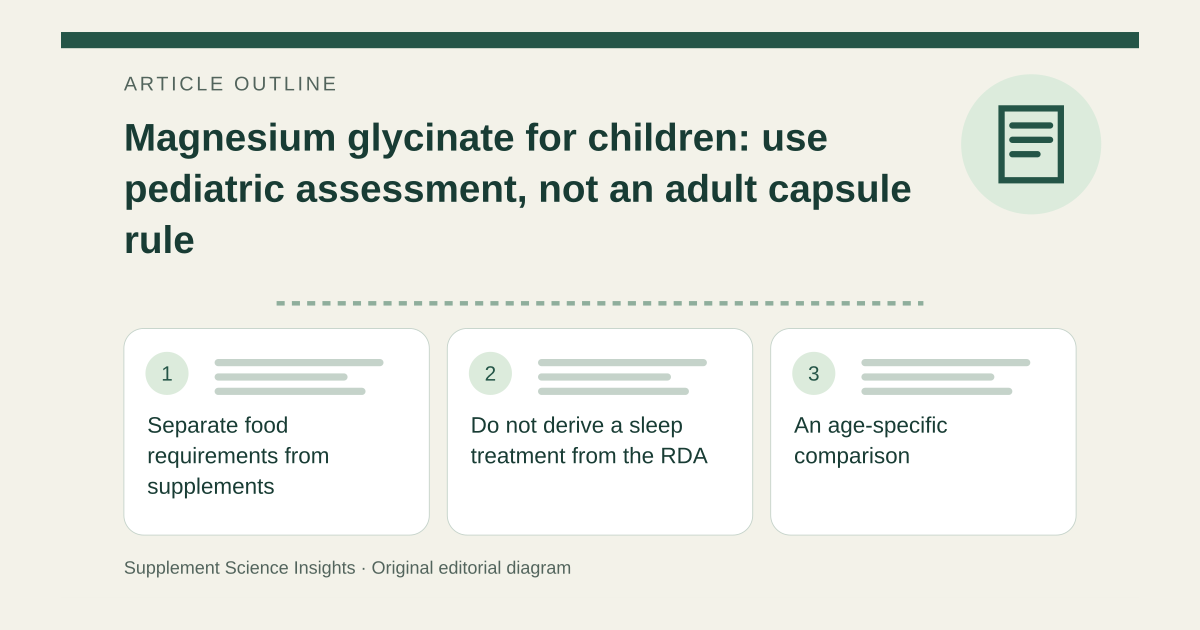
Separate food requirements from supplements
Magnesium RDAs are 80 mg/day at 1–3 years,130 mg at 4–8 and 240 mg at 9–13. These include food. The corresponding upper limits for supplements and medicines are 65 mg,110 mg and 350 mg, respectively. This explains why a younger child’s nonfood limit can be lower than the total requirement. [1]
Do not derive a sleep treatment from the RDA
A nutrient requirement is not a treatment dose for insomnia, anxiety, behavior or constipation. The glycinate form does not supply a separate pediatric dosing rule. A child’s clinician can assess the actual reason for use, diet, kidney health, medicines and product formulation before supplementation; an adult capsule divided by body weight is not a validated regimen. [1]
An age-specific comparison
Imagine a 4-year-old receives 100 mg elemental magnesium from one supplement and 30 mg from another. The nonfood total is 130 mg, exceeding that age group’s 110 mg upper limit before any magnesium-containing medicines are counted. Natural food magnesium is not added to this upper-limit comparison. For infants, no supplementalUL is established; that absence is not permission for unrestricted use. [1]
| Hypothetical4-year-old exposure | Elemental magnesium |
|---|---|
| First supplement | 100 mg |
| Second supplement | 30 mg |
| Nonfood subtotal | 130 mg versus 110 mg age-specificUL |
Sources for this article
- Magnesium - Health Professional Fact Sheet
Source consulted: 2026-09-20. This is a reference resource, not a claim that we conducted the studies or tested a product.