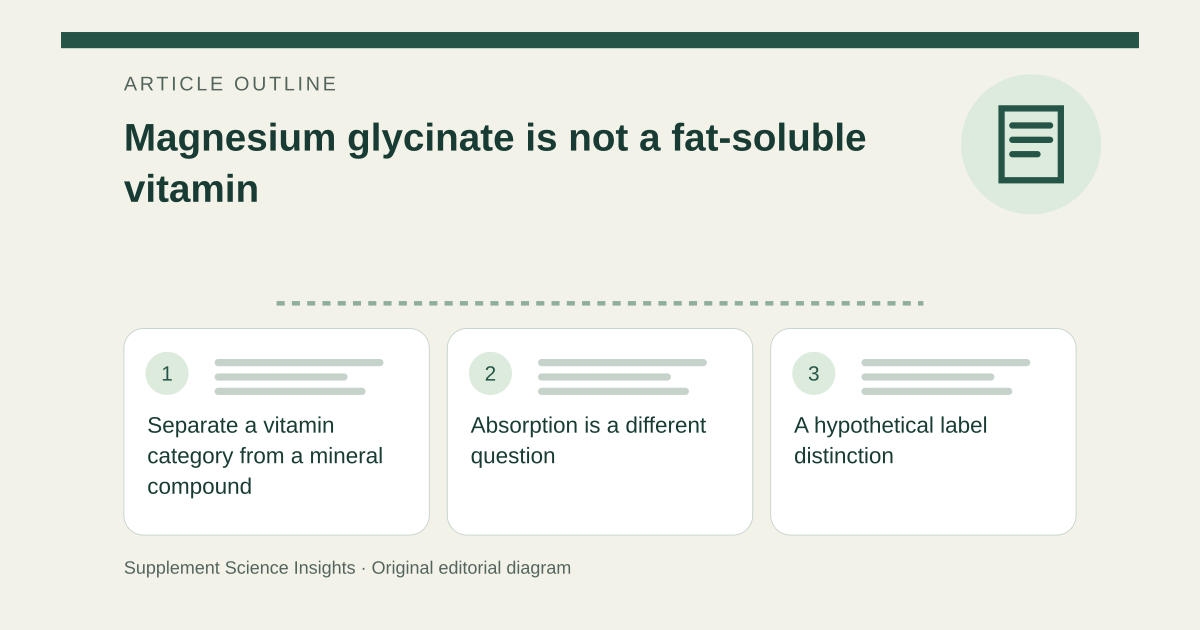
Separate a vitamin category from a mineral compound
MedlinePlus identifies A, D, E and K as the fat-soluble vitamins. Magnesium is a mineral. Glycinate refers to a glycine-derived chemical form; the word does not turn magnesium into one of those vitamins. Describing a supplement as fat-soluble is therefore not an appropriate shortcut for explaining its magnesium delivery. [1][2][3]
Absorption is a different question
ODS describes intestinal magnesium absorption and differences among supplemental forms. A chemical name alone does not establish a particular person’s absorbed percentage, superiority to every other form or an obligation to take it with a fatty meal. The declared elemental magnesium amount is also different from the mass of the complete compound. [1]
A hypothetical label distinction
If a label declares magnesium 100 mg from a glycinate source, record 100 mg as the nutrient amount for that serving. Do not count an additional front-label compound weight as a second amount of magnesium. Follow the exact product and clinical instructions rather than applying advice written for fat-soluble vitamin D to a mineral. [1]
| Term | Meaning |
|---|---|
| Fat-soluble vitamins | A,D,E,K |
| Magnesium | Mineral nutrient |
| Glycinate | A glycine-derived chemical form |
Sources for this article
- Magnesium - Health Professional Fact Sheet
Source consulted: 2026-09-20. This is a reference resource, not a claim that we conducted the studies or tested a product. - glycinate (CHEBI:32508)
Source consulted: 2026-09-20. This is a reference resource, not a claim that we conducted the studies or tested a product. - Vitamins: MedlinePlus Medical Encyclopedia
Source consulted: 2026-09-20. This is a reference resource, not a claim that we conducted the studies or tested a product.