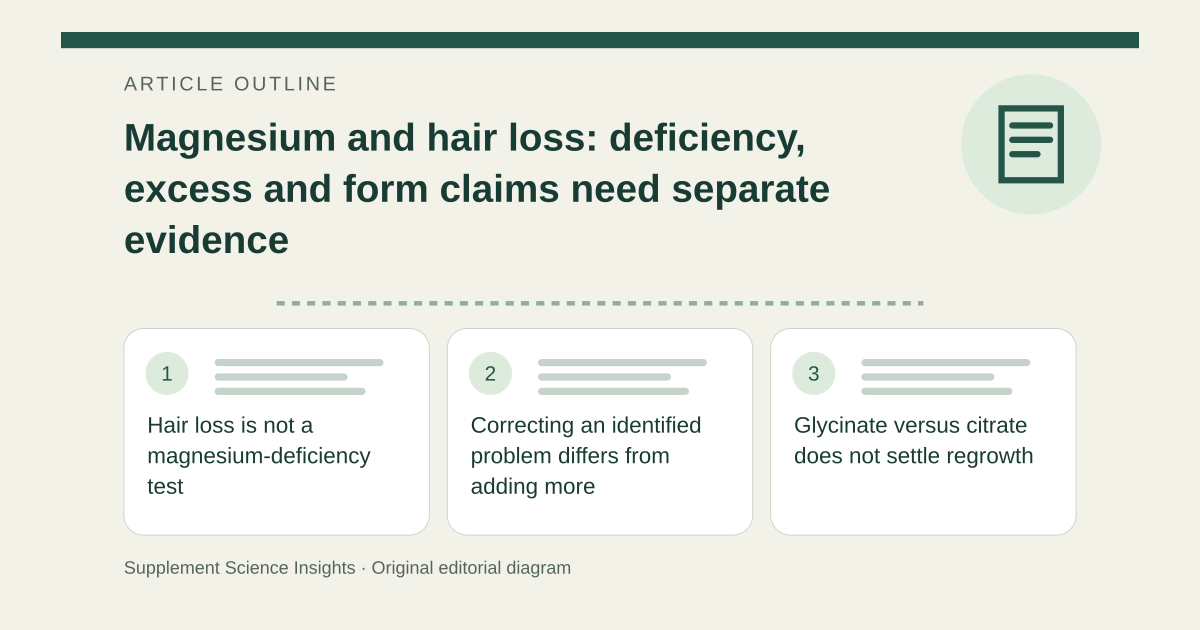
Hair loss is not a magnesium-deficiency test
Magnesium is essential for normal physiology, but a necessary nutrient is not automatically the cause of a particular symptom when intake is low. AAD describes assessment of the pattern, history, scalp and sometimes blood tests or biopsy to identify the cause of hair loss. [1][2]
Correcting an identified problem differs from adding more
If a clinician identifies a nutritional deficiency, treat that finding. In someone without a demonstrated need, the inspected sources do not establish that extra magnesium accelerates growth or treats hereditary hair loss. Many causes require a different approach. [2][1]
Glycinate versus citrate does not settle regrowth
The forms differ in composition and may differ in absorption or bowel tolerance. Those properties do not establish a head-to-head hair-growth advantage. No hair-regrowth dose or winning magnesium form follows from the NIH mineral summary. [1]
Excess does not provide a simple alternative explanation
NIH lists diarrhea, nausea, cramps and serious systemic effects with excessive exposure; it does not identify hair loss as a routine diagnostic sign of magnesium toxicity. That does not make excessive intake safe. Review the full hair supplement because other ingredients may have their own risks. [1][2]
Use a diagnosis-specific plan
AAD describes treatments selected for the actual type of loss, including minoxidil in appropriate cases, and notes that results can take months. Do not postpone assessment by repeatedly switching magnesium salts or increasing the dose. [2]
Separate coincidence from cause
Imagine shedding begins after a supplement change and a recent illness. Bring the timeline and full labels to the assessment. Neither the new product nor magnesium deficiency is established as the cause by timing alone. [2][1]
| Question | Relevant evidence |
|---|---|
| Is magnesium low? | Assessment, not hair loss alone |
| Does glycinate beat citrate? | Hair-specific comparative outcomes |
| Is excess responsible? | Full exposure and clinical review |
| Which treatment? | Depends on the type of hair loss |
Sources for this article
- Magnesium - Health Professional Fact Sheet
Source consulted: 2026-09-21. This is a reference resource, not a claim that we conducted the studies or tested a product. - Hair loss: Diagnosis and treatment
Source consulted: 2026-09-21. This is a reference resource, not a claim that we conducted the studies or tested a product.