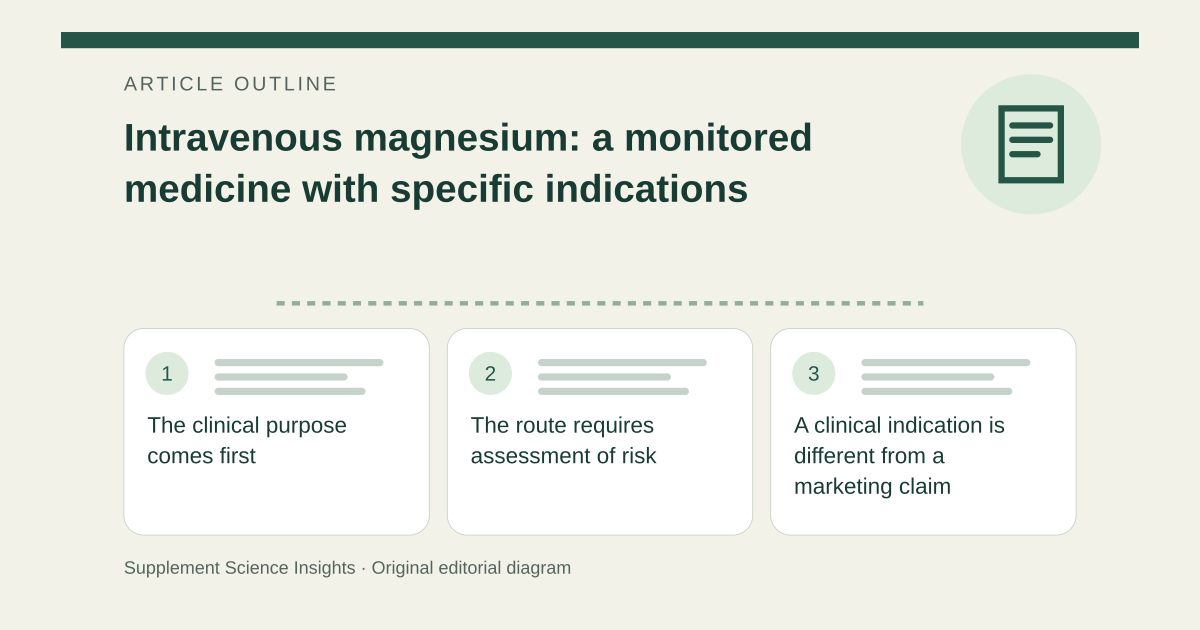
The clinical purpose comes first
The prescribing information includes replacement in magnesium deficiency, particularly acute symptomatic hypomagnesemia, and magnesium provision in parenteral nutrition. It also lists prevention or control of seizures in the relevant preeclampsia and eclampsia settings. [1]
These indications describe supervised medical treatment. They do not show that a person with nonspecific tiredness benefits from an elective magnesium infusion. [1]
The route requires assessment of risk
The label warns that impaired kidney function can increase the risk of magnesium intoxication. Clinicians consider renal function, the clinical response and other medicines when choosing and monitoring treatment. [1]
An oral supplement’s serving directions cannot be converted into an intravenous instruction. Concentration, infusion rate and the patient’s condition are medical decisions, not a home preparation exercise. [1]
A clinical indication is different from a marketing claim
Imagine an advertisement cites hospital use of magnesium as proof that an infusion improves everyone’s energy. Treatment of a documented deficiency does not establish benefit for an unselected wellness customer.
| Detail | Interpretation |
|---|---|
| Clinical replacement | Defined indication |
| Kidney function | Affects risk |
| IV route | Requires professional administration |
Sources for this article
- DailyMed - MAGNESIUM SULFATE- magnesium sulfate heptahydrate injection, solution
Source consulted: 2026-09-17. This is a reference resource, not a claim that we conducted the studies or tested a product.