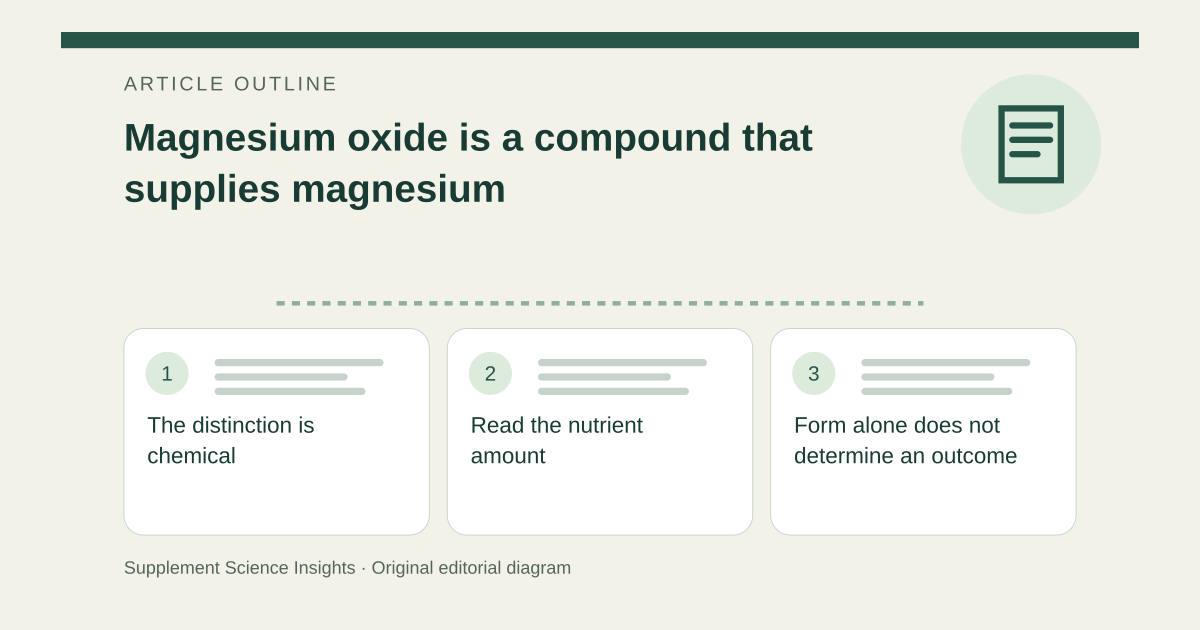
The distinction is chemical
Magnesium oxide has the formula MgO: it contains magnesium and oxygen. Nutritional magnesium can be supplied by this or other magnesium-containing compounds. The two names therefore do not identify equal masses of the same material. In the body, magnesium supports normal enzyme, nerve and muscle functions; the oxide name does not create a separate nutrient. [1][2]
Read the nutrient amount
NIH ODS explains that the Supplement Facts panel reports elemental magnesium rather than the weight of the whole compound. A line reading Magnesium 100 mg (as magnesium oxide) reports 100 mg of the nutrient. Do not reduce that 100 mg again using the compound’s composition. Conversely, an isolated statement of compound weight needs clarification before being treated as elemental intake. [2]
Form alone does not determine an outcome
Absorption varies among forms. The ODS summary reports lower bioavailability for oxide than several more soluble forms in small studies; this is not proof that every other form is superior for every symptom. For a hypothetical comparison, first match elemental amounts and serving sizes, then assess the intended use and relevant evidence. [2]
| Hypothetical label wording | Meaning |
|---|---|
| Magnesium 100 mg (as magnesium oxide) | 100 mg elemental magnesium per stated serving |
| Magnesium oxide 100 mg only | Whole-compound statement; clarify nutrient amount |
| Two capsules per serving | Check whether the amount applies to two capsules |
Sources for this article
- PubChem: Magnesium Oxide, CID14792
Source consulted: 2026-09-20. This is a reference resource, not a claim that we conducted the studies or tested a product. - Magnesium - Health Professional Fact Sheet
Source consulted: 2026-09-20. This is a reference resource, not a claim that we conducted the studies or tested a product.